Did You Know?
A 5,300-year-old man found frozen in the Alps still had 61 tattoos, a copper axe, and an arrowhead lodged in his shoulder. Scientists even know what he ate for his last meal (ibex and red deer with einkorn wheat) and have traced the valley he climbed in the days before he died.
The Numbers Behind the Career
The 2025 median annual salary for anthropologist and archeologist was $70,770.
About 800 anthropologist and archeologist job openings are expected each year over the next decade.
There were about 10,200 anthropologist and archeologist jobs in the U.S. in 2025.
Where This Career Is Headed
The next decade will change what archaeologists spend their time doing more than it changes what they study. Subsurface imaging is advancing toward a point where some sites can be documented in fine detail without excavation, raising a question the profession has never had to answer seriously: whether digging should become the exception rather than the default. At the same time, molecular methods are moving toward reconstructing who lived in a place, what they ate, and which animals they kept from a handful of dirt containing no bones or artifacts at all. The legal and ethical rules around heritage are also still being written, covering everything from who owns a 3D scan of an artifact to whether human-made objects on the Moon deserve protected status. Archaeologists entering the field now will spend their careers developing rules that do not yet exist.

Non-destructive survey methods are likely to mature to the point that entire categories of site can be studied without disturbance, opening research access to protected, sacred, and politically sensitive places that are currently closed to excavation.
Sediment DNA and protein analysis are developing into routine tools, which could allow archaeologists to identify the people and animals present at a site from soil alone and make regions with poor bone preservation newly worth studying.
As legal protections for heritage expand into new territory, including digital reproductions, seabed sites, and eventually off-world artifacts, archaeologists with policy and legal training will be needed in roles that barely exist today.

Education & Certification
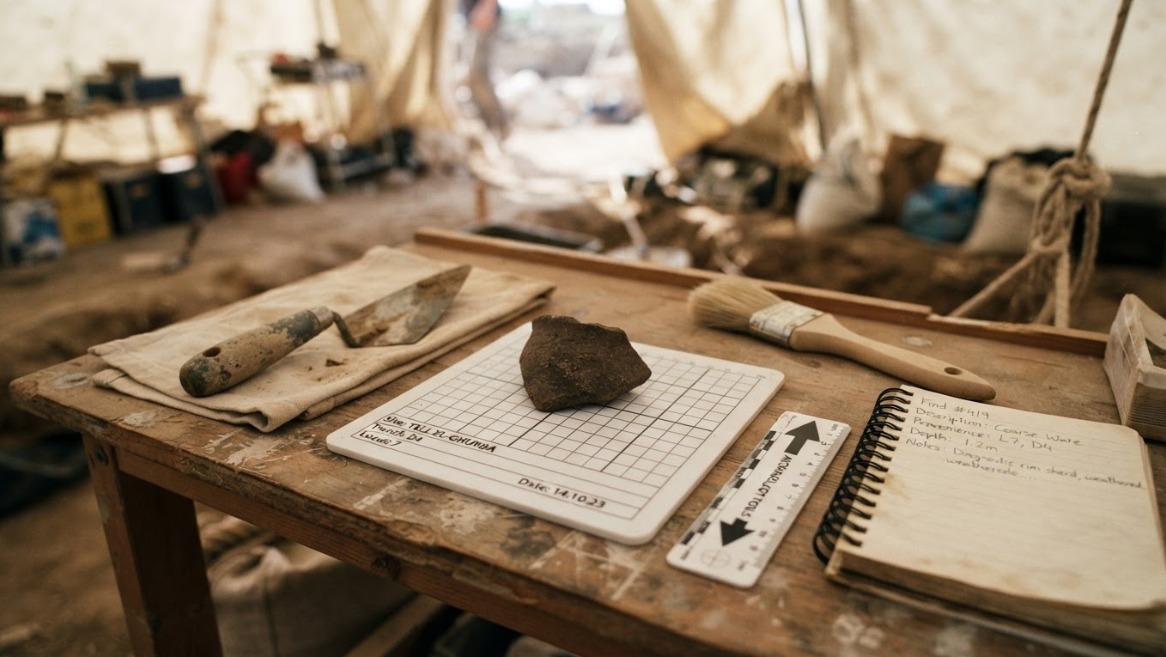
Archaeologists typically start with a bachelor's degree in archaeology, anthropology, or a related field, which is enough for entry-level work on survey and excavation crews. Leading a project, doing academic research, or holding a museum curator role usually requires a master's degree, and directing major excavations or teaching at the university level typically requires a PhD. Along the way, most programs require or strongly recommend a field school, a hands-on training program, often a full summer, where students learn to excavate under supervision. It is the closest thing archaeology has to a required apprenticeship.
No license is required to work as an archaeologist, but employers widely expect registration with the Register of Professional Archaeologists (RPA), especially in cultural resource management, and some agencies and jurisdictions require it. The RPA credential calls for a graduate degree, a thesis or technical reports, and supervised field experience, and registrants agree to follow a professional code of conduct. A newer Registered Archaeologist (RA) tier is open to people with a bachelor's degree and two years of supervised experience, so registration is within reach earlier in a career than it used to be.
To Prepare...
Take courses in world history, earth science, and a foreign language to build the background archaeology programs expect.
Take electives in statistics or geography to build the mapping and data skills used throughout archaeological fieldwork.
Explore anthropology or archaeology clubs if your school offers them, or ask a social studies teacher about National History Day or Model UN, competitions that build skills in evidence and argument.