Photo: Ruth Madelen Luna Cruz, CC BY-SA 4.0 <https://creativecommons.org/licenses/by-sa/4.0>, via Wikimedia Commons
Who She Is
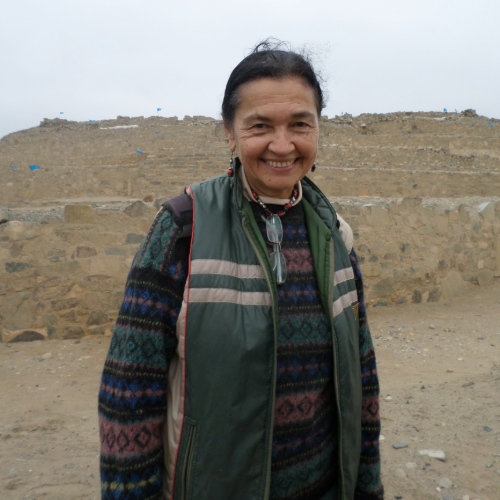
Ruth Shady Solís is a Peruvian archaeologist who began surveying a dusty, overlooked site called Caral in 1994, when most of her colleagues assumed there was nothing important buried there. Radiocarbon dating of the site's massive earthen pyramids, published in 2001, showed they were built as early as 2600 BCE, nearly 5,000 years ago, making Caral the oldest known center of civilization in the Americas and roughly as old as the pyramids of Egypt. The discovery upended a timeline archaeologists had relied on for decades and proved that complex urban life in the Americas began far earlier than textbooks claimed. She has spent much of her career defending the site from looters and land grabs, often with limited funding and sometimes at real personal risk. Caral is now recognized as a UNESCO World Heritage Site because of the work she refused to abandon.
Why She Matters
Shady Solís's discovery is proof that the history books are not finished, and that entire civilizations can still be waiting under the ground for someone willing to look where nobody else thought to. Her persistence, working for years on a site many considered a dead end, changed how the world understands the deep history of the Americas. She did the work with far less money and attention than famous sites elsewhere receive, insisting Caral deserved serious study anyway. Her advocacy for the site's protection also shows that discovery is only the first step, because defending a find can take just as much determination. Her career shows that some of archaeology's biggest breakthroughs come from questioning assumptions everyone else had already stopped examining.