

Did You Know?
The word "veterinarian" comes from the Latin veterinae, meaning "working animals."

What Veterinarians Really Do
Have you ever worried about a pet that seemed sick or hurt and wished you could help? That's exactly what veterinarians do every day! Veterinarians are doctors for animals. They check on pets during visits, give shots to prevent illness, prescribe medicine, and sometimes even perform surgeries. Their patients might be dogs, cats, rabbits, birds, horses, or even lizards and snakes. No two days look the same.
Imagine being the person a family brings their puppy to when it's not eating, or the doctor who helps a farmer's cow that's about to have a calf. Veterinarians use special tools to listen to an animal's heartbeat, look at X-rays, and run tests, just like a doctor does for people, except their patients can't tell them what's wrong. They have to be great detectives, watching how an animal moves and behaves to figure out the problem. If you love animals, enjoy solving puzzles, and want a job where you help creatures big and small feel better, you might love being a veterinarian!
You Might Love This If...

Skills That Follow You Everywhere
Overview: Being a veterinarian helps you develop many important skills that can be useful in many different careers, such as problem-solving, communication, responsibility, and patience. Vets learn how to make careful decisions, explain ideas clearly, and stay focused in complicated or unexpected situations. Among all these skills, empathy, resilience, and teamwork are especially important and play a big role in a veterinarian’s everyday work. Here’s how those skills show up on the job.
Resilience
A veterinarian uses resilience by navigating emotionally challenging cases, demanding workloads, and unexpected setbacks without losing motivation or focus. When outcomes aren’t ideal, they analyze what happened, learn from the experience, and apply those insights to grow professionally. This ability to recover and adapt helps them sustain a long, effective career in a high-pressure medical field.
Teamwork
A veterinarian coordinates with vet techs, assistants, specialists, and support staff to deliver efficient, high-quality care. They communicate clearly, delegate tasks based on each team member’s expertise, and collaborate during exams, surgeries, and emergencies to ensure the best outcomes. In a fast-paced medical environment, this ability to work effectively within a diverse team is essential for both patient safety and clinic success.
Empathy
A veterinarian uses empathy by recognizing and managing both their own emotions and those of anxious animals or stressed owners, listening carefully, and responding with understanding and professionalism to build trust and provide effective care.
Explore more resources for a future Veterinarian

James Herriot's Dog Stories
James Herriot
Why We Picked It
Career Connection
Companion animal veterinarians build long-term relationships with pets and their families, and Herriot's dog stories capture the same emotional bond and dedication that make small-animal practice so rewarding.
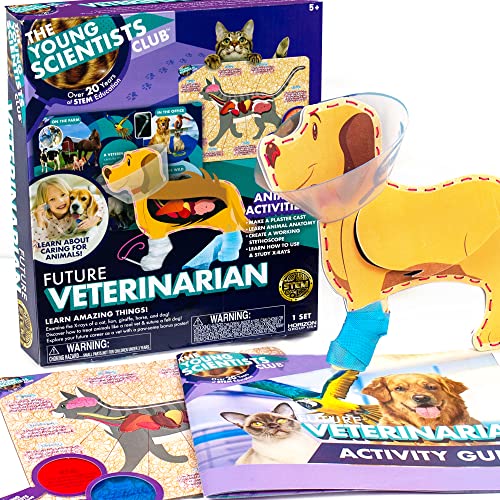
The Young Scientists Club Future Veterinarian Career Kit, 10+ Activities, Includes Interactive Learning Guide, Foam Dog, & Secret Message Viewers, Animal Science Kits for Kids, Gifts, STEM Learning
Why We Picked It
Career Connection
Veterinarians combine clinical observation, diagnostic testing, and compassionate patient handling, and this kit introduces kids to the same multi-skill approach that real veterinary practice requires every day.

Phobby Doctor Kit for Toddlers 3 4 5 Years Old, Kids Veterinarian Playset with Dog Toy, Real Stethoscope & Medical Bag, Pretend Play Doctor Set for Girls Boys Christmas Birthday Gift (Pink)
Why We Picked It
Career Connection
Veterinarians use stethoscopes to listen to heart and lung sounds as part of every animal exam, and this kit introduces kids to the same auscultation technique that real clinical assessments begin with.