
Did You Know?
In some rural areas, large-animal vets make house calls to farms and ranches, driving trucks loaded with medical equipment to treat patients in barns and pastures.

How to Get Started
Getting started in veterinary medicine begins with a genuine love for animals and a willingness to learn the science behind keeping them healthy. Whether you start by observing how your own pet behaves when something is wrong, volunteering at a local animal shelter, or studying how the bodies of different animals work, every step builds toward a career spent protecting the health and well-being of creatures that cannot speak for themselves.
Explore the Basics
Observe animals at home, such as how they move, eat, play, and show feelings. Notice small changes, like if a pet is extra tired or excited, and talk about what that might mean. This builds early “animal awareness,” just like a vet uses, without needing any special tools.
Try It Out
Engage with animals at home or in the neighborhood/community. Take on small, age-appropriate tasks such as helping fill water bowls, gently brushing the pet, or checking that toys and bedding are clean. Try simple “animal science” activities at home, like building a model skeleton, observing pet behavior, or keeping a nature journal with drawings or notes. This helps build observation, responsibility, and early problem-solving skills, just as a veterinarian would.
Join the Community
Visit a local vet clinic for a short tour or career chat to see real equipment and meet veterinary staff or make toys or blankets at home (simple fleece tie blankets, cardboard tube toys for cats, or braided rope toys for dogs) to donate to an animal shelter.
How to Become a Veterinarian
Explore more resources for a future Veterinarian

Germ Hunter: A Story about Louis Pasteur (Creative Minds Biographies)
Elaine Marie Alphin
Why We Picked It
Career Connection
Veterinarians use Pasteur's discoveries daily — from rabies vaccination to pasteurization of milk — and his story shows kids how laboratory research directly protects the health of animals and people.

Veterinary Anatomy Pocket Charts – Dog & Cat Set + PAWPAL Keychain Gift | Canine & Felinee | 66 Illustrated Pages | 5"x3" Foldable Reference Guide for Vet Nurses, Techs & Students
Why We Picked It
Career Connection
Veterinary students spend their first two years studying animal anatomy and physiology in detail, and this workbook introduces the same organ systems and anatomical vocabulary those courses cover.
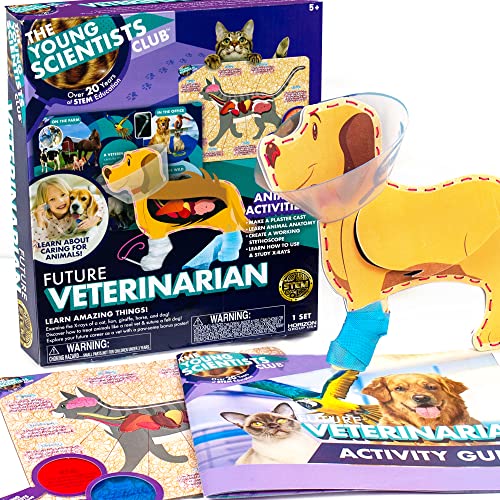
The Young Scientists Club Future Veterinarian Career Kit, 10+ Activities, Includes Interactive Learning Guide, Foam Dog, & Secret Message Viewers, Animal Science Kits for Kids, Gifts, STEM Learning
Why We Picked It
Career Connection
Veterinarians combine clinical observation, diagnostic testing, and compassionate patient handling, and this kit introduces kids to the same multi-skill approach that real veterinary practice requires every day.