
Did You Know?
A single autonomous vehicle contains over 100 million lines of code, more than some entire operating systems!
What Robotics Engineers Really Do
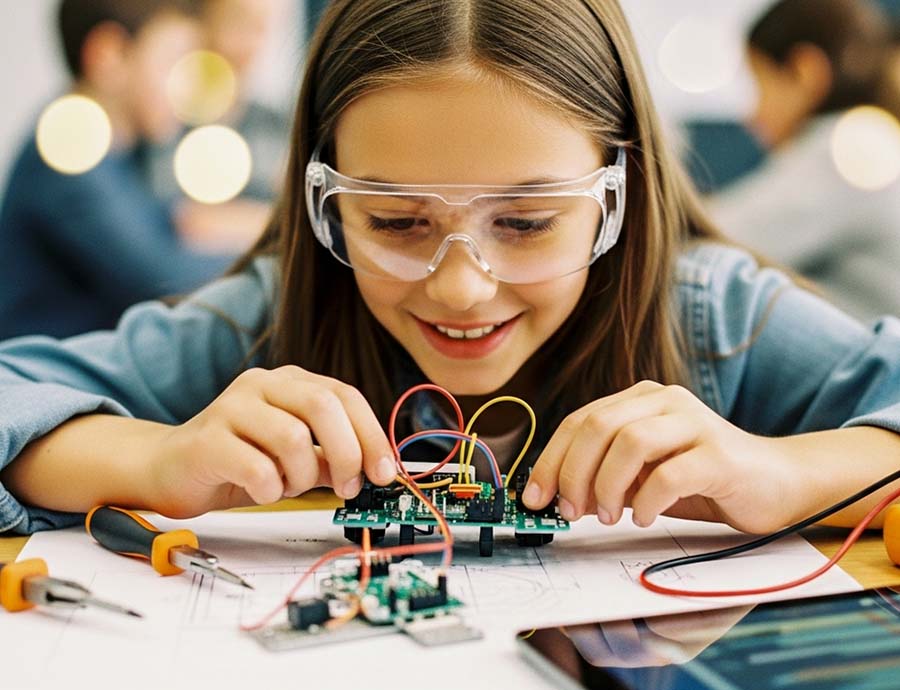
Imagine you are playing with building blocks, but instead of making a castle, you're creating a robot that could help your grandmother reach things on high shelves. You draw pictures of how it would move, what buttons it would have, and how it would know when to stop. A friend suggests it could also water plants, so you redesign the arms to be gentler. What started as blocks and imagination becomes the blueprint for a real helper robot!
Becoming a robotics engineer starts with being curious about how things move and work. Robotics engineers notice when tasks are hard for people and wonder, "What if a machine could help with that?" They build small prototypes, test them out, and keep making improvements because "it's not quite right, yet." If you like taking things apart, building with your hands, and thinking "I could make a robot that does that," you may already be starting to think like a robotics engineer.
You Might Love This If...
Skills That Follow You Everywhere
Being a robotics engineer develops crucial skills that extend far beyond building machines. Engineers learn to approach complex challenges systematically, collaborate across disciplines, and adapt to rapidly changing technologies. These abilities are valuable in any technical field and many leadership roles.
Problem-Solving
Robotics engineers tackle multi-layered challenges by breaking complex problems into manageable parts. Problem-solving means identifying root causes, testing multiple solutions, and learning from failures. Whether debugging code, optimizing mechanical systems, or improving user interfaces, strong problem-solving helps engineers create effective and reliable robotic solutions.
Critical Thinking
Engineering robots requires analyzing requirements, evaluating trade-offs, and making decisions based on data and constraints. Critical thinking helps these engineers assess the feasibility of designs, anticipate potential problems, and choose appropriate technologies for specific applications. This skill ensures that robotic systems are safe, efficient, and meet their intended purposes.
Adaptability
Robotics engineering is evolving rapidly as new technologies, materials, and applications emerge. Adaptability helps engineers learn new programming languages, incorporate emerging hardware, and adjust designs based on changing requirements. The ability to embrace new approaches and technologies is essential for staying current and creating innovative solutions.
Explore more resources for a future Robotics Engineer

Awesome Engineering Activities for Kids: 50+ Exciting STEAM Projects to Design and Build (Awesome STEAM Activities for Kids)
Schul, Christina
Why We Picked It
Career Connection
Robotics engineers design, build, and test systems through cycles of hands-on experimentation and refinement, and building that engineering instinct, the habit of making something to test an idea rather than just thinking about it, starts exactly with activities like these.

Robotics: Everything You Need to Know About Robotics from Beginner to Expert
Mckinnon, Peter
Why We Picked It
Career Connection
Robotics engineers need a working knowledge of both the history and the hardware that define their field, and this guide's breadth across the full landscape of robotics gives aspiring engineers the foundational understanding they will build their technical careers on.
Learn Robotics with Raspberry Pi: Build and Code Your Own Moving, Sensing, Thinking Robots
Timmons-Brown, Matt
Why We Picked It
Career Connection
Robotics engineers integrate hardware and software into systems that sense the world and respond to it, and building a Raspberry Pi robot from scratch gives learners a direct, firsthand experience of exactly that integration process.