
Did You Know?
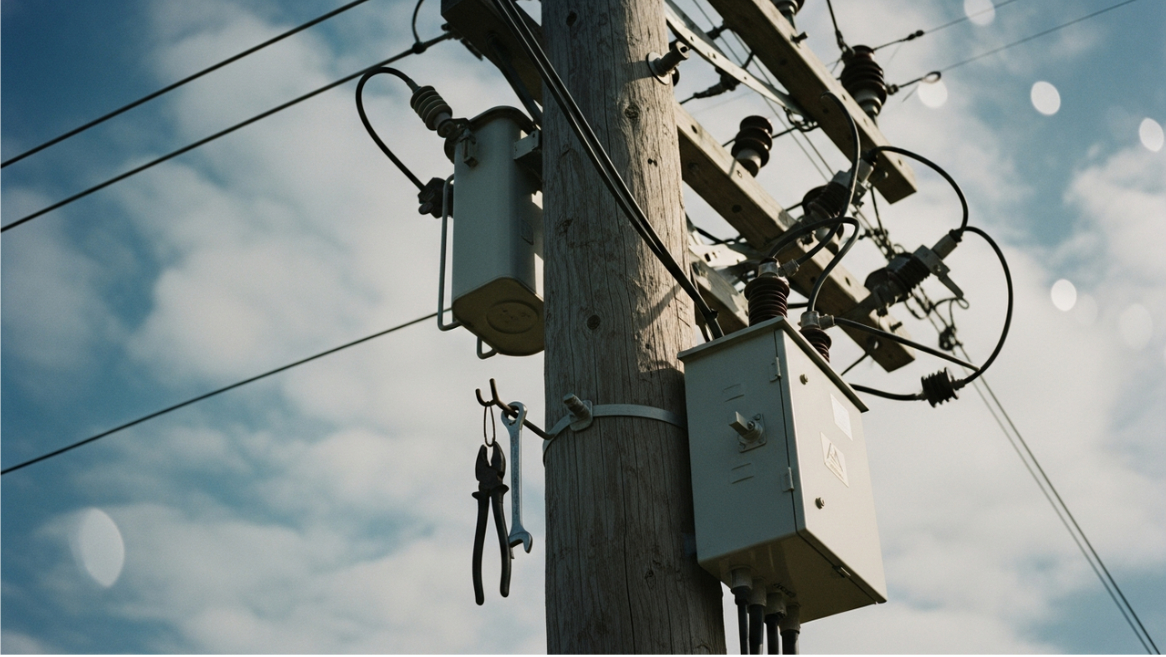
Linemen work with voltages ranging from less than 10,000 volts on neighborhood distribution lines to 300,000 volts or more on long-distance transmission lines. For comparison, a standard household outlet carries 120 volts.
What Linemans Really Do
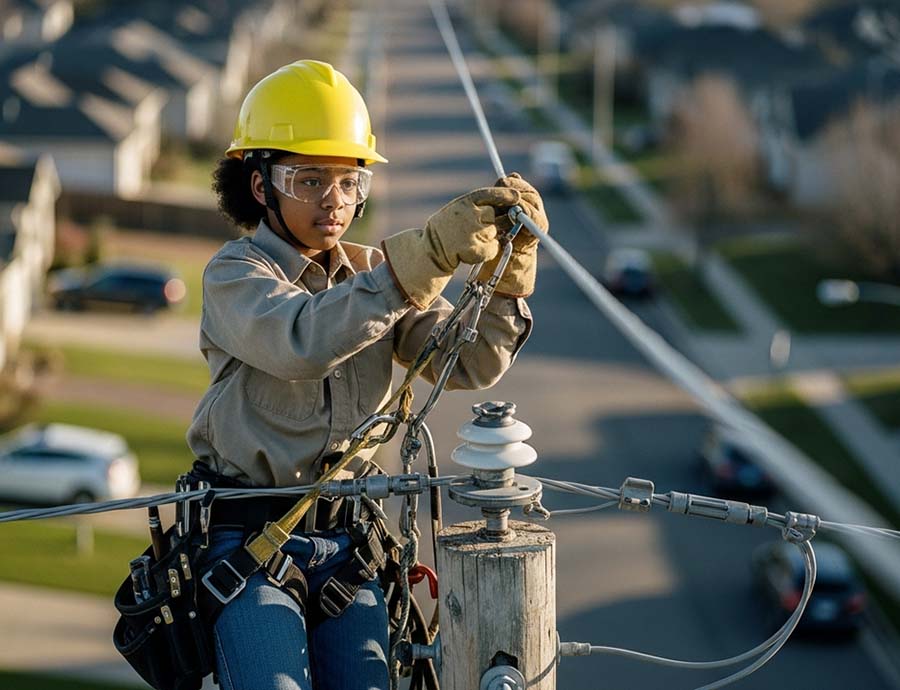
Imagine standing high above the ground in a bucket truck, looking out over your neighborhood from the top of a utility pole. Below you, houses stretch out in every direction, and the wires you are working on carry the electricity that powers everything inside them: the lights, the refrigerator, the television, and the chargers for phones and tablets. You can feel the wind up here, and you can see things most people never get to see from this angle. Your tools hang from your belt, ready for the next connection. You are a lineman, and your job is to make sure all that keeps working.
Linemen spend their days outdoors, working with their hands and powerful tools to install, repair, and maintain the power lines that deliver electricity from where it is made to where people use it. They climb wooden poles using special boots with metal spikes called gaffs, or they ride in bucket trucks that lift them up to the wires. They work in crews, calling out instructions and watching out for each other, because the electricity in those wires is powerful and demands total respect. When a storm blows through, and the lights go out, linemen are the first ones called to fix it, often heading straight into the wind and rain while everyone else heads inside.
You Might Love This If...
Skills That Follow You Everywhere
Being a lineman develops skills that reach far beyond the power lines. Linemen learn to work as a tightly coordinated team, solve complex problems under pressure, and adapt to conditions that can change without warning. These are the same skills that help people succeed in any career and in life.
Adaptability
A lineman might spend Monday doing scheduled maintenance in clear skies and spend Tuesday restoring power in a freezing rain storm 200 miles from home. The shift from routine to emergency, from distribution work to transmission, from established procedures to new technologies like smart grid sensors or drone-assisted inspections, demands constant adjustment. Linemen who thrive are the ones who stay calm when conditions shift, absorb new information quickly, and adjust their approach without losing focus on safety.
Teamwork
Line work is never a solo job. Every task, from setting a pole to energizing a new circuit, depends on crew members communicating clearly, anticipating each other's movements, and trusting that every person is doing their part safely and correctly. That ability to function as part of a high-performing team, where the consequences of miscommunication are immediate and serious, translates to leadership and collaboration in any field.
Problem-Solving
No two days on the job are exactly the same. A lineman might arrive at a routine transformer replacement only to find a rotted pole, hidden conductor damage, and a tree limb within striking distance of the line. Figuring out how to complete the work safely with the equipment and crew available requires creative thinking, technical knowledge, and the ability to evaluate multiple options quickly.
Explore more resources for a future Lineman

Light Up the World: When I Grow Up, I Want to Be a Lineman
Sarah Reijonen
Why We Picked It
Career Connection
Linemen climb poles and string wire in all conditions to keep electricity flowing to the homes and businesses that depend on it, and this book gives the youngest readers their first picture of what that dedication and demanding work actually looks like.

Blackout (Caldecott Honor Award Winner)
Rocco, John
Why We Picked It
Career Connection
Linemen restore power after outages, often working through storms and long nights so moments like this family's dark evening are as brief as possible, and this book quietly celebrates the work that makes normal, powered life something we can take for granted.

Powering American Farms: The Overlooked Origins of Rural Electrification
Hirsh, Richard F.
Why We Picked It
Career Connection
Linemen built the power systems that connected rural America to the grid, one mile of wire at a time, and this book reveals the full human effort behind electrification that most textbooks reduce to a single government program.