Did You Know?
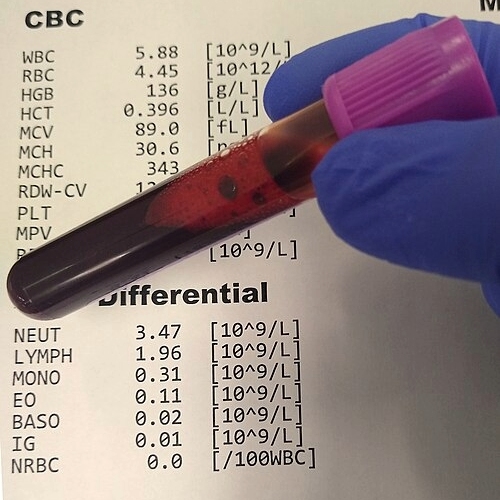
A single drop of blood contains approximately 5 million red blood cells, 7,000 white blood cells, and 250,000 platelets, and a routine complete blood count measures all of them.
The Numbers Behind the Career
There were about 351,200 clinical laboratory technologists and technicians in the U.S. in 2024.
About 22,600 openings are projected each year through 2034.
The 2024 median annual salary for clinical laboratory technologists and technicians in the U.S. is $61,890.
Where This Career Is Headed
The medical laboratory profession is navigating a decade of tension between two forces pulling in opposite directions. Advances in genomic medicine, personalized treatment, and molecular diagnostics are creating demand for more and more complex laboratory testing, expanding what the profession is asked to do. At the same time, automation is taking over an increasing share of routine testing, reducing the number of technicians needed to process standard panels that once required significant manual labor. The technicians and technologists who thrive over the next decade will be those who develop deep expertise in the specialized, high-complexity testing that automated systems cannot yet reliably perform.

The rapid expansion of genomic and molecular testing, including genetic screening, pharmacogenomics, and liquid biopsy for cancer detection, is creating entirely new laboratory specializations that require expertise well beyond what traditional clinical chemistry or hematology training covers.
As AI-assisted diagnostic tools become integrated into laboratory workflows over the next decade, technologists who understand both the biological principles underlying tests and the algorithmic logic of the tools that interpret them will occupy a new and highly valuable role at the intersection of clinical science and medical AI.
The development of point-of-care testing technologies that shift diagnostic capabilities from centralized laboratories to clinics, homes, and remote settings will create demand for laboratory professionals to design, validate, and oversee these decentralized testing programs.
Education & Certification
The educational path into medical laboratory science is divided into two levels. Clinical laboratory technologists, sometimes called medical laboratory scientists, typically hold a bachelor's degree in clinical laboratory science or a closely related field such as biology or chemistry, and complete clinical rotations across all major laboratory specialties before graduating. Clinical laboratory technicians, who perform many of the same functions under the supervision of technologists, can often enter the field with an associate's degree from an accredited program. Some states require licensure before a technician or technologist can practice, and requirements vary significantly by state. Laboratory professionals who want to move into management, research, or highly specialized roles such as molecular diagnostics or clinical chemistry often pursue a master's degree or doctoral training later in their careers.
Certification is widely expected by employers and plays an important role in career advancement. The most recognized credentials are offered by the American Society for Clinical Pathology Board of Certification, including the MLS (Medical Laboratory Scientist) and MLT (Medical Laboratory Technician) designations, which require passing a national examination after completing an accredited educational program. Many laboratory professionals also pursue specialty certifications in areas such as microbiology, blood banking, or molecular diagnostics as their careers develop.
To Prepare…
Focus on biology, chemistry, and mathematics coursework, which form the scientific foundation that laboratory programs build on and that certification examinations will eventually test in depth.
Pursue a bachelor's degree in clinical laboratory science, biology, or chemistry for the technologist pathway, or an associate's degree in clinical laboratory technology if you want to enter the field more quickly at the technician level.
Take any available anatomy, physiology, or microbiology courses in high school or early college, as familiarity with how the body works and how disease processes develop gives you a meaningful head start in a laboratory science program.