
Did You Know?
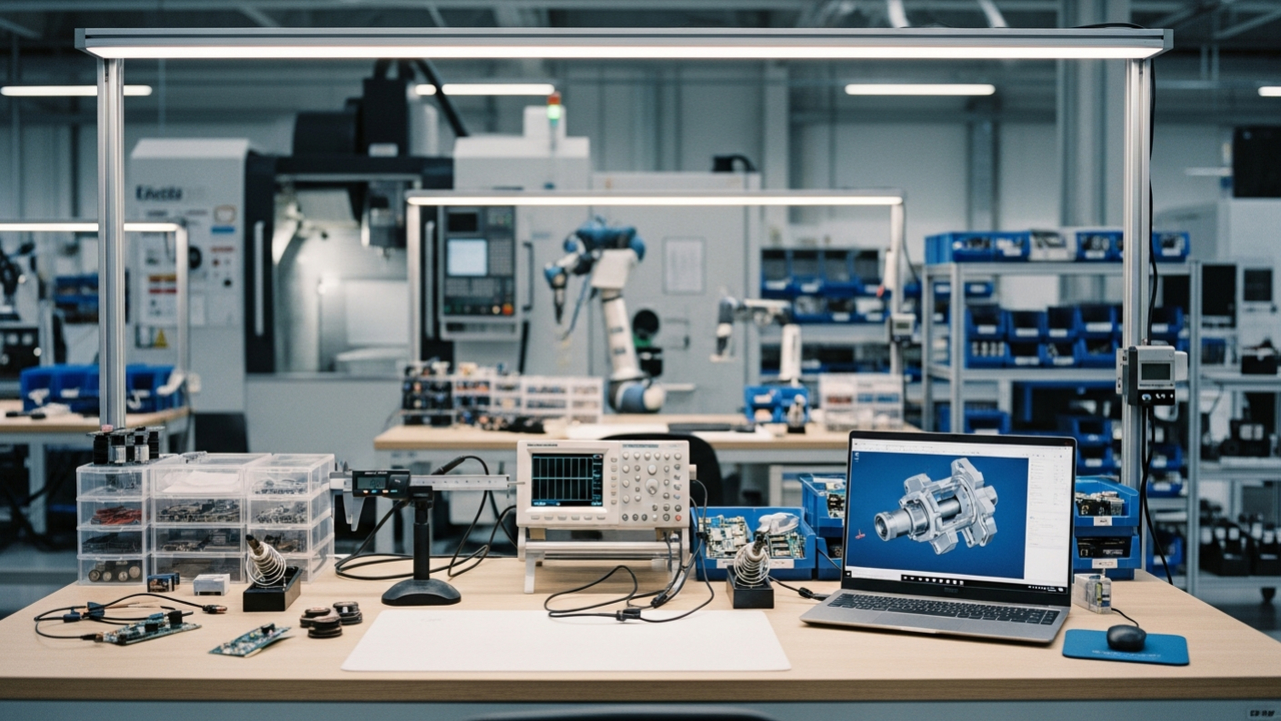
A modern automobile contains roughly 30,000 individual parts. Manufacturing engineers figure out how to source, shape, assemble, and inspect every single one of them so that the finished car rolls off the line safely, reliably, and affordably.

What Manufacturing Engineers Really Do
Have you ever wondered how a toy is made? Not just one toy, but thousands of identical ones, all looking the same, working perfectly, and appearing in stores across the country at the same time? A manufacturing engineer is the person who figures out how to make that happen. They design the steps, select the machines, choose the materials, and organize the workers so products can be built quickly, safely, and error-free. They are the people who turn an inventor's idea into something that you can hold in your hands.
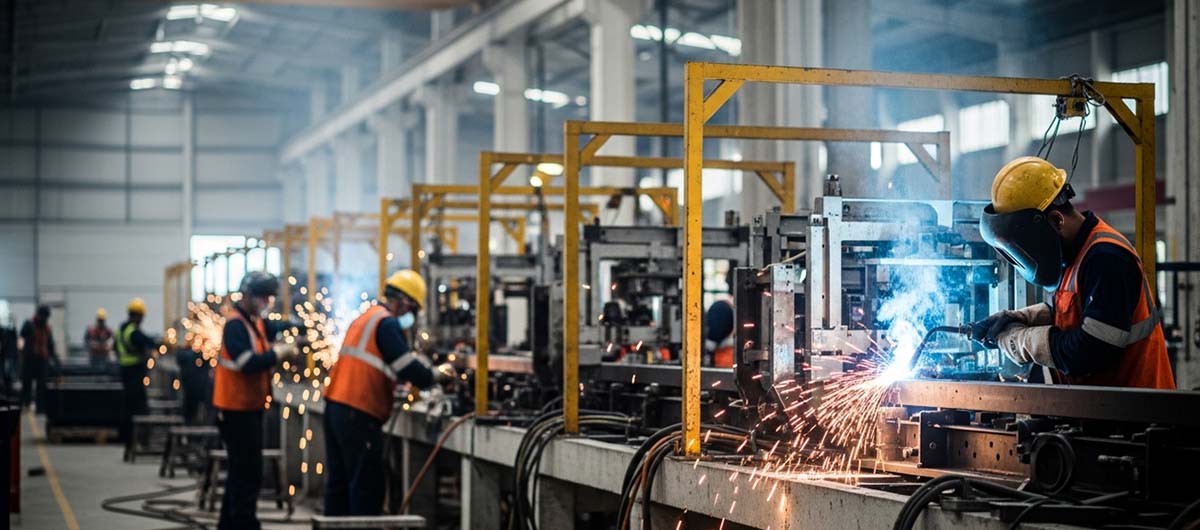
Manufacturing engineers work in factories, but their job isn't just standing at a machine all day doing the same task. They walk the factory floor studying how things move, where problems happen, and how to make the entire process faster and better. If a machine keeps jamming, they figure out why. If a product is coming out with tiny defects, they trace the problem back to the exact step where it begins. They are part detective, part designer, and part problem-solver, and the things they build and improve end up in every home, school, and hospital around the world.
You Might Love This If...
Skills That Follow You Everywhere
Being a manufacturing engineer helps you develop important skills that are useful in many different careers, like problem-solving, critical thinking, and teamwork. Manufacturing engineers learn how to analyze complex processes, identify inefficiencies, design practical solutions, communicate across departments, and lead projects that require coordination among engineers, operators, suppliers, and quality teams.
Critical Thinking
A manufacturing engineer uses critical thinking to evaluate tradeoffs between competing priorities. Faster production speed might increase defect rates. A cheaper material might reduce durability. Automating a workstation might improve throughput but require significant capital investment. Manufacturing engineers analyze data, model scenarios, and make decisions that balance quality, cost, speed, safety, and reliability. They must think in systems, understanding how a change in one part of the process affects every other part.
Teamwork
A manufacturing engineer works at the intersection of multiple departments: design engineering, quality assurance, procurement, production operations, maintenance, and supply chain. They translate between the language of designers (who focus on what a product should be) and operators (who focus on how it gets built). Launching a new product line or implementing a process improvement requires coordinating dozens of people with different expertise, timelines, and priorities. The ability to lead cross-functional teams and build consensus is essential.
Problem-Solving
A manufacturing engineer uses problem-solving every day to diagnose why a production line is underperforming, why a product is not meeting quality specifications, or why a process is costing more than it should. They gather data, observe the process firsthand, test hypotheses, and implement solutions that must work reliably across thousands of production cycles. A fix that works once is not a fix at all. Manufacturing engineers design solutions that are robust, repeatable, and sustainable over time.
Explore more resources for a future Manufacturing Engineer

Henry Ford Book for Curious Kids: Exploring the Ingenious Mind Behind the Automobile Revolution (Great Minds for Curious Kids)
Lylani, Eric
Why We Picked It
Career Connection
Manufacturing engineers design production systems that build things efficiently at scale, and Ford's invention of the moving assembly line is the field's most famous example of what systematic process innovation can achieve.