
Did You Know?
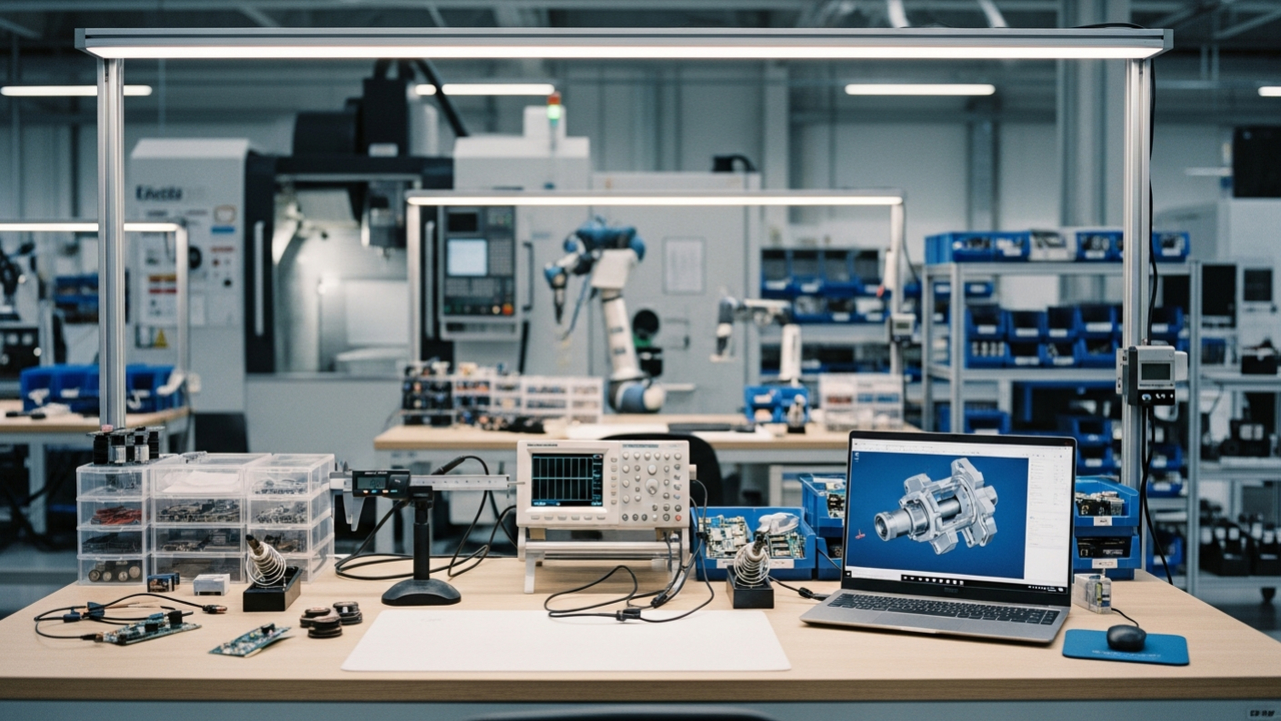
A modern automobile contains roughly 30,000 individual parts. Manufacturing engineers figure out how to source, shape, assemble, and inspect every single one of them so that the finished car rolls off the line safely, reliably, and affordably.
The Numbers Behind the Career
The median annual salary for industrial engineers in 2024 was $101,140.
There were about 351,100 industrial engineer jobs in the U.S. in 2024.
About 25,200 industrial engineer jobs are projected each year through 2034.
Where This Career Is Headed
Manufacturing engineering is in the middle of a profound transformation driven by automation, artificial intelligence, reshoring, and sustainability mandates. The passage of the CHIPS and Science Act, the Inflation Reduction Act, and similar legislation is accelerating the construction of new semiconductor fabrication plants, battery gigafactories, and clean energy component facilities across the United States. At the same time, Industry 4.0 technologies, including digital twins, industrial Internet of Things (IoT), machine learning, and collaborative robotics, are changing what factories look like and what manufacturing engineers need to know. Demand for manufacturing engineers who can bridge traditional production expertise with digital fluency is growing faster than the pipeline of qualified graduates, creating strong career prospects for the next decade and beyond.
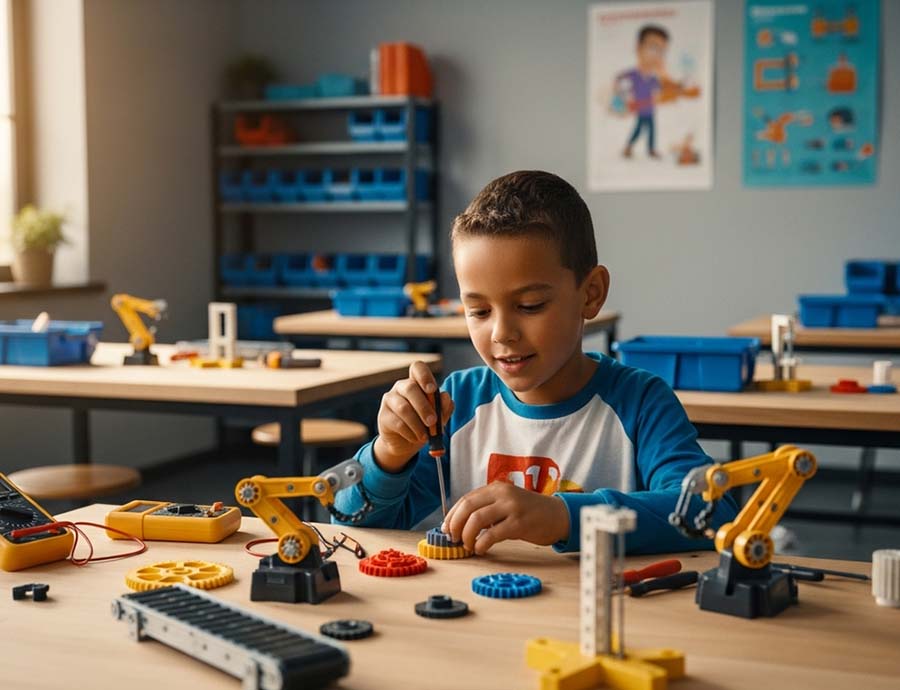
Smart factory and Industry 4.0 integration: Factories are becoming networked environments where machines, sensors, and software communicate in real time. Manufacturing engineers who can design, implement, and optimize these connected systems, including digital twins that simulate production lines before physical changes are made, will be in high demand across every manufacturing sector.
Reshoring and domestic capacity building: Billions of dollars in federal investment are funding new factories for semiconductors, batteries, solar panels, and critical minerals processing in the United States. Each new facility requires manufacturing engineers to design production lines, validate processes, and ramp up output. This wave of domestic factory construction is creating career opportunities at a scale not seen in decades.
Sustainable and circular manufacturing: Regulatory pressure and consumer demand are pushing manufacturers to reduce waste, energy consumption, and carbon emissions. Manufacturing engineers are designing closed-loop systems that recover and reuse materials, optimizing processes for energy efficiency, and integrating renewable energy sources into factory operations. Sustainability expertise is becoming a core competency rather than an optional specialization.

Education & Certification
Manufacturing engineers typically need a bachelor's degree in industrial engineering, manufacturing engineering, mechanical engineering, or a related field. Coursework typically covers materials science, production processes, quality control, statistics, automation, CAD/CAM, and supply chain management. Co-op and internship programs are widely available and highly valued by employers.
Professional certifications can strengthen a manufacturing engineer's credentials. The Society of Manufacturing Engineers (SME) offers the Certified Manufacturing Engineer (CMfgE) and Certified Manufacturing Technologist (CMfgT) credentials. The American Society for Quality (ASQ) offers the Certified Quality Engineer (CQE) and Six Sigma Green and Black Belt certifications. Engineers can also pursue a Professional Engineer (PE) license through their state licensing board after gaining sufficient work experience and passing the required examinations. Lean and Six Sigma training programs are among the most practical credentials for those entering the field.
To Prepare...
Take coursework in math, science, and technology. Algebra, geometry, statistics, physics, and chemistry provide the analytical foundation that manufacturing engineering depends on. Courses in computer science, robotics, or digital fabrication introduce the technical tools used in modern factories.
Get hands-on experience building and making things. Join a robotics team, take a shop or maker-space class, or participate in competitions like FIRST Robotics or Science Olympiad. Hands-on experience with tools, materials, and fabrication processes is the foundation of manufacturing engineering.
Learn CAD software and explore free simulation tools. Practice with free programs like Onshape, Fusion 360, or Tinkercad to design parts and assemblies. Many of these platforms include simulation features for testing designs before building. CAD familiarity is expected of every manufacturing engineering student and professional.
Spotlight: Explore the Life of a Manufacturing Engineer
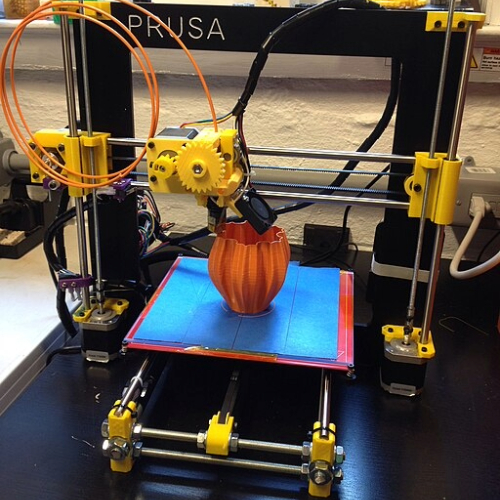
3D Printing: The Invention That Builds Things Layer by Layer
Learn More
Henry Ford
Learn More
Eli Whitney
Learn MoreExplore more resources for a future Manufacturing Engineer

The Cotton Gin: A History Just for Kids
KidCaps
Why We Picked It
Career Connection
Manufacturing engineers must consider not just the efficiency of their innovations but their broader social and economic impacts, and the cotton gin's story is one of the most powerful historical examples of how a new production technology can ripple far beyond its inventor's intentions.

SCRIB3D Advanced 3D Printing Pen with 20 Feet of Filament, Stencil Book, and Project Guide
Why We Picked It
Career Connection
Manufacturing engineers design physical objects before committing them to production, and building structures by hand with a 3D pen develops the spatial reasoning and material thinking that make someone effective at designing parts for real manufacture.

ELI WHITNEY An Inspirational Story for Kids: The Inventor Who Changed the World (An Inspirational Inventors Stories for Kids)
K. James, Lilly
Why We Picked It
Career Connection
Manufacturing engineers depend on interchangeable parts, the principle Whitney pioneered, to build products that can be assembled, repaired, and scaled reliably, making his insight one of the foundational ideas the entire profession is built on.