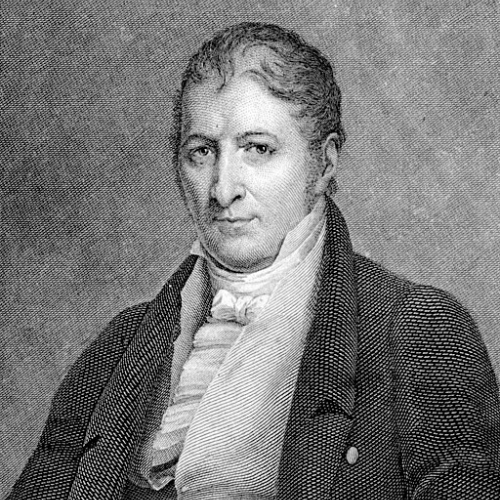
Photo: Charles Bird King, Public domain, via Wikimedia Commons
Who He Is
Eli Whitney grew up on a farm in Westboro, Massachusetts, where he showed an early talent for building and fixing things. As a teenager during the Revolutionary War, he taught himself to make nails using a device he built, and later crafted walking canes and hatpins when he spotted demand for them. He worked his way through Yale College, graduating in 1792, and shortly afterward traveled to the South, where he learned about the enormous difficulty of separating seeds from cotton by hand. Within months, he had designed and built the cotton gin, a machine that could clean more cotton in an hour than multiple workers could process in a day.
Why He Matters
Whitney's most lasting contribution to manufacturing was not the cotton gin itself, but what came next. After struggling for years to profit from the gin (farmers copied his design and his patent was widely ignored), Whitney turned to arms manufacturing. He secured a government contract to produce 10,000 muskets and set out to build them using a revolutionary approach: instead of having skilled craftsmen handmake each complete weapon, he designed milling machines that allowed workers to produce identical, standardized parts that could be assembled interchangeably. This concept of interchangeable parts became the foundation of modern manufacturing, making it possible to produce goods faster, repair them more easily, and train workers more efficiently. Every factory and assembly line in the world today traces back to the principles Whitney helped establish. It is also important to understand that Whitney's cotton gin had a painful legacy: by making cotton enormously profitable, it contributed directly to the expansion of slavery in the American South, a reminder that powerful inventions can have consequences their creators never intended.