Photo: Ilka Hartmann, Public domain, via Wikimedia Commons
Who He Was
Paul Ehrlich was a German physician and scientist who spent his career in the late 19th and early 20th centuries developing the laboratory techniques and theoretical frameworks that transformed medicine from a largely observational practice into an experimentally grounded science. Born in 1854 in what is now Poland, he showed an early fascination with staining tissues with chemical dyes, which led him to develop techniques for differentiating blood cell types under a microscope. His work became the foundation of hematology and is still used in clinical laboratories today. He went on to pioneer the concept of the immune system's ability to produce specific antibodies against specific pathogens, contributing to the development of serology. He later led the team that developed Salvarsan, the first modern chemotherapy agent, a laboratory-synthesized compound that could selectively target and kill the bacterium causing syphilis. He was awarded the Nobel Prize in Physiology or Medicine in 1908 for his work on immunity. His concept of a "magic bullet," a precisely targeted laboratory compound that could attack a specific pathogen without harming the patient, became one of the organizing principles of modern pharmacology and laboratory medicine.
Why He Matters
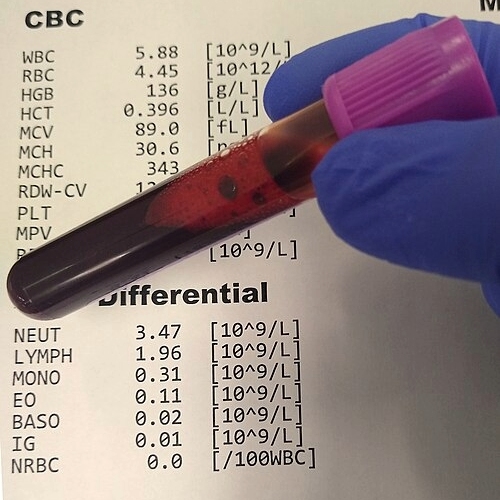
Paul Ehrlich's work sits at the origin of nearly everything that modern clinical laboratories do. The blood cell differentiation techniques he developed are performed millions of times a day in laboratories worldwide as part of routine complete blood counts. His theoretical framework for understanding how the immune system responds to pathogens underlies the serological and immunological testing that laboratory technicians use to diagnose infections and autoimmune diseases, and to determine blood type compatibility. His idea that chemistry could be harnessed to precisely target specific biological threats is the conceptual foundation of both modern antibiotics and targeted cancer therapy. The laboratory as a tool of medicine, rather than just a place of observation, is substantially his invention.