
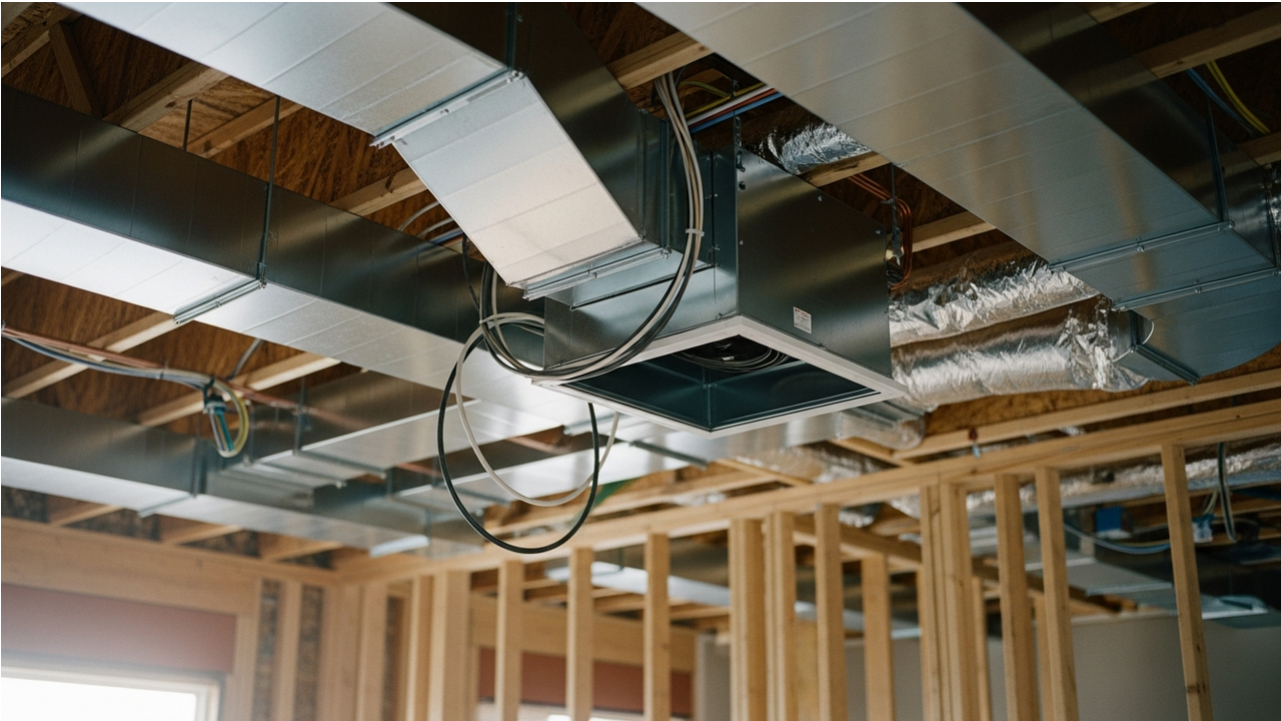
Did You Know?
Before air conditioning was invented, movie theaters were among the first public places to have cooling systems. People would go to the movies just to escape the summer heat, which is how "summer blockbusters" got their start!
The Numbers Behind the Career
About 40,100 job openings for HVAC technicians are projected each year through 2034.
The 2024 median salary for HVAC technicians was $59,810.
There were about 425,000 HVAC technicians working in the U.S. in 2024.
Where This Career Is Headed
HVAC is evolving rapidly as climate concerns, energy efficiency, and smart technology reshape the industry. Modern systems increasingly include computerized controls, Wi-Fi connectivity, and sensors that allow remote monitoring and diagnostics. Heat pumps, which can both heat and cool efficiently, are growing in popularity as an alternative to traditional furnaces and air conditioners.
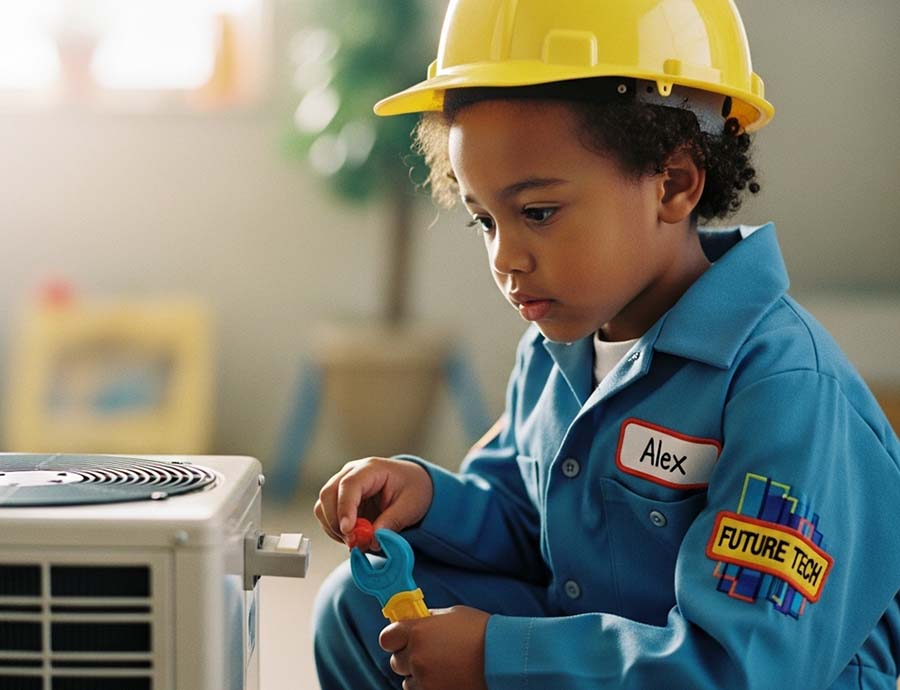
Green energy systems: Technicians who specialize in heat pumps, geothermal systems, and solar-powered HVAC are in growing demand as buildings shift toward more sustainable heating and cooling.
Smart building technology: HVAC systems with Internet of Things (IoT) sensors, automated controls, and integration with building management systems require technicians who are comfortable with both mechanical and digital skills.
Commercial and industrial specialization: Large-scale systems in hospitals, data centers, and manufacturing facilities offer higher pay and more complex technical challenges for experienced technicians.
Education & Certification
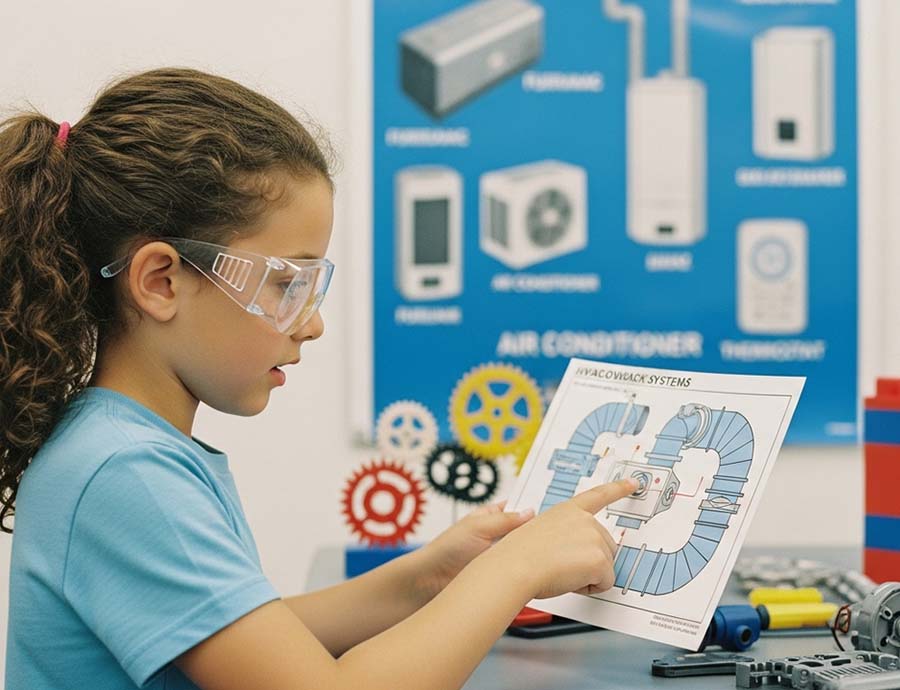
HVAC technicians typically need a high school diploma and then complete postsecondary training through a trade school, community college, or apprenticeship program. Training programs usually last from six months to two years and combine classroom instruction with hands-on practice. Apprenticeships, which last three to five years, allow you to earn money while learning on the job under experienced technicians. All technicians who work with refrigerants must obtain EPA Section 608 certification. Many states require additional licenses, and voluntary certifications from organizations like NATE (North American Technician Excellence) can increase job opportunities and pay.
To Prepare...
Take math, physics, and shop classes in high school. Understanding electrical circuits, thermodynamics, and mechanical systems provides a foundation for HVAC training.
Develop hands-on skills by working on projects at home, helping with repairs, or taking apart and reassembling mechanical devices. Comfort with tools and physical work is essential.
Research trade schools and apprenticeship programs in your area. Some programs can be started while still in high school, giving you a head start on your career.
Spotlight: Explore the Life of a HVAC Technician

Explore more resources for a future HVAC Technician

The Coolest Inventor: Willis Haviland Carrier and His Air Conditioner (Inventors at Work!)
Eldridge, Alison | Eldridge, Stephen
Why We Picked It
Career Connection
HVAC technicians install and maintain the air conditioning systems Carrier invented, and understanding where that technology came from connects young readers to the scientific curiosity and hands-on tinkering at the heart of the trade.

The World in the Comfort Zone: Willis Carrier
Webster, Michael
Why We Picked It
Career Connection
HVAC technicians work daily with the principles and systems Carrier developed, from psychrometrics to refrigerant cycles, and this biography provides the scientific and historical foundation behind the technology they maintain and repair.

Cool: How Air Conditioning Changed Everything
Basile, Salvatore
Why We Picked It
Career Connection
HVAC technicians install and maintain the climate control systems at the center of this book's story, and understanding how profoundly those systems have reshaped human life gives the career a historical and social weight that goes well beyond a service call.