Photo: 100th Anniversary Press Kit - Carrier Corp, Public domain, via Wikimedia Commons
Who He Is
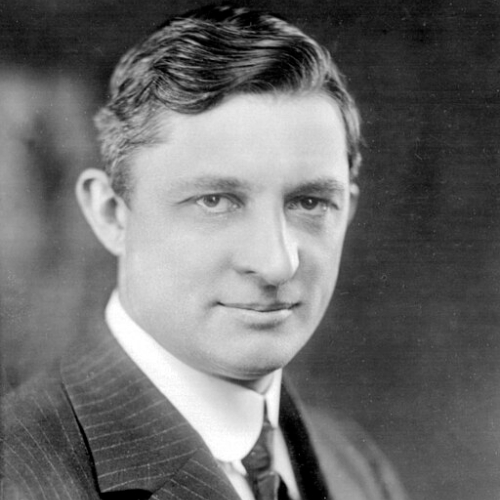
Willis Haviland Carrier (1876-1950) was an American engineer who invented modern air conditioning in 1902. Born on a farm in Angola, New York, Carrier worked his way through Cornell University, graduating with a degree in mechanical engineering in 1901. Just one year later, while working at the Buffalo Forge Company, he was asked to solve a humidity problem at a Brooklyn printing plant where the paper kept wrinkling in the summer heat. His solution controlled both temperature and humidity, laying the foundation for modern air conditioning. In 1915, Carrier and six other engineers pooled $32,600 to start the Carrier Engineering Corporation.
Why He Matters
Willis Carrier's invention transformed how humans live and work. Before air conditioning, productivity dropped sharply during summer, and cities in hot climates struggled to expand. His 1911 paper, "Rational Psychrometric Formulae," became the foundation for scientific HVAC design and remains in use today. Air conditioning enabled everything from modern hospitals and computer data centers to summer blockbuster movies, with theaters among the first to adopt cooling technology. Time magazine named Carrier one of the 100 most influential people of the 20th century in 1998. The company he founded remains a global leader in heating, cooling, and refrigeration, employing tens of thousands worldwide. His work created an entire industry and reshaped human settlement, making life in hot climates much more comfortable and productive.