
Did You Know?
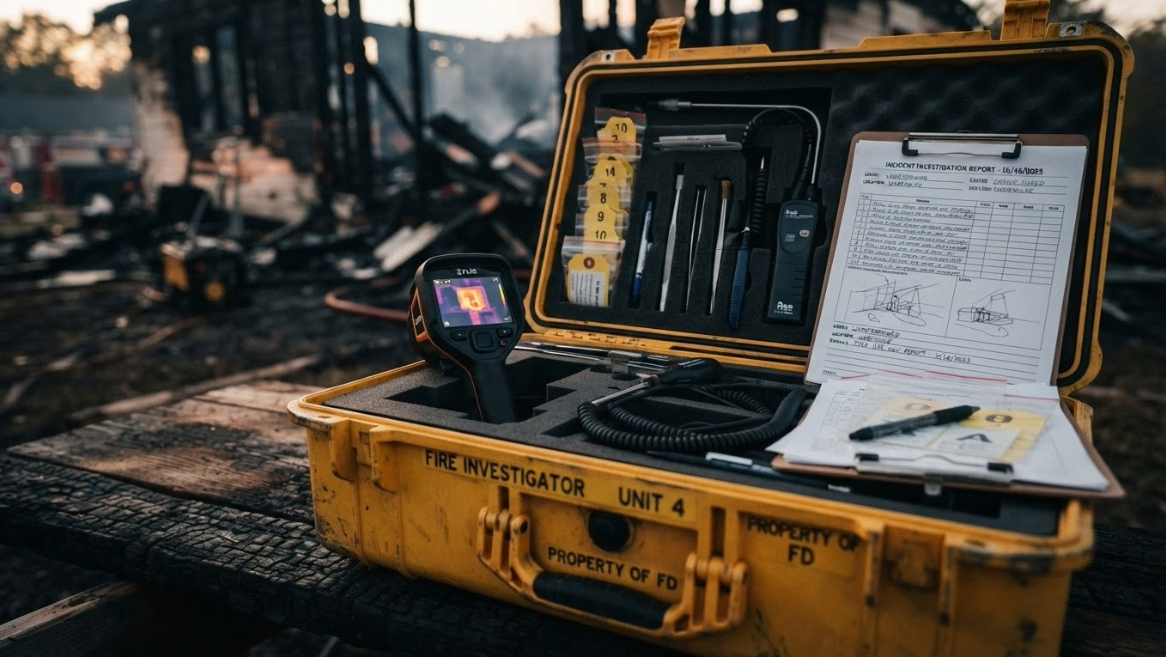
A pile of rags soaked in wood stain or linseed oil can catch fire all by itself. As the oil reacts with oxygen in the air, it gives off heat, and in a tight pile that heat can build until the rags burst into flames.
What Fire Investigators Really Do
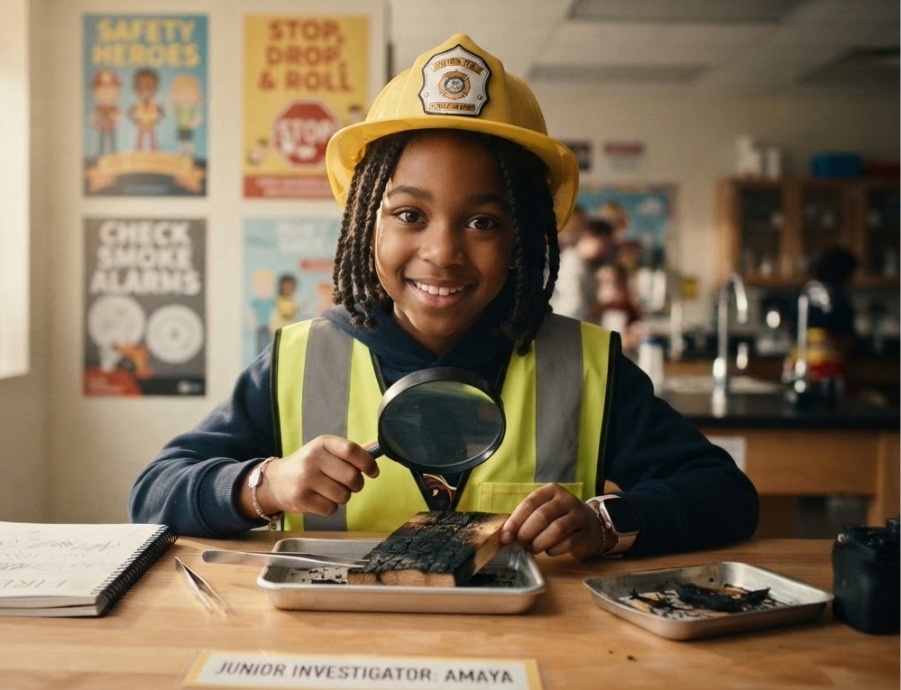
The fire is out, the firefighters are packing up, and the kitchen smells like wet smoke. You step inside with your helmet, gloves, flashlight, and clipboard, and the room looks like a puzzle with the pieces scattered. Your job starts now: figure out where the fire began and what made it start. You take pictures of every wall and look for clues, like which things burned the most and which hardly burned at all. By the end of the day, you have a list of ideas and a plan for testing each one.
Fire investigators use science to figure out why a fire started. They learn how fire needs fuel, heat, and air, so they can follow the clues back to the spot where it began. Most home fires turn out to be accidents, like a cooking mistake or a worn-out cord, and some have causes no one can prove. Investigators share what they learn so families, builders, and companies can make homes safer. If you love figuring out how things work and testing your ideas, you might already be thinking like a fire investigator.
You Might Love This If...
Skills That Follow You Everywhere
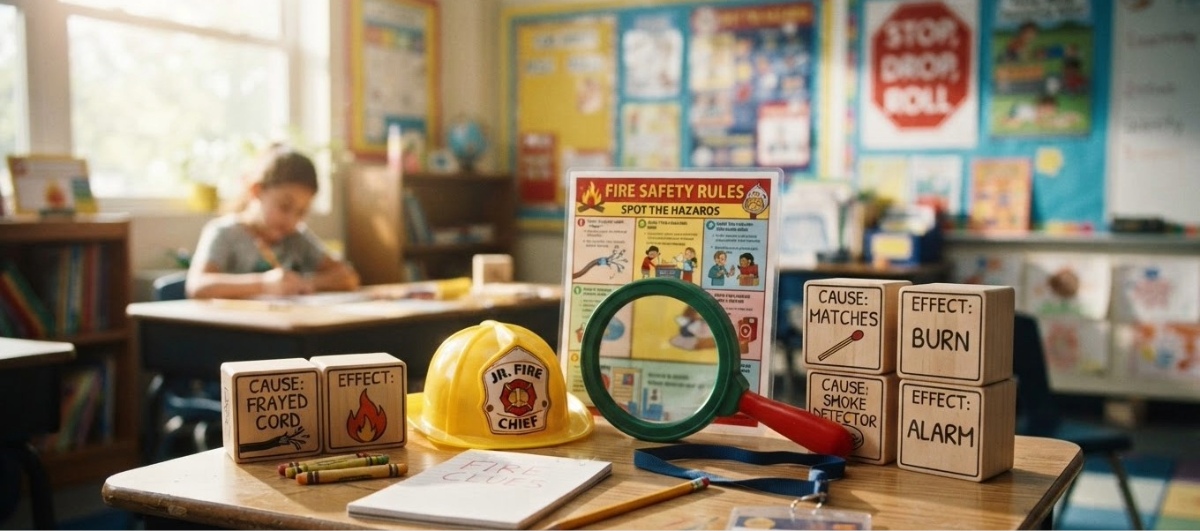
Fire investigators build skills that reach well beyond the scene of a fire. They learn to weigh evidence before they decide, to change a plan when conditions change, and to do careful work while the clock is running. These abilities are valuable in any career where getting the answer right matters.
Critical Thinking
A fire investigator starts with a list of possible causes, such as a heater, a wire, or a candle, and tests each one against the evidence. A cause stays on the list only if it explains every clue at the scene, and a favorite theory is dropped the moment a clue contradicts it. When the evidence cannot prove a cause, the investigator says so instead of guessing.
Time Management
A fire scene does not stay the same for long, because rain, repairs, and the building itself can change or destroy clues. Fire investigators plan their search, work through the scene in a set order, and decide what to photograph and collect first. They also balance careful work with the needs of families and businesses waiting for answers.
Adaptability
Every fire scene is different, from a kitchen to a warehouse, and each one comes with its own hazards, like weakened floors, wet debris, or soot that hides what is underneath. When a building is not safe to enter, investigators change the plan and study photos and firefighters’ reports first. A theory that fit the last scene may not fit the next one, so they start each investigation with fresh eyes.