
Did You Know?
In July 2000, the da Vinci Surgical System became the first complete robotic system cleared by the FDA for general laparoscopic surgery in the United States. The surgeon sits at a console across the room and uses hand controls to guide the robotic arms.

What Surgical Technologists Really Do
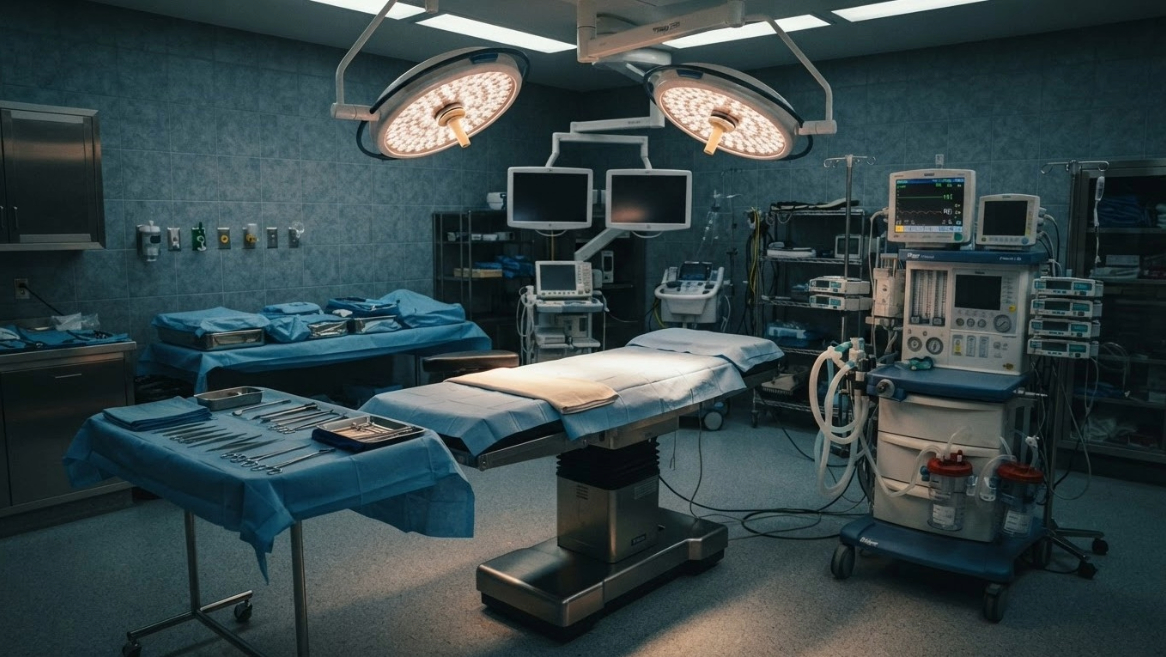
Imagine a room where everything must be perfectly clean, every tool must be in exactly the right place, and a doctor is about to fix something inside a person's body. Someone has to prepare that room. Someone has to hand the doctor each tool at the exact moment it is needed, without being asked. That someone is a surgical technologist. Surgical technologists help surgeons during operations. Before surgery starts, they set out all the instruments and make sure they are sterile, meaning completely free of germs. During surgery, they stand next to the surgeon, pass tools, hold things steady, and track every sponge and needle so nothing gets lost.
Surgical technologists have to know the names of hundreds of instruments and what each one does. They have to stay calm, pay close attention, and think one step ahead, because a good surgical technologist knows what the surgeon needs before the surgeon says it. If you like organizing things, are good at following rules that really matter, and want to help people get better, you might have exactly what it takes.
You Might Love This If...

Skills That Follow You Everywhere
Surgical technologists build skills that reach well beyond the operating room. They learn to keep dozens of details in order when the stakes are high, to work as one unit with people they may have just met, and to adjust instantly when a plan changes. Those abilities are valuable in any career where preparation, teamwork, and composure decide whether things go right.
Adaptability
Even a routine case can change in seconds. Bleeding, an unexpected finding, or a piece of equipment that fails means the plan is different now, and the surgical technologist has to adjust without hesitation, pulling new instruments, reorganizing the field, and staying calm while doing it. Practicing that kind of composure every day builds a steadiness that serves people well in any job where things do not go according to plan.
Teamwork
Nobody performs surgery alone. The surgeon, the anesthesia provider, the circulating nurse, and the surgical technologist each have a defined role, and the operation only works if each one does their part and communicates clearly. Surgical technologists learn to read the room, to anticipate what a teammate will need, and to speak up when something is not right, even to someone with far more authority. Learning to be a reliable part of a high-functioning team is one of the most transferable skills a person can develop.
Organization
A single operation can involve well over a hundred instruments, and every one of them has to be sterile, in the right place, and accounted for at the end. Surgical technologists set up the room from a surgeon's preference card, arrange trays in a logical order, and track every sponge, needle, and instrument through counts before, during, and after the case. That habit of building a system, checking it, and trusting it under pressure is the same skill that makes people excellent at running projects, events, and businesses.