
Did You Know?
In July 2000, the da Vinci Surgical System became the first complete robotic system cleared by the FDA for general laparoscopic surgery in the United States. The surgeon sits at a console across the room and uses hand controls to guide the robotic arms.
The Numbers Behind the Career
About 8,600 surgical assistant and technologist job openings are projected each year over the next decade.
There were about 118,400 surgical technologists working in the U.S. in 2025.
The median salary for surgical technologist in the U.S. was $64,650.
Where This Career Is Headed
Surgical technology is being shaped by an aging population that needs more surgery, by procedures that keep getting less invasive, and by operating rooms that are filling up with technology. Robotic and laparoscopic techniques have become routine in many specialties, and surgical technologists prepare, drape, and troubleshoot that equipment, so the job increasingly rewards comfort with complex machines alongside traditional instrument skills. More procedures are also moving out of hospitals and into outpatient surgery centers, opening a wider range of workplaces and schedules. At the same time, some states now regulate who may work as a surgical technologist, and most employers require certification, which is raising the field's professional standing. The surgical technologist of the next decade will need the same sterile discipline and anticipation the job has always demanded, along with the flexibility to keep learning new equipment and procedures throughout a career.

Faster-than-average job growth, driven largely by the surgical needs of an aging population, means steady demand for trained surgical technologists across hospitals and outpatient centers.
Robotic and minimally invasive surgery are creating a need for technologists who specialize in preparing and supporting advanced equipment, a skill set that commands respect on the surgical team.
Experienced surgical technologists can advance to surgical first assistant, a role with greater responsibility and higher pay, or move into teaching, sterile processing leadership, or work with medical device companies.

Education & Certification
Surgical technologists typically complete a certificate, diploma, or associate degree program in surgical technology at a community college, technical school, university, or hospital. Programs combine classroom study in anatomy, physiology, microbiology, and surgical procedures with lab training and supervised clinical rotations in real operating rooms. Choosing a program accredited by the Commission on Accreditation of Allied Health Education Programs (CAAHEP) or the Accrediting Bureau of Health Education Schools (ABHES) matters, because graduates of those programs, along with graduates of military surgical technology programs, are the ones eligible for the national certification exam.
The main credential is the Certified Surgical Technologist (CST), awarded by the National Board of Surgical Technology and Surgical Assisting (NBSTSA). The four-hour exam has 175 multiple-choice questions, 150 of which are scored. Certified technologists keep their credential current through continuing education or by retaking the exam. A small number of states regulate surgical technologists, and many employers prefer or require certification even where the law does not. Technologists who want to advance can complete an accredited surgical assisting program and earn the NBSTSA's Certified Surgical First Assistant (CSFA) credential.
To Prepare...
Take biology, chemistry, and, if your school offers them, anatomy and physiology or health science courses, which cover the exact material surgical technology programs build on.
Look for a health science or medical careers pathway at your high school, many of which include clinical observation, medical terminology, and infection control training.
Build habits of precision and stamina in whatever you do: a sport, an instrument, a job. Surgical technologists need steady hands, sustained focus, and the ability to stand and concentrate for hours.
Spotlight: Explore the Life of a Surgical Technologist
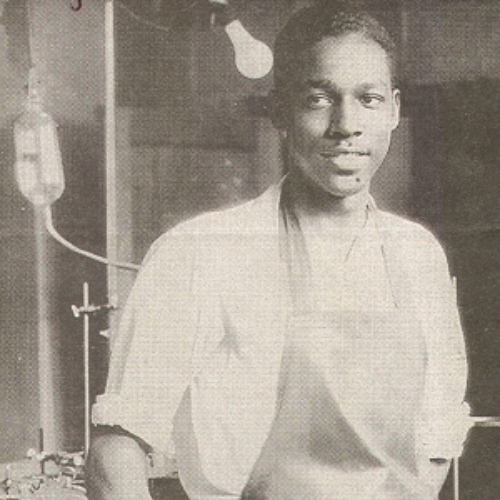
Vivien Thomas
Learn More
Joseph Lister
Learn More