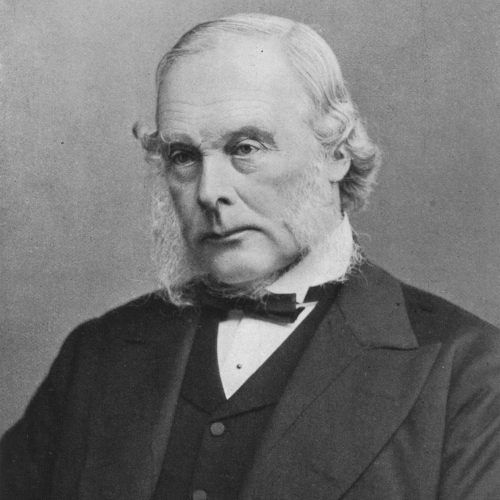
Photo: Weltrundschau zu Reclams Universum 1902, Public domain, via Wikimedia Commons
Who He Was
Joseph Lister was born in 1827 in England and raised in a Quaker family, which at the time limited which universities would admit him. He trained at University College Hospital in London and became a professor of surgery in Glasgow, Scotland, in 1860. In that era, surgeons operated in street clothes with unwashed hands and instruments, and nearly half of all patients died of infection after surgery. Lister read the work of Louis Pasteur on germs and reasoned that if microorganisms caused infection, killing them could prevent it. He began treating wounds and instruments with carbolic acid and published his results in the medical journal The Lancet in 1867. Between 1864 and 1866, before his antiseptic method, 46 percent of his surgical patients died. From 1867 to 1870, 15 percent did. Lister's methods spread across the world, and in 1897 he became the first surgeon ever raised to the British peerage. He died in 1912.
Why He Matters
Every rule a surgical technologist follows about scrubbing, gowning, gloving, and protecting the sterile field descends directly from Joseph Lister. He turned surgery from a last resort that killed almost as many people as it saved into a treatment patients could survive, and he did it not with a new operation but with cleanliness. The sterile field that surgical technologists guard so carefully is Lister's idea, refined over a century and a half. For young people drawn to this career, he is proof that the unglamorous work of keeping germs out is some of the most important work in all of medicine.