Photo: not indicated, Public domain, via Wikimedia Commons
Who She Was
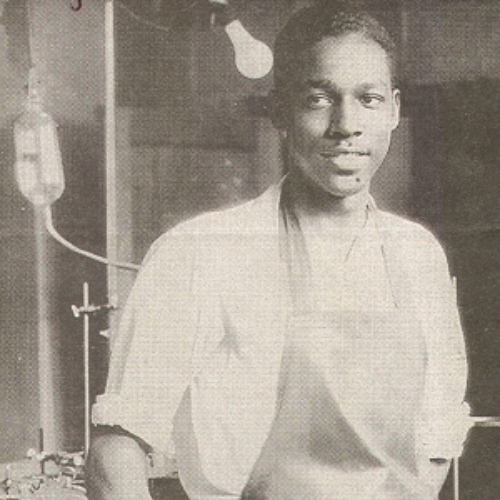
Vivien Thomas was born in 1910 in rural Louisiana and grew up in Nashville, Tennessee, where he trained as a carpenter and saved money to attend college and become a doctor. The Great Depression wiped out his savings. In 1930, he took a job as a laboratory assistant to a young surgeon named Alfred Blalock at Vanderbilt University, and within a few years he was doing surgical research that most trained physicians could not match, even though the hospital classified and paid him as a janitor. When Blalock moved to Johns Hopkins in 1941, Thomas went with him. Working with pediatric cardiologist Helen Taussig, they developed an operation to save "blue babies," infants born with a heart defect that starved their blood of oxygen. Thomas perfected the technique in the laboratory and taught it to Blalock. On November 29, 1944, when Blalock performed the first operation on a human patient, an 18-month-old girl, Thomas stood on a step stool behind him, guiding him through each step. Thomas went on to train generations of surgeons at Johns Hopkins. In 1976, the university awarded him an honorary doctorate and named him an instructor of surgery. He died in 1985.
Why She Matters
Vivien Thomas never went to medical school, yet a surgeon at the top of his field would not begin a historic operation without him in the room. His story is the clearest example in medical history of what a surgical technician's skill, preparation, and judgment can mean at the operating table. It is also a story about a Black man who did extraordinary work in an era that refused him credit for decades, and who kept doing it anyway. For young people, Thomas is a reminder that the person standing beside the surgeon can be just as essential as the surgeon, and that mastery of the craft speaks for itself, even when recognition comes late.