Did You Know?
AR/VR developers working on medical applications have built surgical training simulations so realistic that hospitals are using them to train surgeons before they ever touch a real patient, reducing errors and improving outcomes in actual operating rooms.
The Numbers Behind the Career
About 1,500 positions for AR/VR developers are projected each year over the next decade.
There were about 25,000 AR/VR developers working the U.S. in 2024.
The median annual salary for AR/VR developers in the U.S. in 2024 was $110,000.
Where This Career Is Headed
Augmented and virtual reality development is moving from a niche gaming technology into a foundational layer of how humans interact with digital information across nearly every industry. The hardware is becoming lighter, more affordable, and more powerful with each generation, removing the barriers that kept early headsets from mainstream adoption and opening the technology to entirely new populations of users. At the same time, the convergence of AR/VR with artificial intelligence is enabling experiences that adapt in real time to a user's behavior, emotional state, and physical environment in ways that were not technically possible just a few years ago. The developers who will define this field over the next decade are the ones being trained right now.
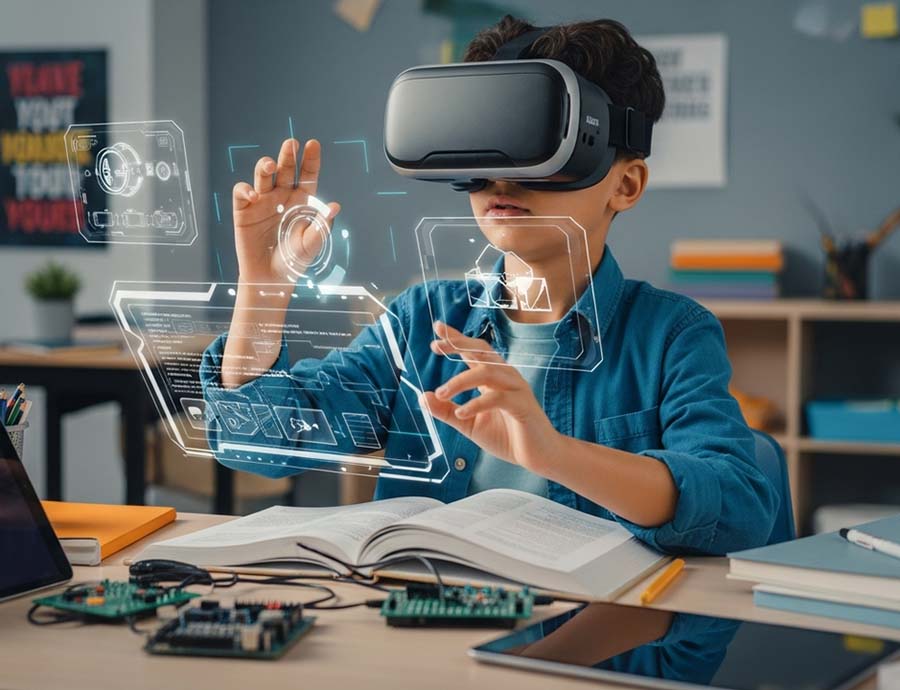
As neural interface technology matures alongside AR/VR hardware, developers who understand how to build experiences that respond to brain signals and biometric data will be positioned at the frontier of the most significant shift in human-computer interaction since the touchscreen.
The emergence of persistent shared virtual spaces, where millions of people work, socialize, and create together in the same digital environment simultaneously, will require a new generation of developers who can build infrastructure and experiences at a scale and level of complexity the industry has never attempted before.
As AR glasses become as common and unobtrusive as smartphones, the ability to layer useful digital information onto every physical environment will create demand for developers who can design contextually aware experiences that know where you are, what you are doing, and what you need before you ask.
Education & Certification
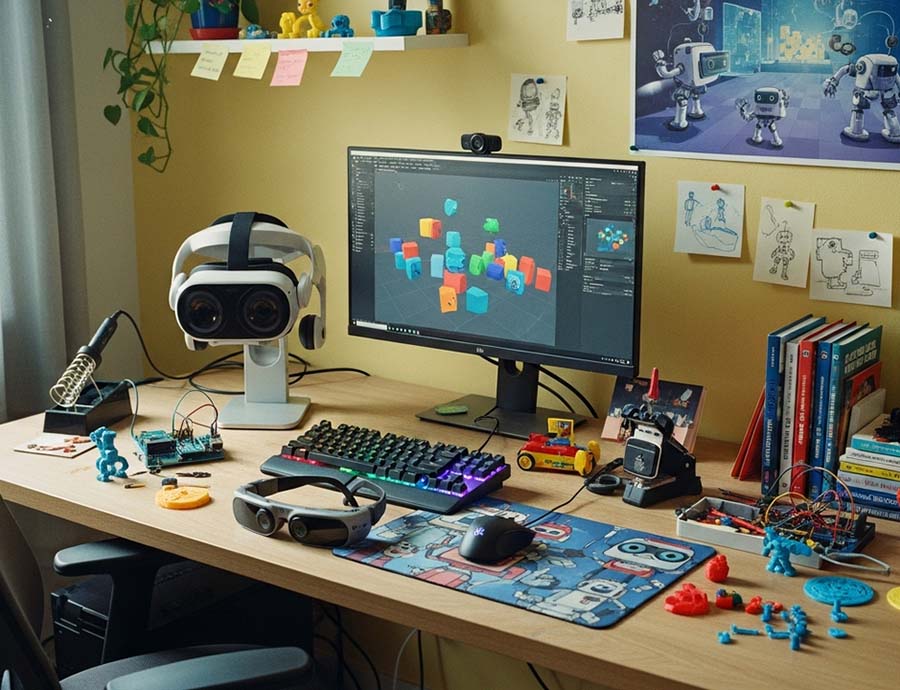
AR/VR development draws people from a wide range of educational backgrounds, reflecting how new and interdisciplinary the field is. Many developers enter the field with a bachelor's degree in computer science, software engineering, or game design, where coursework in programming, 3D mathematics, and real-time graphics builds a strong technical foundation. Others come from design, animation, or film and develop their technical skills through self-study, bootcamps, or online programs focused on Unity or Unreal Engine, the two dominant platforms. A growing number of universities now offer interactive media degrees with AR/VR concentrations, combining technical training with design and user experience principles that suit the interdisciplinary nature of the work.
Formal certification is not yet standardized, but platform-specific credentials are increasingly valued. Unity and Unreal Engine both offer official certification programs that validate proficiency with their engines and are recognized across the gaming, enterprise, and immersive media industries. Many developers also pursue certifications in UX design, 3D modeling, or cloud computing, depending on what they want to build. Still, a strong portfolio of shipped projects remains the single most important signal of readiness for professional work.
To Prepare...
Take courses in mathematics, particularly linear algebra and geometry, which underpin the spatial calculations that power every AR/VR experience, alongside computer science fundamentals that will serve you across any development platform.
Explore game development electives or independent study in Unity or Unreal Engine, both of which are free to download and offer extensive learning resources. Hands-on experience building interactive 3D environments is the most direct preparation for AR/VR development work.
Look into undergraduate programs in computer science, game design, or interactive media that include AR/VR coursework or have dedicated immersive technology labs, as access to professional-grade headsets and project-based learning environments makes a significant difference in early career preparation.