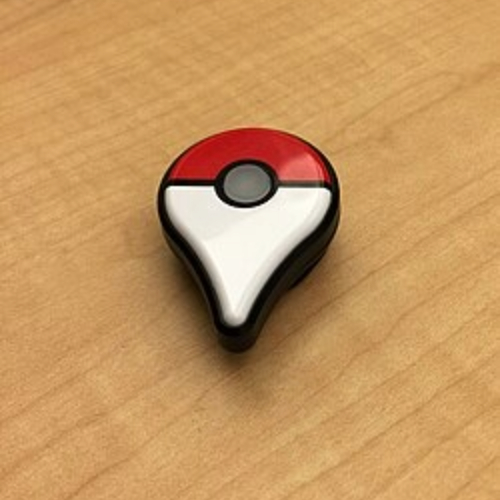
Photo: Gieson Cacho, CC BY 2.0 <https://creativecommons.org/licenses/by/2.0>, via Wikimedia Commons
What It Is
On July 6, 2016, hundreds of millions of people stepped outside to catch fictional creatures, and augmented reality went from a laboratory concept to a global phenomenon overnight. Niantic's Pokémon Go used a smartphone's camera and GPS to place virtual Pokémon characters in real-world locations for players to find and catch, reaching an estimated 500 million downloads within a month and making it the fastest app in history to reach that milestone. Players flooded parks, landmarks, and city streets at all hours, causing traffic jams, overwhelming servers, and generating news coverage in countries that had never meaningfully discussed augmented reality before. The game was built on mapping technology developed through Google's Street View project and years of location-based game development at Niantic, combining infrastructure that had been quietly developing for years with a cultural property that instantly made the technology real to hundreds of millions of people simultaneously.
Why It Matters
Pokémon Go did something no laboratory demonstration or technology conference had managed to do: it made augmented reality feel natural and joyful to people who had never thought about it before. In one month, it demonstrated that AR could change how people move through physical space, discover their surroundings, and connect with strangers over a shared digital experience. For AR/VR developers, the launch of Pokémon Go is the clearest proof of concept the field has ever produced, showing that when the technology is invisible enough, and the experience is compelling enough, the boundary between the digital and physical world disappears entirely. Every developer working on location-based AR, social AR, and mobile immersive experiences today is building on the audience, the infrastructure, and the proof of concept that Pokémon Go created.