

About Artist
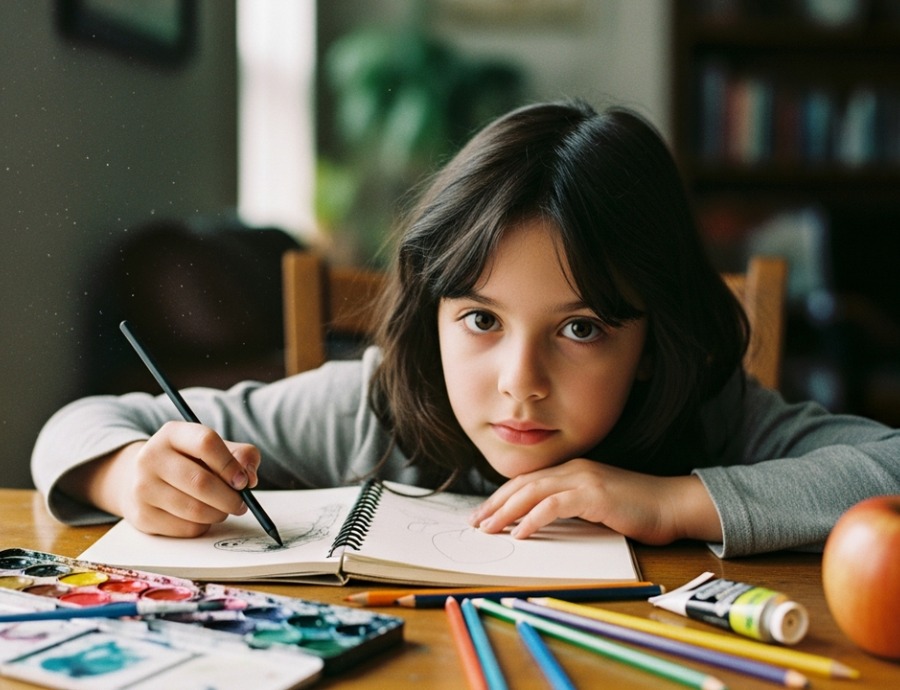
Imagine sitting at a table covered in paints, brushes, pencils, and scraps of colored paper. You have an idea in your head, maybe a creature no one has ever seen before, or a place you visited in a dream, and your job is to turn that idea into something other people can see and feel. You pick up a brush, mix two colors together, and something unexpected happens on the page. That is what it feels like to be an artist: taking what exists only in your imagination and making it real.
Artists create visual work that communicates ideas, tells stories, or captures emotions. Some artists paint on canvas, some sculpt with clay or metal, some draw illustrations for books and magazines, and some create entirely on a computer or tablet. Their work appears in museums, on the walls of buildings, in the games you play, in the movies you watch, and on the covers of the books you read. Being an artist takes practice, patience, and the willingness to try something that might not work the first time. Every sketch, every failed experiment, and every finished piece teaches the artist something new about how to express what they see in the world and what they feel inside
You Might Love This If...
- Observing tiny details closely, such as patterns on leaves, folds in clothing, or the way shadows curve is exciting.
- You turn story ideas into visuals, showing your ideas instead of only telling them.
- You fill your notebooks with doodles, characters, or imaginative maps.
- Noticing subtle differences in color, like many shades of blue in the sky, and little details is fascinating to you.
Explore more resources for a future Artist:
More Than a Job
Being an artist helps you develop important skills that are useful in many careers, such as creativity, communication, and time management. Artists learn to generate original ideas, share messages through their artwork, and manage their time to complete projects. These skills work together every day as artists create, improve, and finish their work.