
Did You Know?
Students as young as fourth grade design and build their own wind turbines for the KidWind Challenge, then test them in a wind tunnel while judges from the wind industry watch. More than 4,000 students took part in the 2017 to 2018 season, and winners advance to a national event.
How to Get Started
Wind turbine work rewards people who like machines, are comfortable off the ground, and take safety seriously. You can start building all three long before you set foot on a wind farm. Understanding how a turbine captures wind, building and testing small ones yourself, and getting comfortable with heights and tools will give you a real head start on a wind energy program.
Explore the Basics
Make paper pinwheels with three, four, and six blades and test them in the same breeze, from a fan or an open window. Which spins fastest? Which spins most smoothly? Real wind turbines almost always have three blades, and engineers chose that number on purpose. Then look at the shape of a real turbine blade in a photo. It is not flat like a pinwheel. Try to guess why.
Try It Out
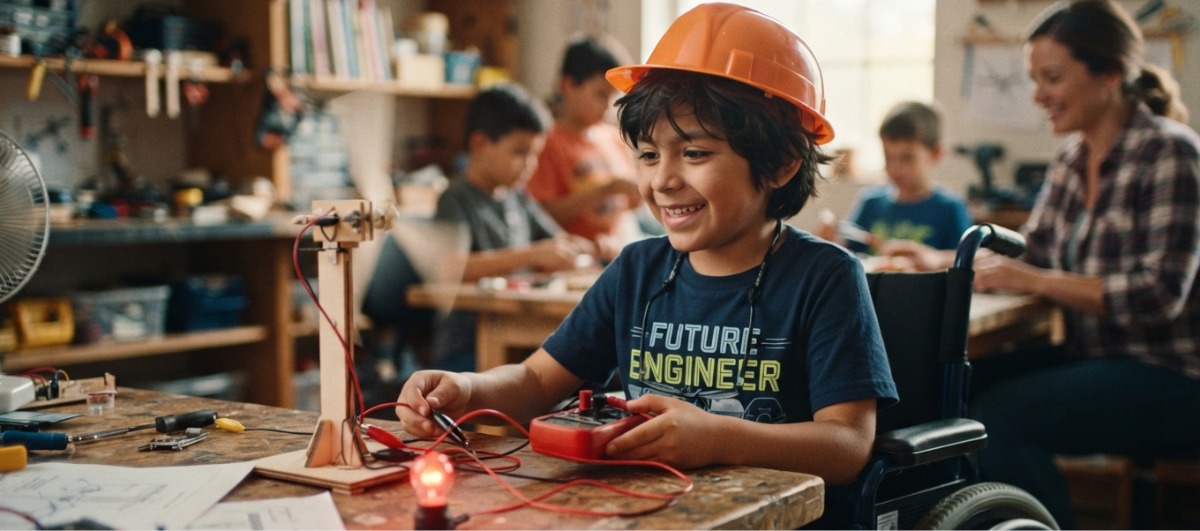
With an adult, build a small model turbine from a science kit or from a small motor, a cork, and craft-stick blades, and connect it to a little light. When the light glows, you have made electricity from moving air. Change the number, length, or angle of the blades and watch what happens to the light. Write down what worked best.
Join the Community
Ask your teacher about the KidWind Challenge, a wind turbine design competition open to teams starting in fourth grade. Some schools have a small wind turbine of their own through the Department of Energy's Wind for Schools program. Ask whether one is near you, and ask a parent to take you to see a real wind farm from the road. Standing under one is the best way to understand how big they are.