
Did You Know?
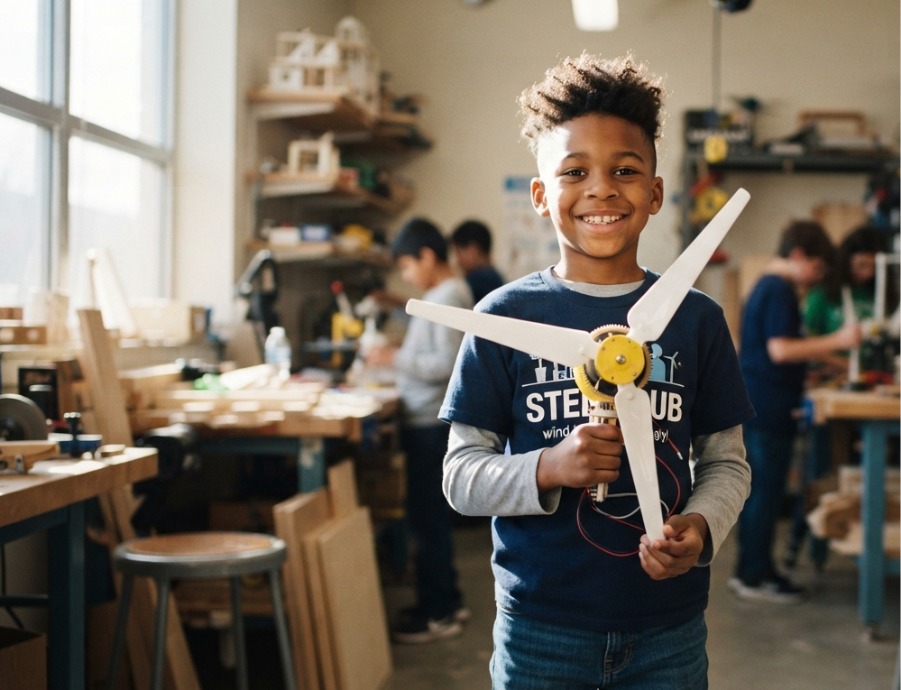
Students as young as fourth grade design and build their own wind turbines for the KidWind Challenge, then test them in a wind tunnel while judges from the wind industry watch. More than 4,000 students took part in the 2017 to 2018 season, and winners advance to a national event.
What Wind Turbine Technicians Really Do
Imagine standing at the bottom of a wind turbine so tall that the blades look like they are touching the clouds. You clip your harness to the ladder and start climbing. At the top, you open a hatch and crawl into a room full of gears and wires. One part has worn out. You swap in a new one, and the giant blades begin to turn again. Now the wind is making electricity for thousands of homes.
A wind turbine technician keeps wind turbines working. You check oil, tighten bolts, test wires, and fix broken parts. You use hand tools and computers. You work high in the air and out in the wind, so safety comes first every single day. If you like climbing, machines, and helping make clean energy, this could be a fit.
You Might Love This If...

Skills That Follow You Everywhere
Working as a wind turbine technician builds skills that carry into any technical career. Wind techs learn to trace a fault code to its cause, communicate precisely when a mistake could hurt someone, and keep going through long climbs, bad weather, and weeks away from home.
Critical Thinking
A wind turbine technician uses critical thinking every time a turbine shuts down. A single alert can have many causes: a sensor, a wiring fault, a hydraulic leak, a worn bearing, or a software setting. The technician reads the data, forms a theory, tests it, and rules things out before replacing anything, because a wrong guess means another 200-foot climb. BLS lists problem-solving as one of the most important qualities for the job, and it starts with thinking clearly under pressure.
Resilience
A wind turbine technician uses resilience on nearly every shift. The job means climbing towers with tools on your back, working in the confined space of a nacelle, dealing with extreme heat and cold, and sometimes staying on a rural site or an offshore vessel for days or weeks. Technicians build the physical stamina and the mental steadiness to do careful, precise work at the end of a long, hard climb.
Communication
A wind turbine technician uses communication because the work is done in pairs and at heights where a misunderstanding can be dangerous. Wind techs talk through each step with their partner, confirm that power is locked out before anyone touches a component, and coordinate with electricians and engineers on major repairs. They also keep detailed records of every service performed, which is how the next technician knows what was done and why.