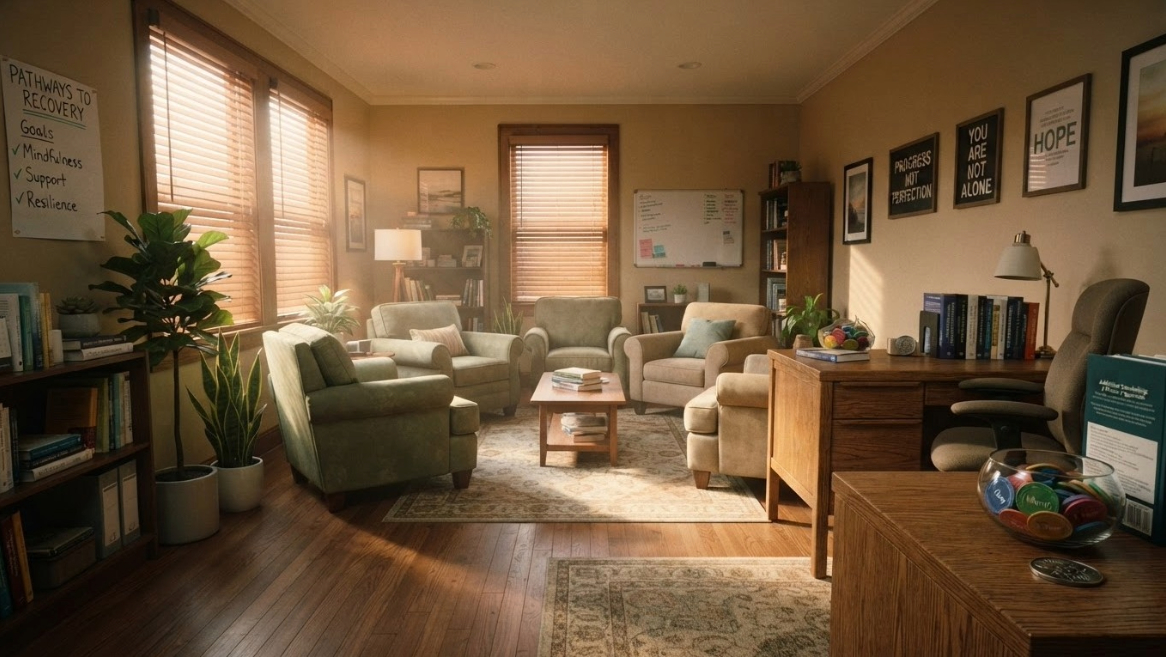
Did You Know?
A University College London study found that it took people an average of 66 days for a new healthy habit to become automatic. Missing a single day along the way did not undo their progress.
The Numbers Behind the Career
There were about 533,400 substance abuse, behavioral disorder, and mental health counselor jobs in the U.S. in 2025.
About 50,500 job openings are projected each year over the next decade.
The median salary for professionals in this field was $59,350 in 2025.
Where This Career Is Headed
Over the next decade, addiction counselors are expected to be in short supply, and federal health workforce projections released in December 2025 show a shortage of about 77,000 addiction counselors by 2038. The field is responding with new ways to reach more people, including phones and wearable sensors that researchers are testing to predict stress and craving and send help in real time, which could let counselors support clients between visits. Counselors may also work alongside new medicines, such as GLP-1 drugs that early research suggests may reduce alcohol craving, and with AI note-taking tools that could ease the paperwork that comes with larger caseloads. Whatever tools arrive, recovery will still depend on a counselor who listens and builds trust.

More than $50 billion in opioid settlement money is being paid to state and local governments through 2038, and states such as New Jersey are using some of it to fund peer recovery specialists, so new programs and jobs may keep opening in the years ahead.
Clients spend the other 167 hours of the week outside the counselor's office, so tools that help counselors stay connected between sessions could extend their reach.
As treatment teams add doctors who prescribe new medicines, nurses, peer specialists, and social workers, counselors who coordinate care well will be able to move into lead roles.

Education & Certification
Substance abuse counselors typically need at least a bachelor's degree, though requirements range from a high school diploma to a master's degree depending on the position, state, or employer. Common undergraduate fields include psychology, public policy and social services, and social science. Some jobs also require certification in basic life support or CPR.
Counselors in private practice must be licensed, which in every state requires a master's degree, a specified number of supervised clinical hours, a passing exam, and yearly continuing education. Requirements for counselors outside private practice vary by state, and some states, such as New Jersey, use titles like Certified Alcohol and Drug Counselor (CADC) for their credentials. Counselors can also earn voluntary national credentials through NAADAC, the association for addiction professionals, including the National Certified Addiction Counselor (NCAC) levels I and II and the Master Addiction Counselor (MAC) for those with a master's degree.
To Prepare...
Take psychology, health, and sociology courses, including AP Psychology if your school offers it, to learn how people think, behave, and change.
Join HOSA-Future Health Professionals if your school has a chapter, a club for people interested in health careers, to practice teamwork and learn about the health field.
Take a speech, writing, or world language course to practice explaining ideas clearly and listening carefully.