

Did You Know?
Babies begin learning the sounds of their native language before they are even born. Research shows that newborns cry in the melody of the language they heard in the womb, and SLPs study exactly how that early learning shapes communication development.
The Numbers Behind the Career
About 13,300 speech-language pathologist job openings are projected annually over the next decade.
The 2024 median annual salary for speech-language pathologist was $95,410.
There were about 187,400 speech-language pathologist jobs in the U.S. in 2024.
Where This Career Is Headed
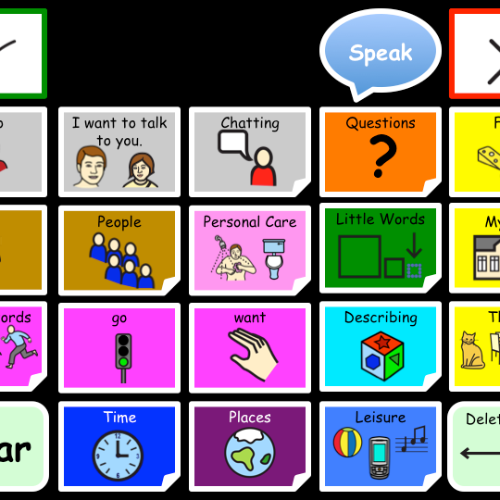
Speech-language pathology, or SLP, is expanding rapidly as new research deepens our understanding of the brain, language, and communication disorders. Telepractice, which involves delivering therapy remotely via video, has opened access to SLP services for people in rural and underserved communities who previously had limited options. Advances in augmentative and alternative communication (AAC) technology, including sophisticated speech-generating devices and apps, are transforming what is possible for people who cannot communicate verbally. At the same time, a growing awareness of the connection between early language development and long-term academic success is driving demand for SLPs in schools and early intervention programs across the country.

The rapid growth of telepractice is allowing SLPs to reach clients across geographic barriers, creating new, flexible career models and expanding access to care in underserved communities.
Advances in AAC technology and brain-computer interfaces are opening new frontiers for SLPs to help people with severe communication disabilities express themselves in ways previously impossible.
Growing recognition of the link between early language development and literacy is increasing demand for SLPs in schools, early intervention programs, and pediatric health settings.

Education & Certification
Speech-language pathology requires a significant educational investment. A master's degree in communication sciences and disorders is the standard entry point into the profession, and most programs require applicants to have an undergraduate background in communication sciences, linguistics, psychology, or a related area. Graduate programs typically take two years and include extensive supervised clinical hours in addition to coursework. After completing their degree, SLPs must pass the Praxis examination in Speech-Language Pathology and complete a supervised postgraduate clinical fellowship before earning their Certificate of Clinical Competence in Speech-Language Pathology (CCC-SLP) from the American Speech-Language-Hearing Association (ASHA). Most states also require a state license to practice.
To Prepare...
Take courses in biology, psychology, and English or linguistics to build a strong foundation in the sciences of the brain, behavior, and language.
Seek out volunteer or observation opportunities at schools, hospitals, or clinics where SLPs work, as many graduate programs expect applicants to have documented observation hours before applying.
Develop your listening and communication skills intentionally. Learning a second language, working with children or elderly individuals, or volunteering with people with disabilities all build the interpersonal foundation that makes a strong SLP.
Spotlight: Explore the Life of a Speech-Language Pathologist


Explore more resources for a future Speech-Language Pathologist

Becoming an Exceptional API Leader: Intimate Stories From 15 “Silent Voices” Changemakers
Chan, Mai Ling | Pham, Giang T. | Vuong, Kimberly Oanh | Cheng, Li-Rong Lilly | Kalyanasundaram, Meena | Ito, Nadhiya | Palafox, Phương Liên | Chu, Shin Ying | Maroonroge, Sumalai | Lorenzana, Tina
Why We Picked It
Career Connection
Speech language pathologists who serve culturally and linguistically diverse populations need both cultural humility and specialized knowledge, and this guide's emphasis on connecting personal identity with professional service reflects best practice in culturally responsive SLP care.

It's Just the Way I Talk: Facts About Stuttering for Ages 5-8 (Mrs. Speech Books)
Tillock, Jennifer
Why We Picked It
Career Connection
Speech language pathologists work with children and adults who stutter, helping them develop fluency strategies and rebuild communication confidence, and this book's compassionate approach to demystifying stuttering reflects the understanding-first philosophy that makes SLP therapy most effective.

The Boy Who Found His Voice
Gordon, Tyler
Why We Picked It
Career Connection
Speech language pathologists help clients find confidence in communication, meeting them where they are and building from their strengths, and this story's message that a voice can be expressed in many ways reflects the broadest and most compassionate definition of what communication therapy aims to achieve.