
Did You Know?
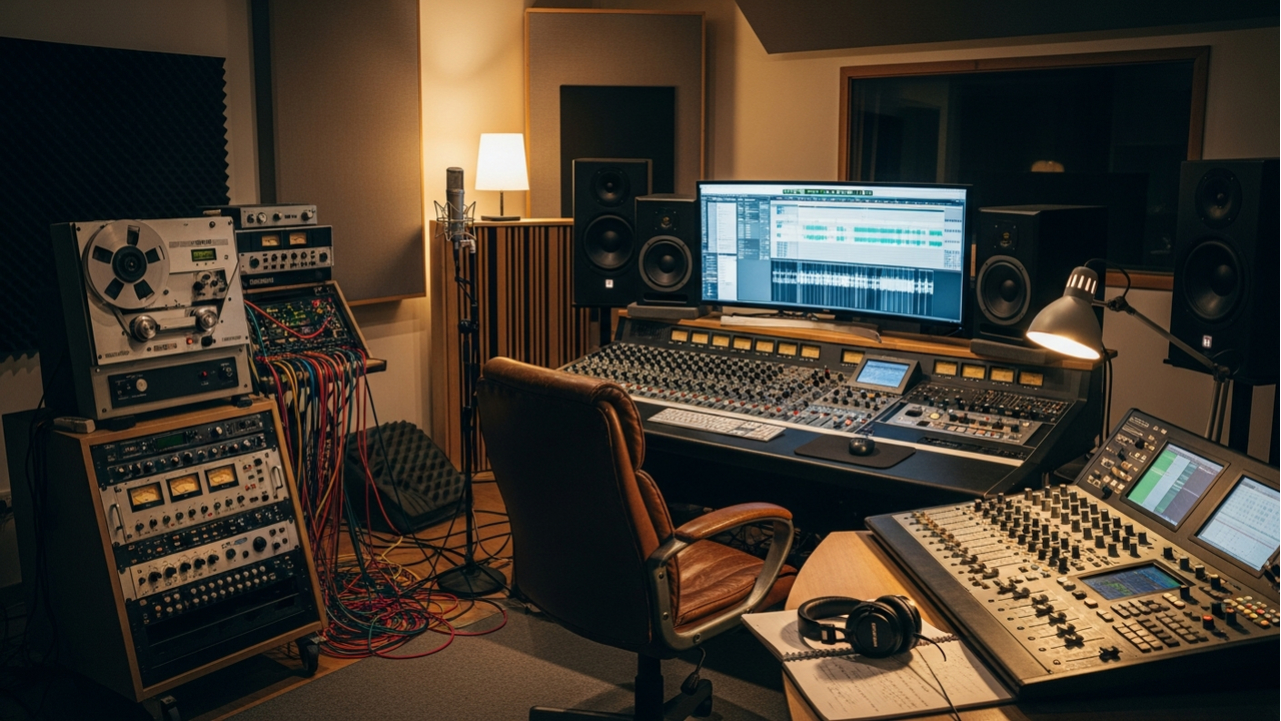
Before Les Paul invented multitrack recording in the late 1940s, every song had to be performed live in a single take by every musician at once. His invention made it possible to record each instrument and voice separately and combine them later, which is how virtually all music, film soundtracks, and podcasts are produced today.

What Sound Designers Really Do
Close your eyes and picture yourself sitting in a movie theater. The screen shows a dark forest at night. You hear crickets chirping, an owl calling in the distance, and then the gentle crunch of footsteps on dry leaves. Your heartbeat speeds up slightly even though nothing scary has happened yet, because these sounds alert your brain to pay attention. The person who created all these sounds is a sound designer and they didn’t record these effects in a real forest. Instead, they made them in a studio using microphones, computers, and sometimes everyday objects that are surprisingly simple. They then carefully positioned each sound exactly where it needed to be to make the movie feel real to you.
Sound designers determine what you hear in movies, television shows, video games, theater productions, and podcasts. Some of them record real-world sounds, like rain hitting a window or traffic on a busy street, then modify those recordings to match a scene. Others create entirely new sounds that don’t exist in real life, like the roar of a dragon or the hum of a spaceship engine. They collaborate with directors and other members of the creative team to ensure the audience experiences the right emotion at the right moment. A creaky door can make you nervous. A burst of cheerful music can make you smile. Sound designers are the invisible storytellers who influence how you feel about everything you watch and hear.
You Might Love This If...

Skills That Follow You Everywhere
Being a sound designer helps you develop important skills useful in many different careers, such as creativity, problem-solving, and communication. Sound designers learn to listen critically, operate complex digital audio software, manage large, well-organized libraries of files, collaborate with directors and creative teams under tight deadlines, and translate abstract emotional ideas into concrete technical decisions.
Creativity
A sound designer uses creativity every day to solve problems with no obvious answers. How do you make a dragon sound real when dragons do not exist? How do you make a quiet apartment feel lonely using only sound? Sound designers combine imagination with technical skill to build audio experiences from scratch. They layer recordings, manipulate pitch and timing, and experiment with unexpected sources to create sounds that serve the story. The ability to hear something in your mind and then figure out how to build it in the real world is the foundation of the entire profession.
Problem-Solving
A sound designer constantly encounters technical and creative problems. A dialogue recording from the set may have unwanted background noise that needs to be removed without affecting the actor’s voice. A scene may require a sound that does not exist in any library and must be built from raw materials. Equipment can fail during a session. Deadlines can shift. The ability to diagnose problems quickly, identify workable solutions, and adapt when the first approach does not succeed is essential to delivering professional work on time and on budget.
Communication
A sound designer works closely with directors, producers, editors, composers, and other members of a production team. Directors often describe what they want in emotional or abstract terms: “This scene needs to feel heavier” or “The silence should be uncomfortable.” Translating those ideas into specific technical decisions requires strong listening skills, the ability to ask clarifying questions, and the confidence to present creative options. Clear communication ensures the final product reflects the team's shared vision.
Explore more resources for a future Sound Designer

The Art of Sound Design: Crafting Award-Winning Sound Design with Sound FX and Foley
Parry, Andrew
Why We Picked It
Career Connection
Sound designers must master both the technology of audio production and the creative judgment needed to shape a scene's emotional reality through sound, and this guide addresses both dimensions with the depth that professional sound work genuinely demands.
Galactic Phrase Book & Travel Guide: Beeps, Bleats, Boskas, and Other Common Intergalactic Verbiage (Star Wars)
Burtt, Ben
Why We Picked It
Career Connection
Sound designers create the audio texture that makes fictional worlds believable, and Ben Burtt's invention of actual alien languages for Star Wars is one of the most thorough examples of how sound and language design together build a world audiences accept as real.

Guitar Genius: How Les Paul Engineered the Solid-Body Electric Guitar and Rocked the World (Children’s Music Books, Picture Books, Guitar Books, Music Books for Kids)
Tomsic, Kim
Why We Picked It
Career Connection
Sound designers work in studios built on the multitrack recording technology Les Paul invented, and his story of turning curiosity and experimentation into transformative invention is the most personal origin story of modern sound production available.