
Did You Know?
Astronauts aboard the International Space Station have taken more than five million photographs of Earth since the year 2000. Their images have helped scientists track hurricanes, monitor deforestation, and study the effects of climate change from a perspective no one on the ground can match.
How to Get Started
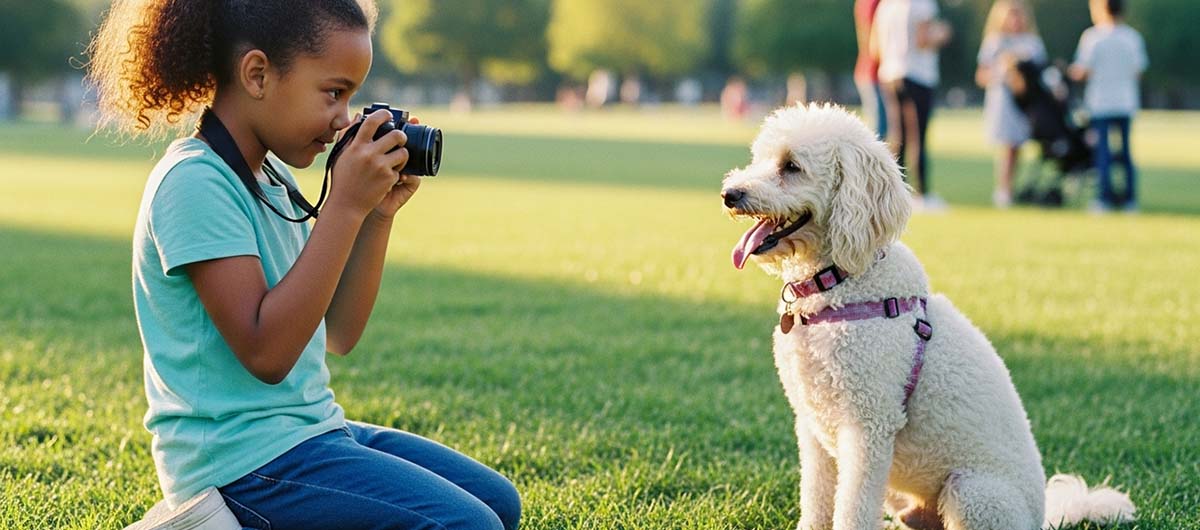
Getting started toward a career as a photographer begins with picking up a camera and looking at the world with intention.
Explore the Basics
Go on a photo walk with a parent. Bring a camera or smartphone and pick a theme before you leave the house: it could be “color,” “shadows,” “faces,” or “things that are round.” Walk around your neighborhood, a park, or a downtown area and take at least twenty photos that fit your theme. When you get home, sit together and pick your five favorites. Talk about why you chose each one. What caught your eye? What do you like about the way the picture looks?
Try It Out
Try a portrait challenge at home. Ask a family member to sit near a window where natural light comes in from one side. Take one photo with the light hitting their face directly, one with the light coming from the side, and one with the light behind them. Compare all three. How does the direction of the light change the way the person looks? This simple experiment introduces you to one of the most fundamental concepts in photography: the direction and quality of light controls the mood, shape, and feeling of every picture you take.
Join the Community
Ask a parent to help you find a local photography exhibit, art museum, or gallery that features photographic work. Many museums and cultural centers host family-friendly exhibitions and workshops. When you visit, pick your favorite photograph and spend a few minutes with it. What do you notice about it? How does it make you feel? Why do you think the photographer chose that subject? Talking about photographs you admire is one of the best ways to develop your own sense of what makes an image powerful.
How to Become a Photographer
Explore more resources for a future Photographer

Little Humans
Stanton, Brandon
Why We Picked It
Career Connection
Photographers who work with real people on streets and in communities develop a gift for seeing the humanity in fleeting moments, and Stanton's ability to stop a stranger and capture something true about them is the skill at the center of his entire career.

Humans of New York : Stories
Stanton, Brandon
Why We Picked It
Career Connection
Photographers who work in portraiture develop both the technical skill to capture a person at their most genuine and the human skill of listening as much as looking, and Stanton's career shows how combining both can produce work that changes how people see their neighbors.

Gordon Parks: How the Photographer Captured Black and White America
Weatherford, Carole Boston
Why We Picked It
Career Connection
Photographers choose what to put in the frame and what to leave out, and Parks showed that those choices can be as powerful as any political act, directing public attention toward what deserved to be seen and could not be unseen.