
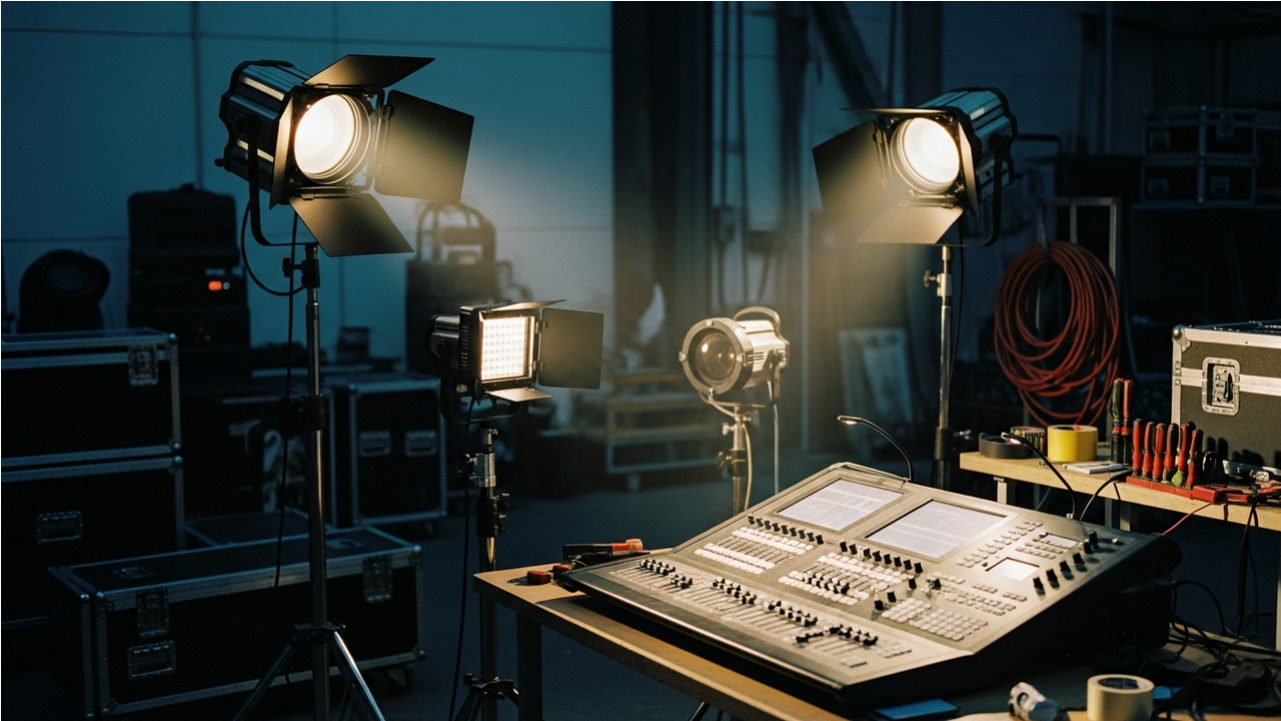
Did You Know?
A gobo is a small metal or glass disc with a pattern cut into it that lighting technicians place inside a spotlight to project shapes onto the stage. A single gobo can turn a bare floor into a moonlit forest, a stained-glass window, or a city skyline, all without building any scenery.
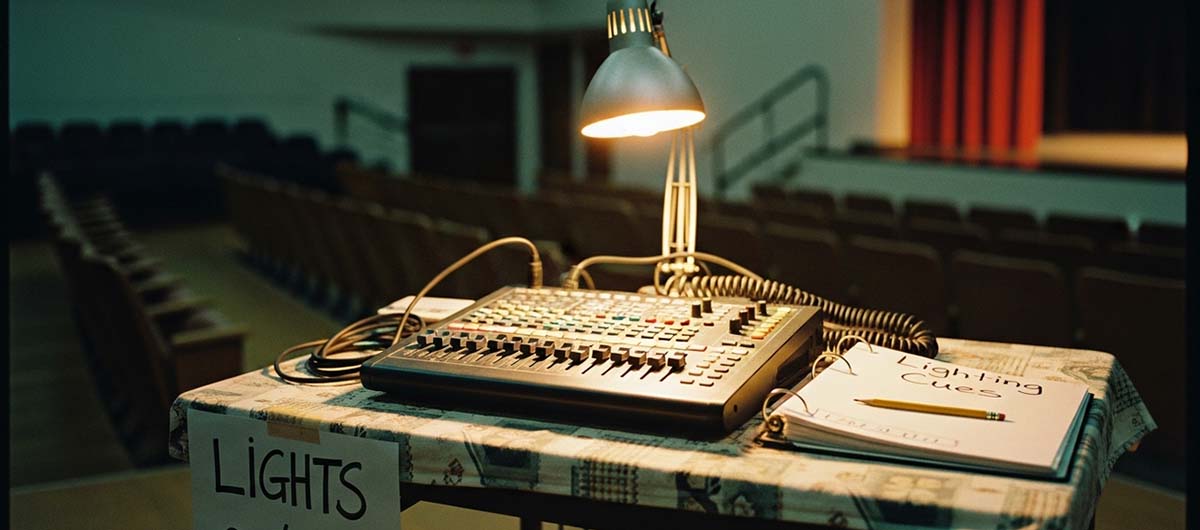
How to Get Started
Starting a career as a lighting technician involves getting hands-on experience with equipment and volunteering at live performances.
Explore the Basics
The next time you attend a school play, concert, or community event, pay close attention to the lights instead of just the performers. Notice how the color changes when a scene shifts from happy to sad. Watch for moments when a single spotlight isolates one person on stage. After the show, talk with your family about what you noticed. How did the lighting make you feel during different parts of the performance? If you can, ask a parent to help you experiment at home with a desk lamp and colored cellophane or tissue paper. Hold different colors in front of the light and see how they change the way a room feels.
Try It Out
Build a miniature stage using a shoebox or cardboard box. Cut an opening in the front for the “audience” to look through, place a small toy figure inside as your actor, and experiment with different light sources. Try shining a flashlight from above, from the side, and from below. Notice how the direction of the light changes the way your figure looks and the mood of the scene. Use colored plastic wrap or tissue paper over the flashlight to create different color effects. You are doing the same thing a lighting technician does when they set up lights for a show: deciding where the light comes from, what color it is, and how it shapes what the audience sees.
Join the Community
The next time you see a live performance, stay after the show if possible and look at the stage from the audience. Can you spot the lights hanging above the stage or on the sides? Count how many different colors you see. Ask a parent to help you learn the names of the basic fixtures: spotlight, floodlight, and followspot. If your community has a children’s theater or performing arts center, ask whether they offer backstage tours where you can see the lighting equipment up close. Seeing the equipment in person and understanding how it connects to what you watched on stage is the beginning of thinking like a technician.
How to Become a Lighting Technician
Explore more resources for a future Lighting Technician

The Followspot Guide
Nick Mobsby
Why We Picked It
Career Connection
Lighting technicians who operate followspots must understand the equipment's mechanics, optics, and operating history, and this guide provides exactly that knowledge, from the Victorian limelight that originated the spotlight to the professional fixtures in use today.

Snap Circuits Light Electronics Exploration Kit | Over 175 Exciting STEM Projects | Full Color Project Manual | 55+ Snap Circuits Parts | STEM Educational Toys for Kids 8+
Why We Picked It
Career Connection
Lighting technicians understand how electricity powers every fixture on a stage, and experimenting with circuits, switches, and light sources through hands-on projects builds the electrical intuition that professional lighting work depends on.

National Geographic Circuit Maker Kit - Electronics Kit for Kids with 120 Electrical Projects, Electric Circuit STEM Toy, Electronic Projects, Electrical Kit for Kids, Electricity Set
Why We Picked It
Career Connection
Lighting technicians understand how circuits and electrical signals control every fixture on stage, and building and testing real electrical projects gives young learners the foundational understanding of electricity the career depends on.