
Did You Know?
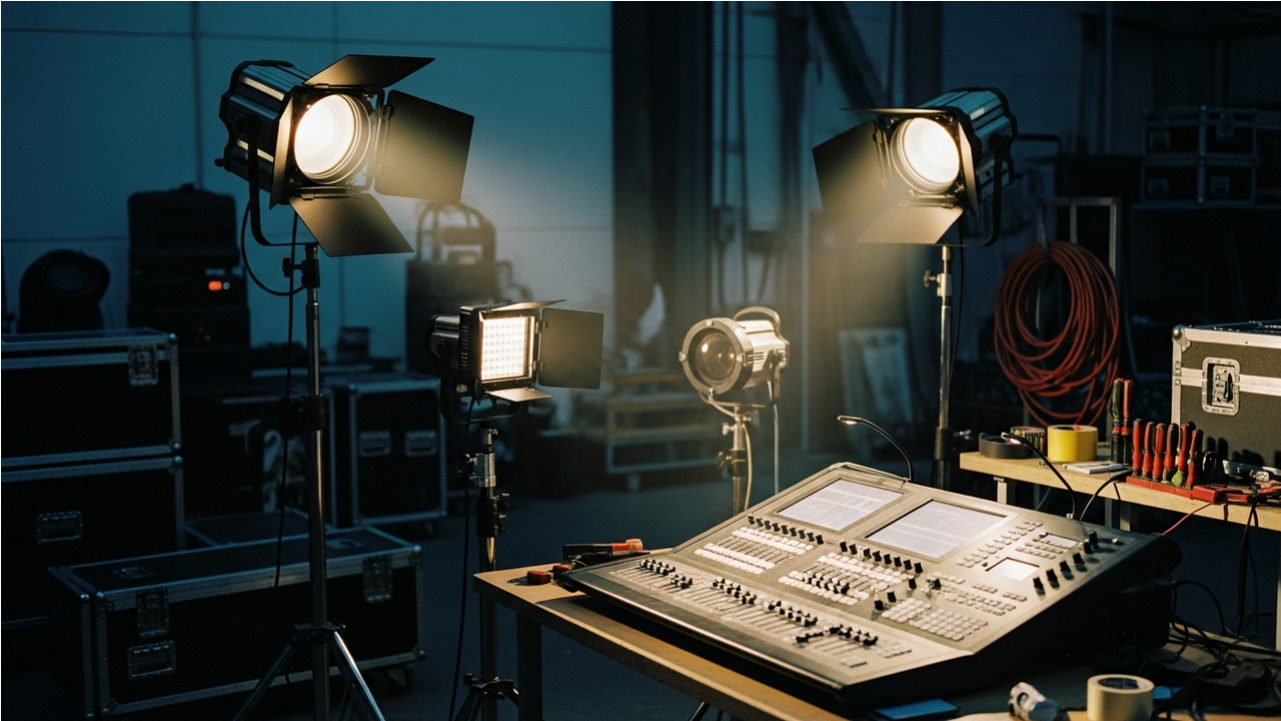
A gobo is a small metal or glass disc with a pattern cut into it that lighting technicians place inside a spotlight to project shapes onto the stage. A single gobo can turn a bare floor into a moonlit forest, a stained-glass window, or a city skyline, all without building any scenery.
What Lighting Technicians Really Do
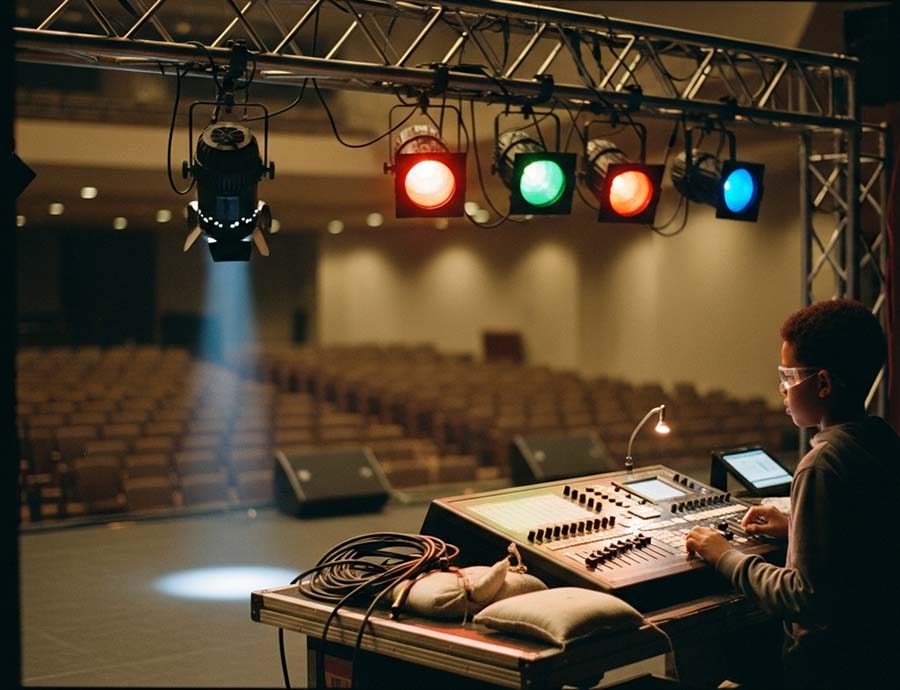
Imagine standing high above a stage on a narrow metal walkway called a catwalk. Below you, actors are rehearsing a scene from a musical, and your job is to make the audience feel like they are watching a sunset. You reach up and adjust a big metal light, tilting it just right and sliding a sheet of orange-colored gel in front of the lens. When the director calls “Go,” you bring the light up slowly, and the stage transforms from a bright afternoon into a warm golden evening. The actors have not changed anything about what they are doing, but the audience will feel something completely different because of the light you created.
Lighting technicians are the people who set up, aim, and operate all the lights you see at plays, concerts, dance shows, and live events. They climb ladders to hang heavy lights from metal bars above the stage, run thick cables across the floor to connect everything to power, and work with the lighting designer to make sure every scene looks and feels exactly right. Some days, you might be in a dark theater programming hundreds of lighting cues into a computer console. Other days, you could be outside in a park helping set up lights for a concert or festival. You work behind the scenes, but what you do shapes everything the audience sees and feels from the moment the lights go down to the final bow.
You Might Love This If...
Skills That Follow You Everywhere
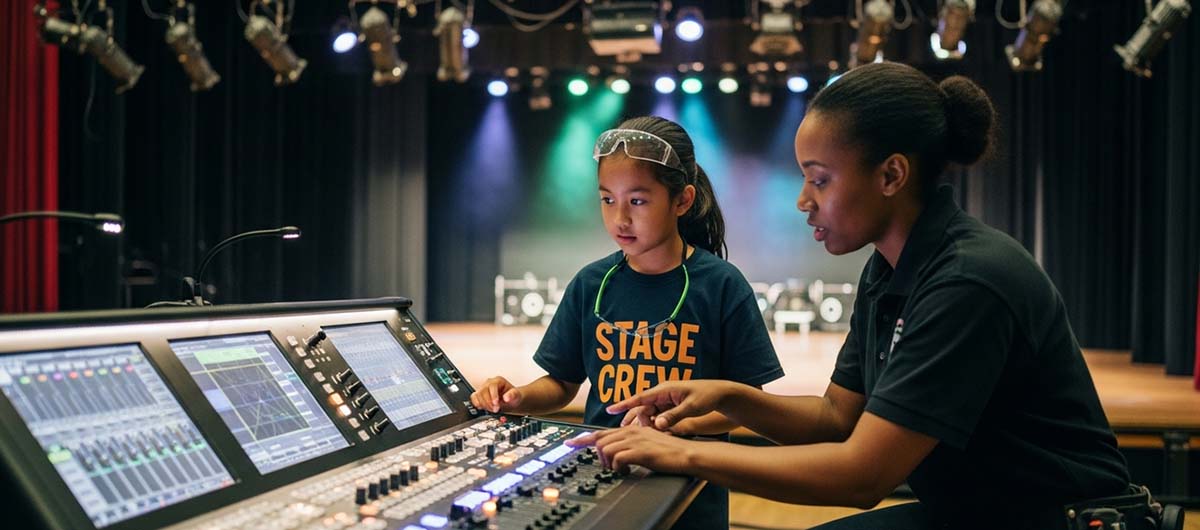
Being a lighting technician helps you develop important skills that are useful in many different careers, like problem-solving, teamwork, and creativity. Lighting technicians learn how to read technical drawings, operate complex digital control systems, manage equipment inventories, work safely at heights, collaborate with designers and stage managers under tight deadlines, and adapt quickly when things go wrong during a live performance.
Creativity
A lighting technician uses creativity to translate a designer’s artistic vision into physical reality using the tools and equipment available. When the budget is tight, the venue is unfamiliar, or the designer asks for an effect that seems impossible, the technician must find inventive solutions. Choosing the right combination of angle, color, intensity, and texture to make a scene feel like moonlight, or a thunderstorm, or a memory, requires both technical knowledge and an artistic eye.
Teamwork
A lighting technician works as part of a production team that includes designers, stage managers, directors, carpenters, sound engineers, and performers. During a hang, focus, or tech rehearsal, clear coordination with colleagues is critical. A followspot operator must stay in sync with the stage manager’s cues. A console operator must respond instantly to the designer’s notes. Every successful production depends on people trusting and communicating with each other under pressure.
Problem-Solving
A lighting technician uses problem-solving constantly, whether diagnosing a flickering fixture minutes before curtain, figuring out how to light an unusually shaped set piece, or rerouting power when a circuit fails. Every production presents unique physical and technical challenges, and the ability to identify the cause of a problem and fix it quickly, often in the dark and under time pressure, is one of the most essential skills in the profession.
Explore more resources for a future Lighting Technician

Snap Circuits Light Electronics Exploration Kit | Over 175 Exciting STEM Projects | Full Color Project Manual | 55+ Snap Circuits Parts | STEM Educational Toys for Kids 8+
Why We Picked It
Career Connection
Lighting technicians understand how electricity powers every fixture on a stage, and experimenting with circuits, switches, and light sources through hands-on projects builds the electrical intuition that professional lighting work depends on.
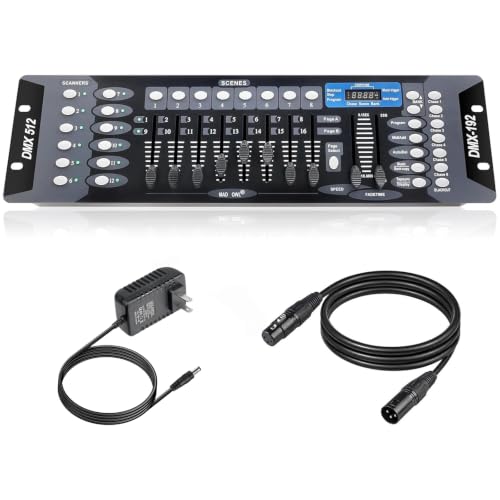
DMX Controller for dj Lights Dmx512 Light Controllers 192 Channel DMX Board with Cables 2m/6.6 ft Dmx-512 Lighting Console for Control Stage Light
Why We Picked It
Career Connection
Lighting technicians program and operate DMX controllers to execute every cue in a live show, and working with actual DMX hardware builds the operational understanding of the protocol that is the foundation of professional stage lighting work.

The Magic of Light: The Craft and Career of Jean Rosenthal, Pioneer in Lighting for the Modern Stage
Rosenthal, Jean | Wertenbaker, Lael
Why We Picked It
Career Connection
Lighting technicians execute the designs that create atmosphere, guide attention, and shape how an audience experiences a performance, and Rosenthal's career shows what that craft looks like when it is pursued with full artistic seriousness and ambition.