

Did You Know?
If you had invested $1,000 in Amazon when it first went public in 1997, that investment would be worth more than $2 million today, without ever adding another dollar!
The Numbers Behind the Career
The 2023 median annual salary for securities, commodities, and financial services was $76,900.
There were about 317,600 securities, commodities, and financial services jobs in the U.S. in 2023.
There were about 46,600 openings for securities, commodities, and financial services jobs are projected annually over the next decade.
Where This Career Is Headed
Artificial intelligence and machine learning are rapidly changing how investment analysis is done, automating tasks like data gathering, pattern recognition, and early-stage financial modeling that once took analysts days to complete. At the same time, the rise of environmental, social, and governance (ESG) investing is pushing analysts to evaluate companies on a broader set of criteria beyond traditional financial metrics. New asset classes like cryptocurrency and digital assets are creating demand for analysts who understand both finance and technology. The analysts who will thrive in this environment are those who can work alongside AI tools, ask better questions than algorithms can, and apply human judgment to situations where data alone is not enough.

AI-powered tools will automate routine data analysis, freeing analysts to focus on higher-value judgment, strategy, and client relationships.
The growth of ESG investing is creating new specializations for analysts who can evaluate climate risk, social impact, and governance practices alongside traditional financial metrics.
The expansion of private markets, including private equity, venture capital, and infrastructure investment, will create strong demand for analysts outside of traditional public stock markets.

Education & Certification
Most investment analysts enter the field with a bachelor's degree in finance, economics, accounting, mathematics, or a related field. Top investment banks, asset managers, and financial firms are highly competitive and often recruit from a select group of universities, making academic performance and internship experience especially important. Many analysts pursue a Master of Business Administration (MBA) or a Master's in Finance to advance into senior roles. The Chartered Financial Analyst (CFA) designation is widely considered the gold standard credential in investment management, requiring candidates to pass three rigorous exams covering investment analysis, portfolio management, and ethics. Other valuable certifications include the Financial Industry Regulatory Authority (FINRA) Series 7 and Series 63 licenses, which are required to buy and sell securities on behalf of clients.
To Prepare...
Build strong math habits early, from learning to budget and compare prices as a kid to studying algebra, statistics, and economics in middle and high school. Numbers are the language of investing, and the earlier you get comfortable with them, the better.
Start exploring how money works at whatever level makes sense for you right now. Track prices of things you buy, play money games, or read books like How to Turn $100 into $1,000,000. Try reading a company's basic financial summary or following a stock with a free simulator.
Get involved in programs that make finance hands-on and fun, from Junior Achievement and school money clubs in elementary and middle school to FBLA (Future Business Leaders of America), investment clubs, and stock market competitions in high school.
Spotlight: Explore the Life of a Investment Analyst



Explore more resources for a future Investment Analyst

Investing for Kids: How to Save, Invest, and Grow Money
Redling, Dylin | Tom, Allison
Why We Picked It
Career Connection
Investment analysts understand that the earlier money is put to work, the harder it grows over time, and introducing kids to compound interest and stock ownership at a young age builds the financial instincts that serious investing depends on.

Principles for Success
Dalio, Ray
Why We Picked It
Career Connection
Investment analysts develop principles for evaluating information, making decisions, and handling failure systematically, and Dalio's approach to disciplined, evidence-based decision-making is one of the most influential frameworks in the investment world.
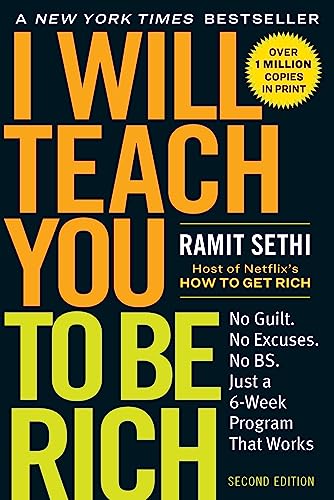
I Will Teach You to Be Rich: No Guilt. No Excuses. Just a 6-Week Program That Works (Second Edition)
Sethi, Ramit
Why We Picked It
Career Connection
Investment analysts build on the foundational understanding of money, compounding, and risk that this book teaches, and developing strong personal finance habits early is the most practical first step toward thinking like a professional investor.