
Did You Know?
A team of researchers at the University of Oxford has studied more than 16,000 big projects around the world. They found that fewer than half finished on budget, and only about one in every 200 finished on budget, on time, and delivered everything that was promised.
What Construction Estimators Really Do
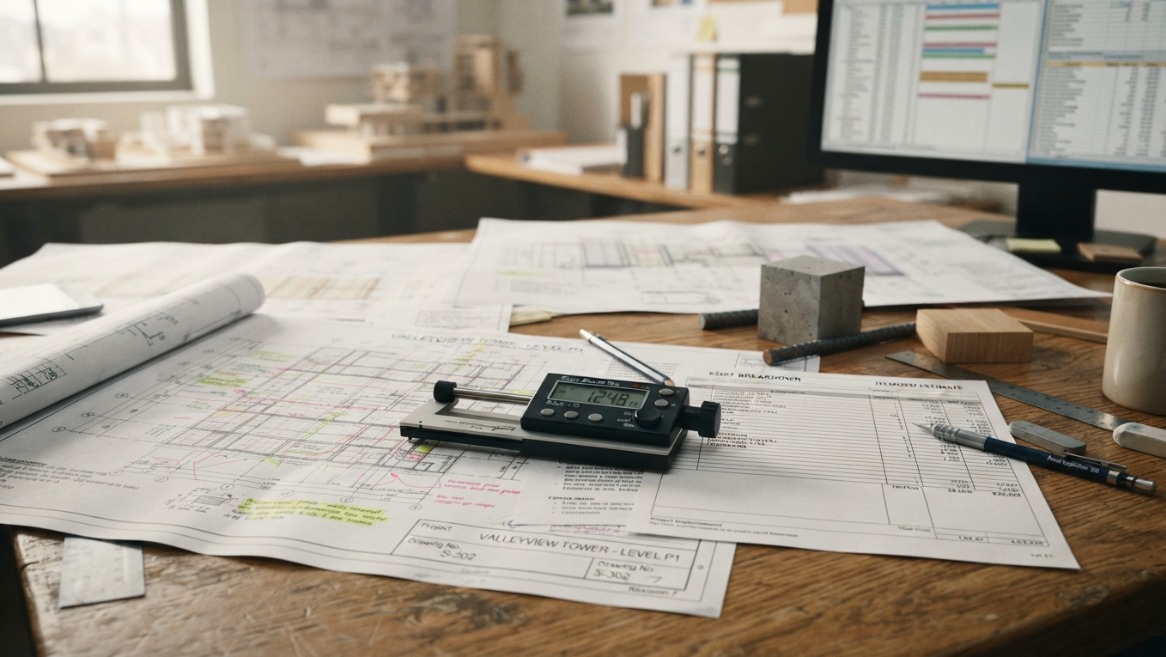
Imagine your town wants to build a new playground, and you have an important job. Before anyone digs a hole or pours concrete, you have to answer a big question: how much will it cost? You are the construction estimator. You look at the drawings for a building, a bridge, or a road and figure out everything it will take to build it. How many boards? How many bricks? How many workers, and for how many days? Then you add it all up to find the price.
Estimators spend most of their time in an office, but they also visit building sites to see the work up close. They use math, computers, and careful lists to make sure nothing gets forgotten. Even a small mistake, like counting too few windows, can cost a lot of money later. If you like counting, planning, and figuring out how things get built, you might enjoy being a construction estimator.
You Might Love This If...

Skills That Follow You Everywhere
Construction estimating builds skills that pay off well beyond the construction industry. Estimators learn to keep enormous amounts of information in order, to weigh evidence and make sound judgments when some facts are still unknown, and to explain their numbers clearly to people who need to act on them. These are skills that matter in almost any career and in everyday life.
Critical Thinking
No estimator knows exactly what the weather will do next spring or what steel will cost in six months. Estimators learn to question every assumption, compare construction methods on evidence rather than habit, spot the line items most likely to go wrong, and build in reasonable allowances for what cannot be known. Then they stand behind a number when the deadline arrives. Practicing this kind of careful, evidence-based reasoning prepares people for leadership roles in any field.
Communication
An estimate is only useful if the people who depend on it understand it. Estimators write reports that help managers decide whether to bid and at what price, ask architects and engineers precise questions when drawings are unclear, and negotiate with subcontractors and suppliers to get accurate quotes. They learn to explain a complicated set of numbers in plain terms and to defend a realistic figure when someone wants a lower one. Clear, confident communication is a skill that opens doors in every industry.
Organization
A single estimate can contain thousands of items, dozens of subcontractor quotes, and weeks of research, all of it due on one deadline. Estimators develop systems for keeping every piece straight: what has been measured, what has been priced, what is still missing, and which version of the drawings is current. Learning to break a huge task into manageable pieces and track each one to completion is a skill that helps students, managers, and anyone juggling a complex project.