
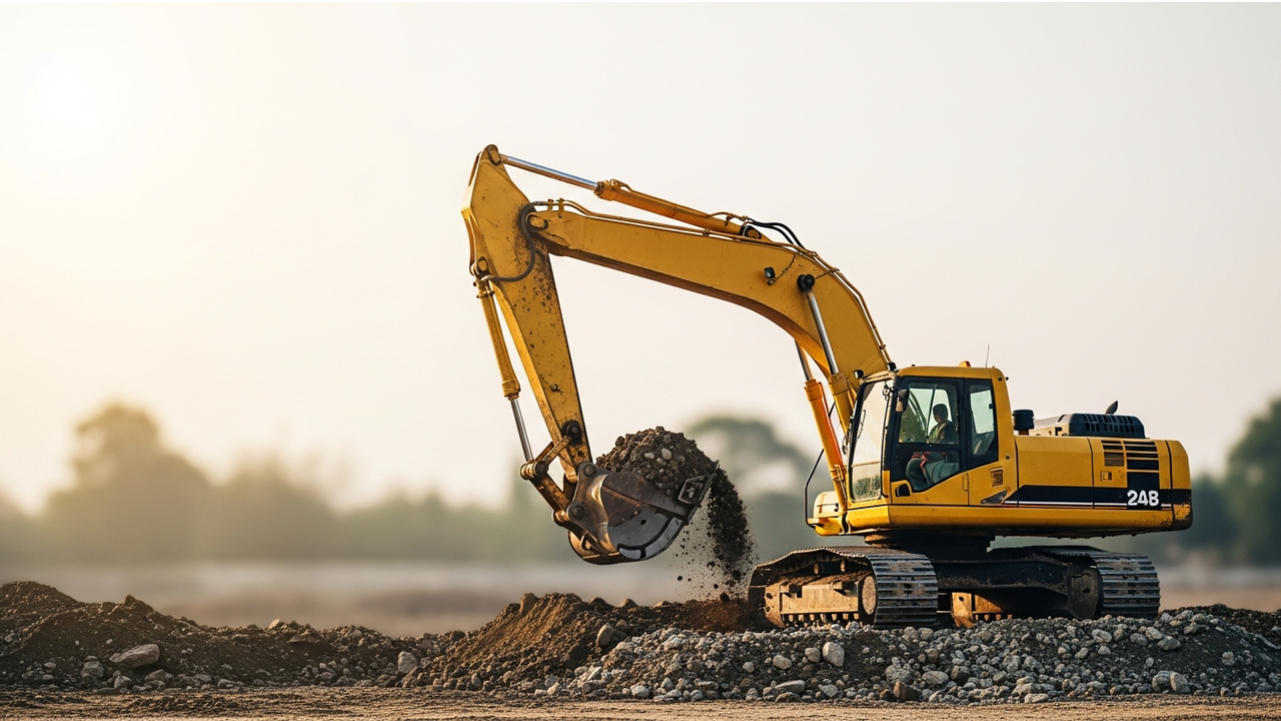
Did You Know?
A skid steer loader can spin in a complete circle without moving forward or backward. This zero-radius turning ability makes it one of the most agile machines on a construction site, able to work in tight spaces where larger equipment cannot fit.
The Numbers Behind the Career
The 2024 median annual salary for heavy equipment operators was $63,850.
About 46,200 openings are projected each year over the next decade for heavy equipment operators.
There were about 539,500 heavy equipment operators in the U.S. in 2024.
Where This Career Is Headed
Over the next decade, heavy equipment operation will keep evolving as technology, infrastructure investments, and sustainability standards reshape the field. Operators who blend traditional machine skills with knowledge of digital tools and emerging technologies will be best positioned for the strongest opportunities in an industry that is both vital and quickly modernizing.
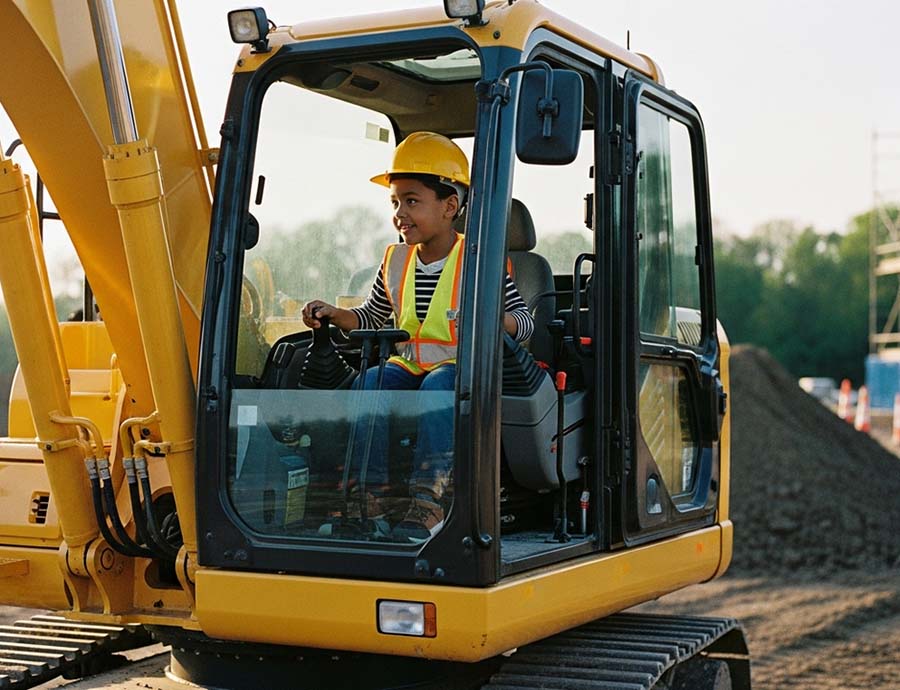
GPS and machine control systems: Satellite-guided grading and excavation systems enable operators to achieve design-grade accuracy within fractions of an inch. Operators trained in these systems are increasingly in demand because they reduce rework, conserve materials, and accelerate project timelines.
Telematics and data-driven operations: Modern equipment transmits real-time data on fuel use, engine health, idle time, and operator performance. Knowing how to use this data to improve efficiency and minimize downtime is becoming an essential skill for operators and fleet managers.
Renewable energy and infrastructure construction: The rapid expansion of wind farms, solar fields, battery storage facilities, and electric vehicle charging networks is creating a growing category of heavy equipment work that did not exist at this scale a decade ago. Operators who gain experience on energy infrastructure projects will be positioned for sustained demand as the sector continues to grow.

Education & Certification
Most heavy equipment operators enter the trade through one of three primary pathways. Many begin with on-the-job training, starting as construction laborers and gradually learning to operate equipment under the supervision of experienced operators; this route typically requires a high school diploma or equivalent.
Others pursue registered apprenticeship programs, often sponsored by the International Union of Operating Engineers (IUOE) or contractor associations, which combine three to four years of paid on-the-job training with classroom instruction in safety, blueprint reading, hydraulics, and equipment maintenance. A third option is enrolling in vocational or trade schools, where specialized heavy equipment training programs can prepare students for entry-level employment in as little as three to nine weeks, offering hands-on seat time on multiple types of equipment along with classroom instruction in safety and job-site fundamentals.
To Prepare...
Build a foundation in math and science. Geometry, measurement, and basic physics show up constantly in equipment operation. Understanding angles, slopes, volume, and weight helps operators read grade plans and make precise cuts. If your school offers shop class, auto mechanics, or any hands-on vocational course, take it.
Develop mechanical awareness. Learn how engines, hydraulics, and basic machines work. Take apart and reassemble small engines or machines at home. Undertake projects that require measuring, leveling, and spatial problem-solving. The more comfortable you are understanding how things move and why, the faster you will learn to operate heavy equipment.
Get comfortable reading plans and maps. Operators work from site plans, blueprints, and GPS displays every day. Practice reading topographic maps, building diagrams, or even video game minimaps with an eye for elevation, distance, and spatial relationships.
Spotlight: Explore the Life of a Heavy Equipment Operator


Explore more resources for a future Heavy Equipment Operator

R. G. LeTourneau Heavy Equipment: The Electric-Drive Era, 1953-1970
Orlemann, Eric
Why We Picked It
Career Connection
Heavy equipment operators depend on machines whose core design principles trace directly to LeTourneau's era, and understanding the engineering history behind electric-drive scrapers and self-propelled earthmovers gives aspiring operators a richer appreciation for the technology they will use.
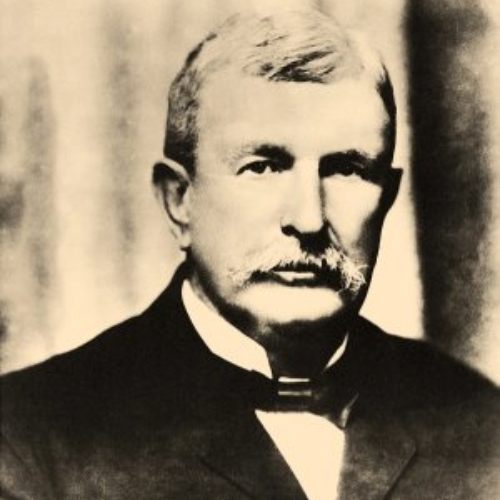
Benjamin Holt and Caterpillar: Tracks and Combines
Wik, Reynold M.
Why We Picked It
Career Connection
Heavy equipment operators run Caterpillar-brand crawler tractors and tracked machines every day, and understanding how Holt's track system solved the fundamental problem of heavy machinery sinking into soft ground gives operators deep insight into the engineering principles behind the equipment they depend on.

Mike Mulligan and More
Burton, Virginia Lee
Why We Picked It
Career Connection
Heavy equipment operators are the people behind the machines that keep communities moving through every season, and Burton's storytelling gives young readers a sense of the purpose and personality behind the work.