Photo: Federal Highway Administration, Public domain, via Wikimedia Commons
The Interstate Highway System
What It Is
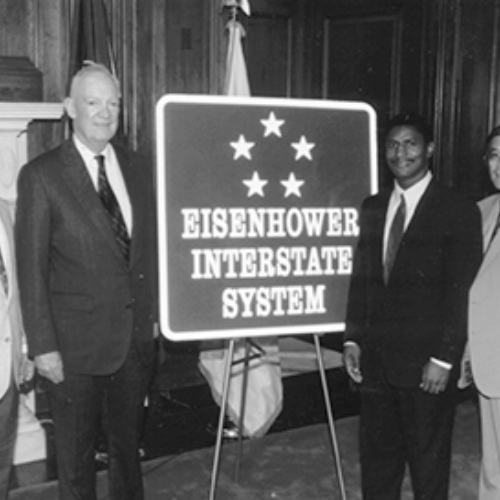
On June 29, 1956, President Dwight D. Eisenhower signed the Federal-Aid Highway Act, authorizing the construction of a nationwide network of controlled-access highways. The project was partly inspired by Eisenhower's experience during World War II, when he observed how Germany's autobahn system enabled the swift movement of troops and supplies, and by a cross-country military convoy he took part in during 1919, when it took 62 days to drive from Washington, D.C., to San Francisco on the nation's rough roads. The Interstate Highway System would become the largest public works project in American history, eventually covering more than 48,000 miles and taking 35 years to be largely completed.
Why It Matters
The Interstate Highway System couldn't have been built without heavy equipment operators. Thousands of operators operated bulldozers, excavators, graders, scrapers, and pavers to carve through mountains, bridge rivers, and lay the roadbed for every mile of the system. The project transformed the American landscape, connecting cities and towns, enabling suburban growth, and creating a transportation network that moves people and goods across the country to this day. It also spurred major advances in the heavy equipment industry itself, as manufacturers designed bigger, faster, and more powerful machines to meet the project's extraordinary demands. For the generation of operators who built the interstates, the work represented one of the most tangible legacies any skilled worker could leave behind: a physical network that millions of people use daily. The Interstate Highway System stands as proof that the work of heavy equipment operators is not temporary. It is infrastructure that will last for generations.