
Did You Know?
A bristlecone pine named Methuselah in California's Inyo National Forest was already more than 4,700 years old when scientists studied it in 1957. The Forest Service keeps its exact location a secret to protect it.
What Foresters Really Do
Your boots crunch over pine needles as you hike deeper into the forest, carrying a map, a long tape measure, and a can of bright tree-marking paint. You stop at a tall tree, wrap the tape around its trunk, and write down how big it is. Then you lean in close to look for tiny holes in the bark, because they can be a sign that bugs have gotten inside and are making the tree sick. The air smells like pine, a woodpecker is knocking somewhere above you, and a creek is bubbling nearby. This is a day in the life of a forester, a person who takes care of a whole forest.
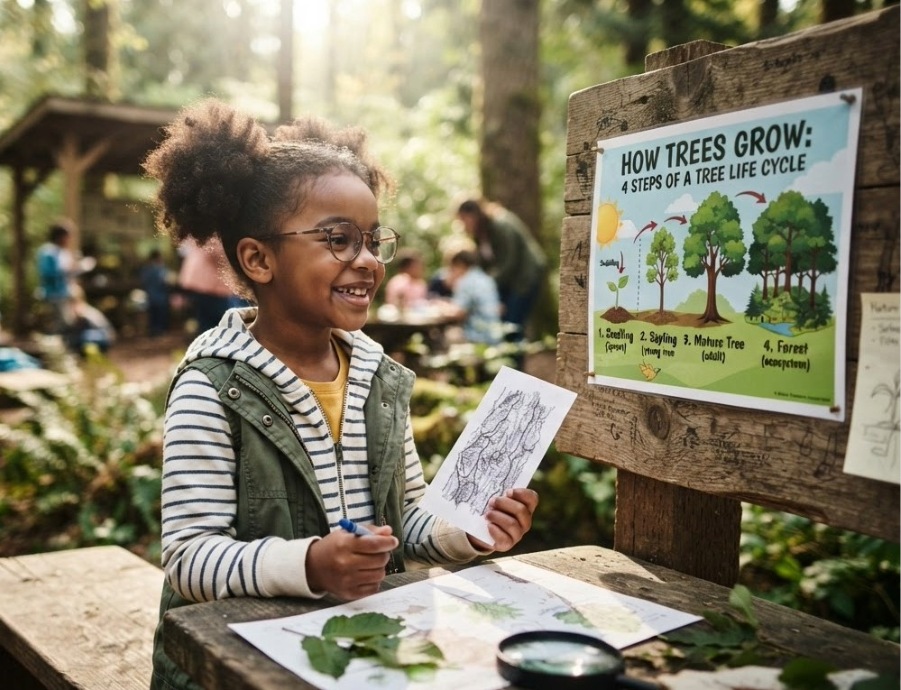
Foresters keep forests healthy so animals have homes, streams stay clean, and people have wood for houses, books, and paper. Some days a forester marks which trees are ready to be cut and decides where new baby trees should be planted. Other days, a forester plans a new trail for hikers, checks for sick trees, or plans to keep a wildfire from spreading. Foresters have to think far ahead because a tree planted today might not be fully grown until you are an adult. If you love being outside, getting muddy boots, and caring for living things, you might already be thinking like a forester.
You Might Love This If...
Skills That Follow You Everywhere
A career in forestry builds skills that reach well beyond the woods. Foresters learn to plan work across seasons and decades, think carefully before making decisions that are hard to undo, and keep going when fire, pests, or storms damage years of work. These abilities are valuable in any career that involves long projects, competing priorities, and results you cannot fully control.
Critical Thinking
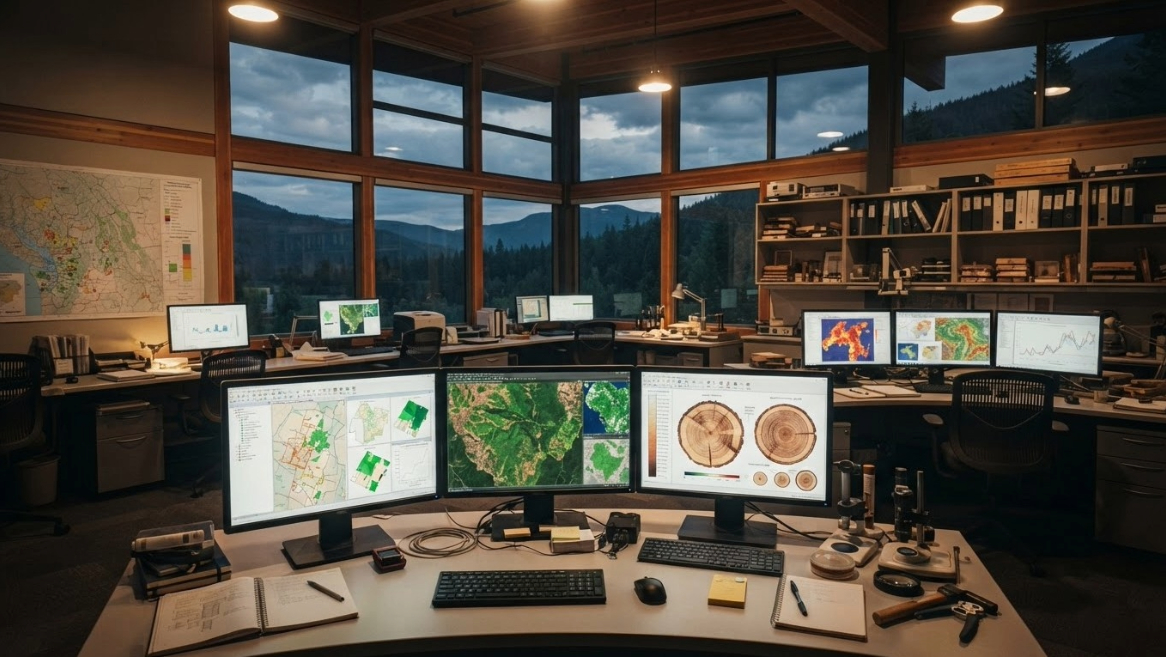
Before a forester decides to cut, thin, or replant, they have to understand what is happening in the stand. They ask why certain trees are dying, which clues in the data matter, and what could go wrong with each option. Because a cut tree cannot be un-cut, foresters weigh the evidence from plot measurements, soil, and wildlife before choosing a plan.
Time Management
A forester's calendar runs on two clocks at once: the seasons and the decades. Seedlings have to go in the ground during a narrow planting window, timber work has to happen when ground conditions can handle heavy equipment, and fire prevention has to be finished before dry season arrives. Foresters set priorities and schedule each job carefully so that trees planted this year are ready to be thinned or harvested many years from now.
Resilience
A wildfire, storm, or insect outbreak can wipe out trees that took decades to grow. Foresters have to absorb that loss, study what happened, and replant with the next fire or pest season in mind. Resilience is what keeps them returning to work whose payoff may be a lifetime away.