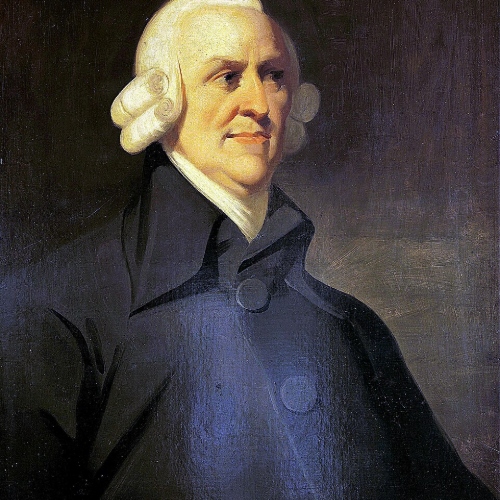
Did You Know?
Adam Smith, the economist often called the father of modern economics, once appeared on British currency. His portrait was printed on the Bank of England twenty-pound note from 2007 until the note was withdrawn in 2022, making him the first economist ever featured on UK money.
The Numbers Behind the Career
The median annual wage for economist is over $115,000.
There were about 17,600 economist working in the U.S. in 2024.
About 900 economist job openings are projected annually over the next decade.
Where This Career Is Headed
Economics is being reshaped by the explosion of available data and the growing power of computers to analyze it. Economists increasingly use artificial intelligence and machine learning to spot patterns in huge datasets, from consumer spending to climate impacts, that would have been impossible to find by hand a generation ago. At the same time, the field is paying closer attention to real-world experiments and behavioral research, testing how people actually behave rather than assuming they always act perfectly rationally. Over the next decade, economists who can combine traditional economic theory with coding and data science skills will be especially in demand.

Growing amounts of digital data will give economists powerful new tools to study everything from housing markets to public health.
Governments and companies will increasingly rely on economists to evaluate the real-world impact of policies before they are rolled out.
New specialties, like climate economics and the economics of artificial intelligence, are opening fresh career paths within the field.

Education & Certification
Most entry-level economist jobs require at least a bachelor's degree in economics, math, or a related field, but many research and policy positions, especially with the federal government or universities, require a master's degree or a Ph.D. There is no license required to work as an economist, though some economists choose to earn finance-related credentials, such as the Chartered Financial Analyst (CFA) designation, if their work overlaps with investing or financial analysis. The path is flexible: strong math and statistics skills, plus real research or data experience, matter as much as any single credential.
To Prepare...
Take classes in algebra, statistics, and any available economics, personal finance, or computer science courses.
Practice working with data in spreadsheets, and try free introductory coding or statistics courses online.
Read about current events involving money, jobs, and policy, and practice explaining your own opinion with evidence.