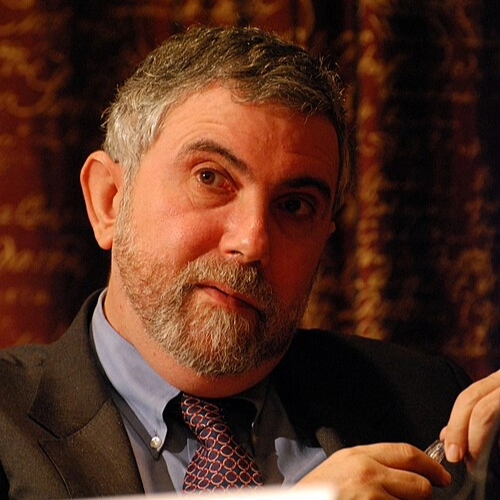
Photo: Prolineserver, GFDL 1.2 <http://www.gnu.org/licenses/old-licenses/fdl-1.2.html>, via Wikimedia Commons
Who He Is
Paul Krugman is an American economist, born in 1953, who won the Nobel Prize in Economics in 2008 for research explaining why certain cities and regions become hubs for specific industries, like why one area becomes a manufacturing center while another becomes a tech hub, and how international trade patterns form as a result. Beyond his academic research, Krugman is one of the most widely read economists in the world because he writes a regular opinion column, translating complex economic events, from recessions to trade policy, into plain language for millions of everyday readers. He has taught at Princeton, MIT, and the City University of New York, and has written both serious academic papers and accessible books aimed at general audiences.
Why He Matters
Krugman's research on trade and geography helped economists better understand why globalization affects different places so differently, work that still shapes debates over trade policy today. Just as importantly, he shows that an economist's job does not stop at publishing research. Krugman built a second career explaining economic events, like the 2008 financial crisis, to the public in real time, helping ordinary people understand why their own lives were being affected. For students, Krugman is proof that economics can lead to a career mixing serious research with public writing, journalism, and even a bit of internet fame.