Photo: US Embassy Sweden, CC BY 2.0 <https://creativecommons.org/licenses/by/2.0>, via Wikimedia Commons
Who She Was
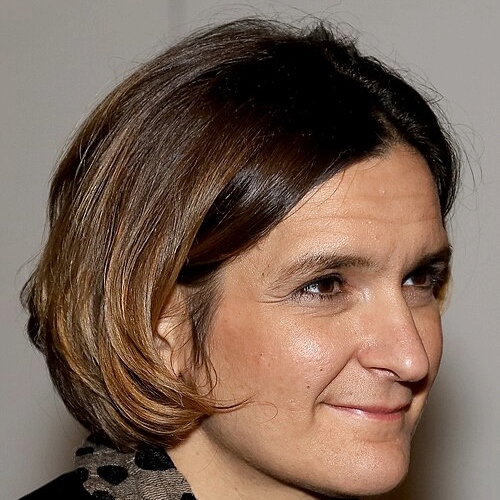
Esther Duflo is a French American economist born in 1972 who won the Nobel Prize in Economics in 2019, becoming the youngest person and only the second woman ever to receive the honor. Alongside her research partners Abhijit Banerjee and Michael Kremer, Duflo pioneered a new way of studying poverty: running carefully designed, real-world experiments, similar to medical trials, to test which anti-poverty programs actually work. Her research has examined questions like whether providing free mosquito nets, cash payments, or better school textbooks most effectively helps families in developing countries. She co-founded the Abdul Latif Jameel Poverty Action Lab (J-PAL) at MIT to spread this experimental approach worldwide.
Why She Matters
Duflo's experimental approach changed how governments, charities, and international organizations decide where to spend money to fight poverty, replacing guesswork with tested evidence. Her research has directly influenced real programs that have improved health, education, and income for millions of people around the world. For students today, Duflo's career is proof that economics is not just about stock markets or interest rates. It can also be a powerful tool for understanding and solving some of the world's most serious problems, and it is a field where young researchers can make history.