
Did You Know?
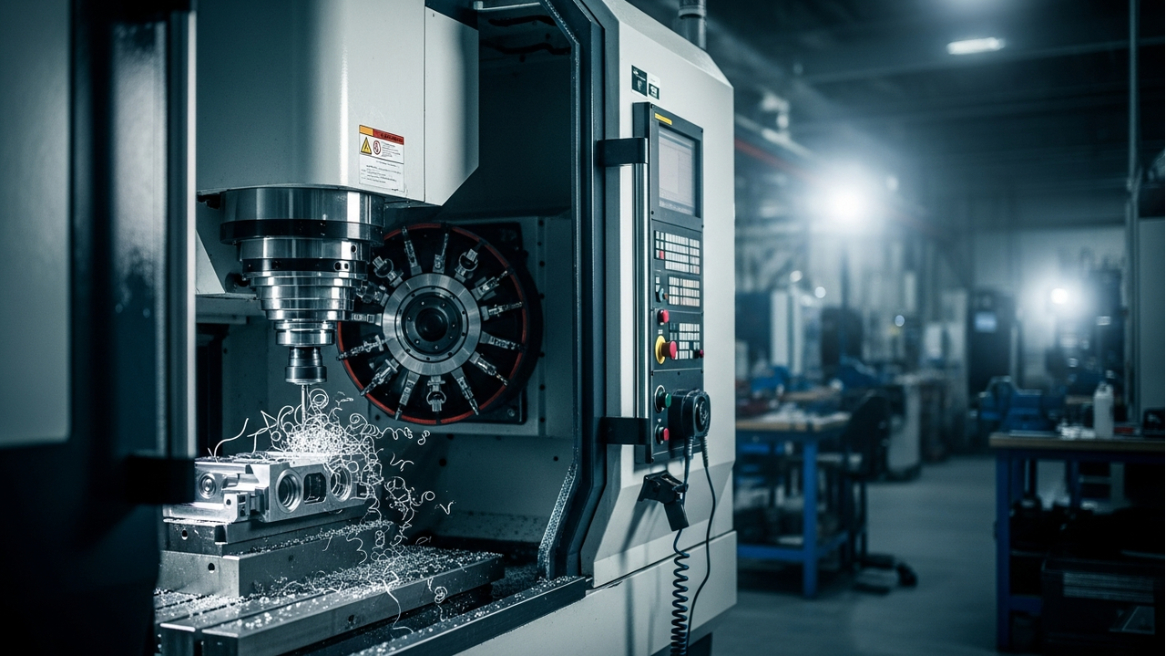
CNC machines never sleep. A single programmed machine can run unattended through the night, producing identical parts, which is why some manufacturing facilities operate what machinists call "lights-out" shifts, where the factory runs in complete darkness with no humans present.
The Numbers Behind the Career
About 34,200 openings for machinists and tool die makers are projected annually over the next decade.
There were about 299,500 machinist jobs in the U.S. in 2024.
The 2024 median annual salary for machinist was $57,700.
Where This Career Is Headed
CNC machining is being transformed by advances in automation, multi-axis machine technology, and the growing complexity of the industries it serves. Machines that once required constant human monitoring are increasingly capable of running unattended for long stretches, shifting the machinist's role toward higher-level programming, quality control, and process optimization. At the same time, manufacturers across aerospace, defense, and medical devices are expanding domestic production capacity, creating new demand for skilled machinists at a moment when the existing workforce is aging rapidly and fewer young people are entering the trades. The machinists who will thrive in the next decade are those who combine deep technical knowledge with the ability to work alongside increasingly sophisticated automation rather than being replaced by it.

Expanding domestic production at aerospace, defense, and medical device companies is creating strong demand for skilled CNC machinists who can produce precision parts to the exacting standards these industries require.
Advances in five-axis and multi-axis machining are opening new applications in industries like aerospace and medical devices, requiring machinists with more sophisticated programming skills and creating opportunities for higher compensation.
Additive manufacturing, or 3D printing, is increasingly being combined with CNC machining in hybrid processes, creating new roles for machinists who can work across both technologies.

Education & Certification
Most CNC machinists enter the field through a combination of formal education and hands-on training. Community colleges and technical schools offer certificate and associate degree programs in machining technology, manufacturing technology, or precision machining that typically take one to two years to complete and cover machine operation, blueprint reading, G-code programming, and quality control. Many machinists also enter through apprenticeship programs, which combine paid on-the-job training with classroom instruction and typically last three to four years. Some manufacturers run in-house training programs for entry-level hires, enabling direct entry into the field from high school with strong math and technical skills.
Professional certification is not universally required but is widely valued in the field. The National Institute for Metalworking Skills (NIMS) offers a tiered credentialing system covering everything from basic machine operation to advanced CNC programming, and NIMS credentials are recognized by employers across the manufacturing industry. Machinists who pursue ongoing certification and develop expertise in multi-axis programming, quality inspection, or specific industries like aerospace or medical devices can significantly increase both their earning potential and career options.
To Prepare...
Take classes in algebra, geometry, and trigonometry, which are used directly in CNC programming to calculate tool paths, angles, and dimensions.
Develop comfort with computer-aided design (CAD) software by exploring free programs like Fusion 360, which is used by professional machinists and is available to students at no cost.
Look for introductory machining or manufacturing courses at local technical schools or community colleges that offer hands-on experience with real equipment outside of a traditional school setting.
Spotlight: Explore the Life of a CNC Machinist

Explore more resources for a future CNC Machinist

The Big Book of LEGO Facts
Hugo, Simon
Why We Picked It
Career Connection
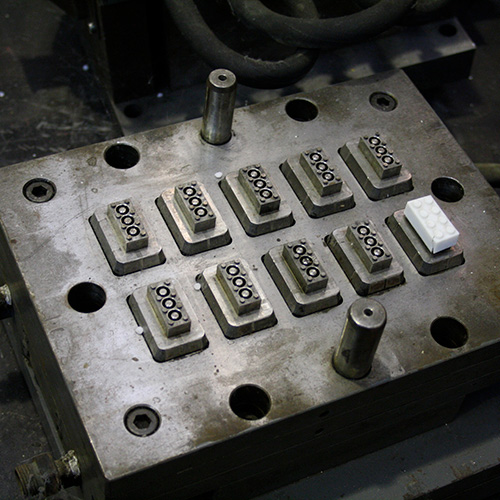
LEGO bricks are manufactured to tolerances measured in thousandths of a millimeter using CNC-machined molds, and the behind-the-scenes facts in this book reveal the machining precision that makes every satisfying snap possible.