Photo: VicenteAssensio, CC BY-SA 4.0 <https://creativecommons.org/licenses/by-sa/4.0>, via Wikimedia Commons
What It Is
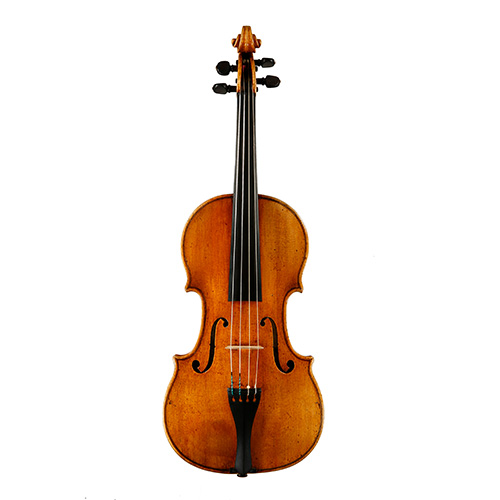
Antonio Stradivari was an Italian instrument maker who lived from 1644 to 1737 and produced approximately 1,100 violins, violas, and cellos during his lifetime, of which around 650 survive today. His instruments are considered the finest ever made, regularly selling at auction for between one and twenty million dollars, and professional musicians around the world compete for the chance to play one. For centuries, the secret of what made Stradivarius instruments sound so extraordinary remained one of the great unsolved mysteries in music. Modern CNC machinists and acoustic engineers have used precision scanning and computer-controlled cutting tools to produce exact replicas of Stradivarius instruments down to fractions of a millimeter, hoping to unlock what Stradivari knew about wood selection, geometry, and varnish that made his work unrepeatable.
Why It Matters
The Stradivarius project reveals something profound about what precision manufacturing can and cannot do. CNC machines can now reproduce the physical dimensions of a Stradivarius violin with accuracy that Stradivari himself could never have achieved with hand tools, and yet the replicas, extraordinary as they are, still do not fully replicate the sound of the originals. That gap between perfect dimensional reproduction and true replication is one of the most fascinating open questions in both acoustics and manufacturing. Precision is a tool, not an end in itself, and the most interesting problems are the ones where even the best technology in the world has not yet found the answer.