
Did You Know?
An airplane's "black box" is bright orange so searchers can find it in wreckage. It is built to survive an impact of 3,400 times the force of gravity and fire hotter than 1,000 degrees Celsius.
What Avionics Technicians Really Do
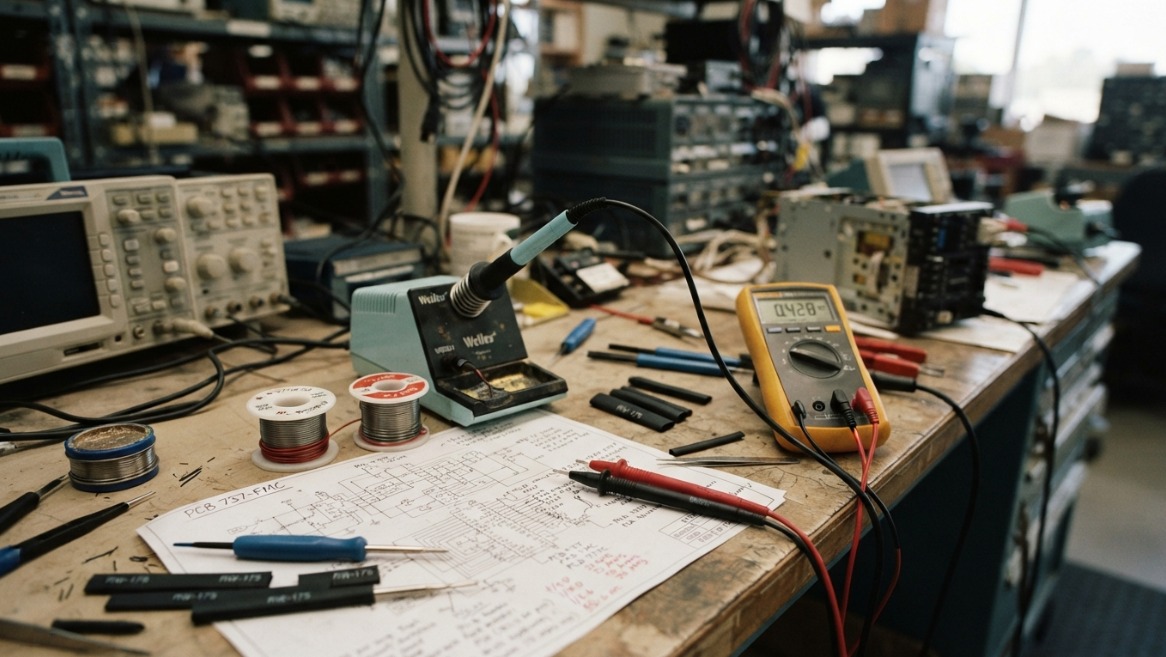
Imagine you are in the cockpit of a jet, but it isn't flying. It is parked in a big hangar, and a screen the pilot needs is blank. You open a panel under the dashboard and find hundreds of colored wires. You test them one by one with a special meter until you find the broken one. You fix it, close the panel, and the screen lights up. Tomorrow that jet will carry 150 people across the country. It will work because of you.
An avionics technician fixes an airplane's electronic parts. That means radios, radar, GPS, autopilot, and the screens pilots use to fly. You test circuits, replace parts, install new equipment, and write down everything you do. You work with tiny tools and big machines at the same time. If you like electronics, puzzles, and airplanes, this could be a fit.
You Might Love This If...
Skills That Follow You Everywhere
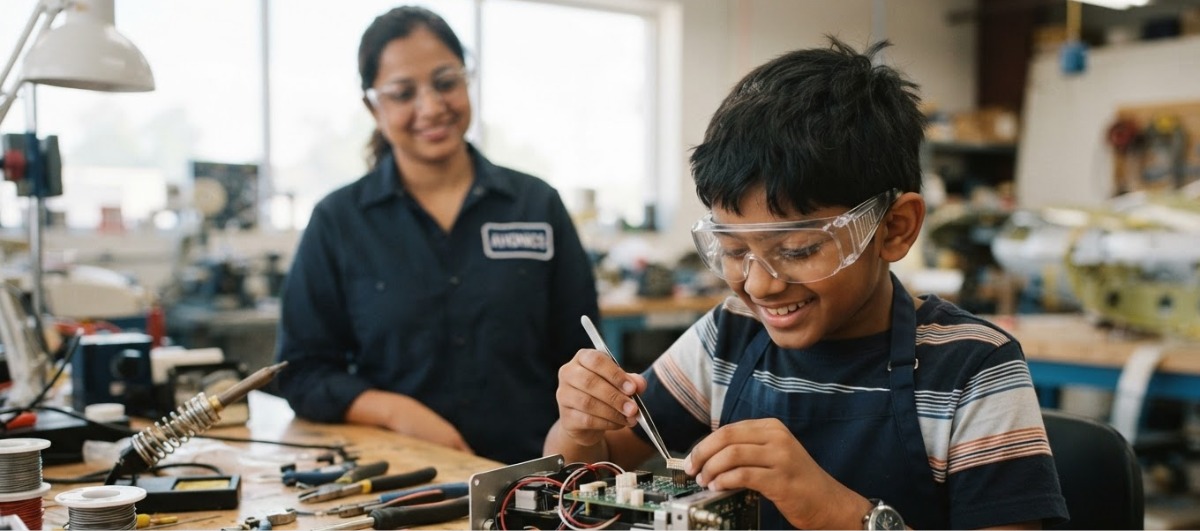
Working as an avionics technician builds habits that transfer to any field where mistakes are expensive. Technicians learn to reason from symptoms to causes, follow written procedures precisely, and hold themselves to the standard that someone's life depends on their work.
Critical Thinking
An avionics technician uses critical thinking on every fault. A pilot's report might say a radio cuts out on one frequency, and the cause could be an antenna, a connector, a wire chafed somewhere in the fuselage, a component, or a software setting. The technician reads test data, forms a theory, and checks it before replacing anything, because swapping parts until the problem goes away is expensive, slow, and does not tell you what was wrong.
Resilience
An avionics technician uses resilience because the work happens on the aircraft's schedule, not the technician's. Shifts can run nights, weekends, and holidays, and some faults take days to find. The environment is loud, the spaces are cramped, and the deadline is a departure time. Technicians build the steadiness to stay careful when they are tired and the discipline to stop and re-check rather than sign off on work they are not sure of.
Organization
An avionics technician uses organization constantly. Every repair is done to a written procedure, every part is tracked, and every job is recorded in the aircraft's maintenance records, which the FAA requires. Technicians keep tools accounted for so that nothing is left inside an aircraft, keep wiring labeled so the next technician can follow it, and keep records so complete that an inspector years later can see exactly what was done.