Photo: Roksenhorn, CC BY-SA 4.0 <https://creativecommons.org/licenses/by-sa/4.0>, via Wikimedia Commons
What It Is
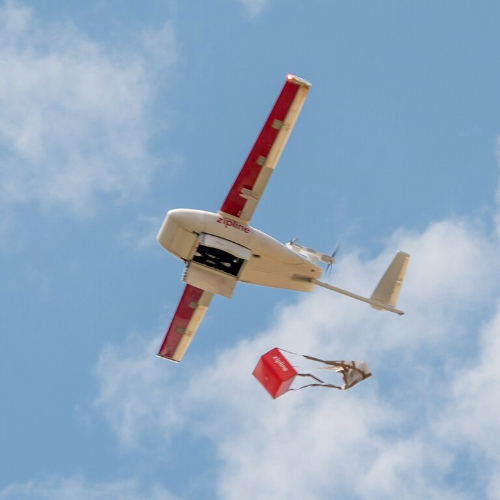
In 2016, a small American company called Zipline launched something the world had never seen before: a drone delivery network designed not to deliver packages to people, but to save their lives. Operating first in Rwanda, Zipline's fixed-wing drones flew blood, vaccines, and emergency medical supplies to rural hospitals that could take hours to reach by road, with each aircraft launched by catapult, dropping its cargo by parachute, and returning to base without ever touching down at the delivery site. The technology worked so well that the network expanded to Ghana, Nigeria, the Ivory Coast, and eventually the United States, where Zipline began delivering prescription medications directly to patients' homes. By 2024, the company had completed over a million deliveries across multiple countries. The drone systems technicians who build, maintain, and prepare those aircraft are at the center of every single one.
Why It Matters
Before Zipline, a hospital in rural Rwanda could wait days for a blood delivery that a patient needed in hours, and the gap between what was available in a city and what was available in a remote clinic was often the difference between life and death. Zipline closed that gap, and it did so not with a new medicine or a new surgical technique but with a drone and the technicians skilled enough to keep it flying. The company's success demonstrated that civilian drone systems, maintained and operated by trained technicians, could solve problems that no other technology had cracked. It also proved that the drone technician role was not just a support job but a mission-critical one, where the quality of a technician's work had direct consequences for real patients. For anyone considering a career in drone systems, Zipline shows the scale of impact this work can have.