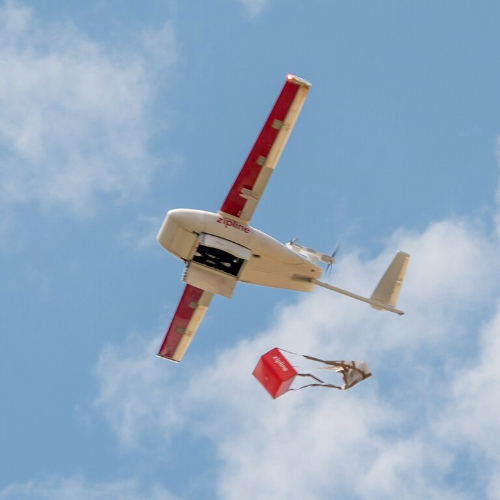
Photo: U.S. Government, Public domain, via Wikimedia Commons
The FAA Part 107 Rule
What It Is
Before August 29, 2016, anyone who wanted to fly a drone commercially in the United States needed a full pilot's license, the same credential required to fly a passenger jet. That changed when the Federal Aviation Administration enacted Part 107, a new set of rules built specifically for small unmanned aircraft that created a dedicated certification pathway for commercial drone operators and technicians. To earn a Part 107 certificate, applicants study airspace regulations, weather, drone performance, and safety procedures, then pass a knowledge test at an FAA-approved testing center. The rule established weight limits, altitude restrictions, and operational guidelines that made commercial drone work legal, standardized, and scalable for the first time. Within two years of Part 107 taking effect, the number of certified commercial drone operators in the United States had grown to over 100,000.
Why It Matters
The publishing of Part 107 is the moment that the civilian drone technician profession became a real occupation. Before that rule existed, there was no clear legal framework for the work, no standardized knowledge requirements, and no reliable way for employers to verify that a technician understood the regulatory environment in which they were operating in. The rule did not just create a certification, it created an industry, and every agricultural drone scanning a cornfield, every inspection drone checking a power line, and every film crew drone capturing a cinematic aerial shot operates within the framework it established. What is easy to miss is that those rules were written by people who had to imagine a profession that barely existed. They also had to balance safety, innovation, and access in ways that would shape an entire field. For students interested in drone systems, Part 107 is both the entry credential for the profession and a reminder that understanding the rules governing emerging technologies is as important as understanding the technology itself.