Photo: joebeone, CC BY 2.5 <https://creativecommons.org/licenses/by/2.5>, via Wikimedia Commons
Who She Was
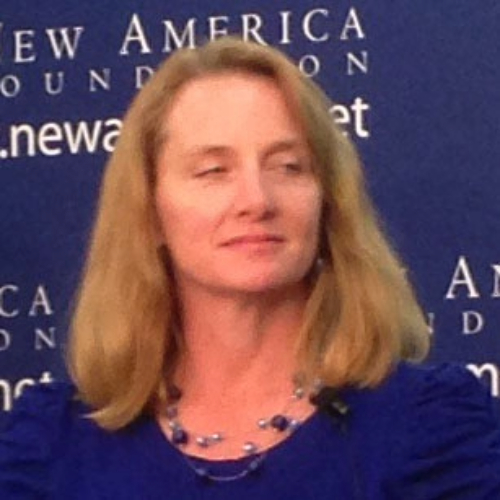
In 1988, Mary "Missy" Cummings became one of the first women cleared to fly F/A-18 Hornets off aircraft carriers in the United States Navy, entering a cockpit that had been officially closed to women just years before. After leaving the military, she channeled that experience into a new question: how do humans and autonomous machines make decisions together, and what happens when they get it wrong? She earned a PhD in systems engineering and went on to direct autonomous systems laboratories at MIT, Duke University, and George Mason University, becoming one of the world's leading researchers in unmanned aircraft safety. In 2021, she was appointed as a senior safety advisor at the Federal Aviation Administration, where she worked on the regulatory frameworks governing how commercial drones operate nationwide. Her career has moved from flying the aircraft to designing the systems that make them safe for everyone else to use.
Why She Matters
Cummings has spent decades asking a question that the drone industry sometimes moves too fast to answer: what happens when these systems fail, and who is responsible? Her research on human-autonomy interaction has directly shaped how drone systems are designed to alert technicians and operators when something goes wrong, and her policy work at the FAA has influenced the rules governing commercial drone operations across the United States. She has been a consistent and outspoken voice on the importance of safety standards in a field that can prioritize speed over rigor, and her willingness to challenge industry assumptions has made the technology more trustworthy for the technicians, operators, and communities that depend on it. For young people interested in drone systems, her career demonstrates that the most important contributions to this field are not just technical but also about asking hard questions about how these systems should work and who is responsible when they do not. Her story is proof that the path into drone systems can start anywhere, including a Navy cockpit, and lead somewhere no one has gone before.