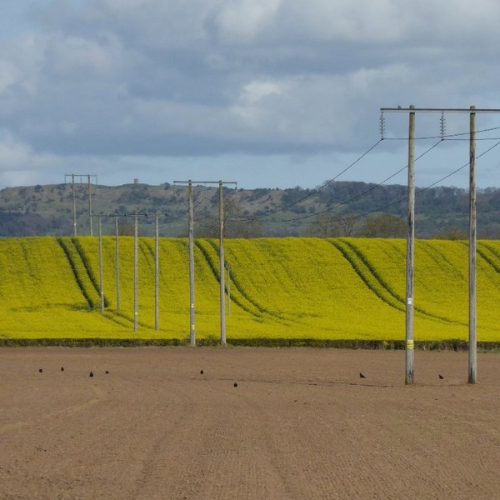
Photo: Electric power lines by Philip Halling, CC BY-SA 2.0 <https://creativecommons.org/licenses/by-sa/2.0>, via Wikimedia Commons
What It Is
The United States power grid is a vast network of power plants, transmission lines, substations, and distribution lines that produce electricity and deliver it to every home, school, hospital, and business nationwide. It consists of three interconnected grids: the Eastern Interconnection, the Western Interconnection, and the Texas Interconnection (ERCOT). Collectively, these grids encompass about 200,000 miles of high-voltage transmission lines and over 5.5 million miles of local distribution lines, served by more than 3,000 utility companies. The National Academy of Engineering ranked electrification as the greatest engineering achievement of the 20th century, and the power grid is the infrastructure that makes it possible.
Why It Matters
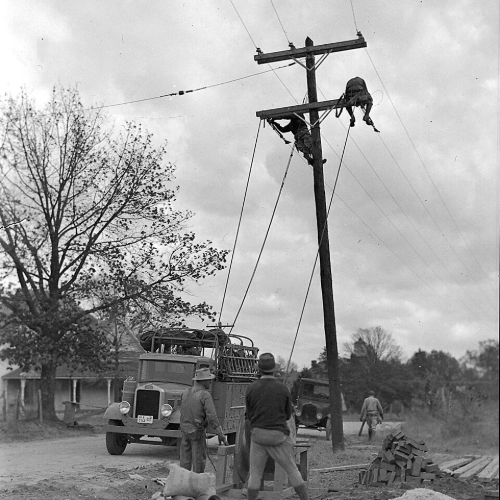
The power grid is what stands between modern life and darkness. Every time you flip a switch, charge a device, open a refrigerator, or walk into a heated or air-conditioned building, you are relying on a system that must balance electricity supply and demand at every second of every day. That system was built over more than a century by generations of linemen, and it continues to depend on them for maintenance, expansion, and emergency repair. Today, the grid faces challenges it was never designed for: integrating renewable energy sources like wind and solar that produce power intermittently, meeting surging demand from electric vehicles and data centers, and withstanding increasingly severe weather. The next generation of linemen will not just maintain the grid as it exists. They will help build the grid of the future, one that is smarter, more resilient, and capable of powering a country that runs on more electricity than ever before.