Photo: Created with Google Gemini
Who He Is
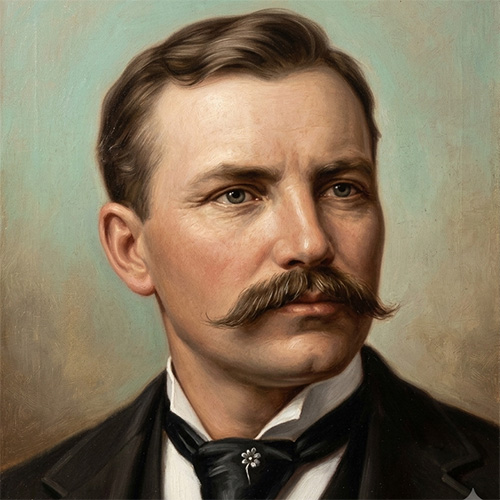
Henry Miller (1853–1896) was a traveling lineman from Fredericksburg, Texas, who became the founder and first president of the International Brotherhood of Electrical Workers (IBEW), the union that still represents hundreds of thousands of electrical workers across North America today. Miller began his career in the electrical trade as a teenager, working as a water boy for a government crew stringing telegraph wire from San Antonio to Fort Clark. He went on to work as a lineman for Western Union and various utility companies, traveling from city to city and living in boardinghouses as he followed the work. In 1886, while working for the St. Louis Municipal Electric Light and Power Company, Miller began organizing his fellow electrical workers, convinced that only a national union could win the safe working conditions and fair wages the trade desperately needed.
Why He Matters
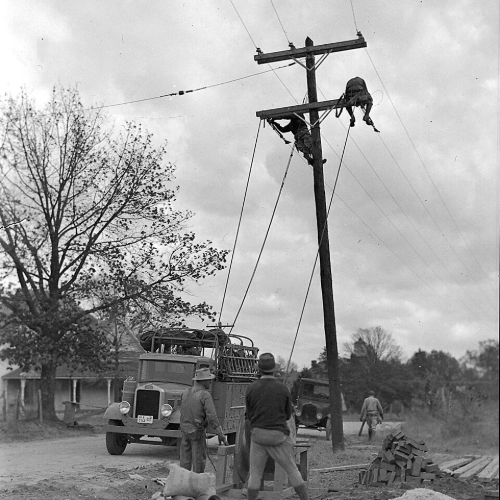
In the 1890s, electrical line work was one of the deadliest jobs in the country. Workers climbed poles with no safety equipment, handled live wires with no formal training, and earned low wages while employers hired unskilled laborers willing to work for even less. Henry Miller saw these conditions firsthand and spent years persuading electrical workers in city after city to organize. In 1891, at a convention he organized in St. Louis, the National Brotherhood of Electrical Workers was officially founded, with Miller elected as its first president at the age of 33. Miller spent the remaining years of his life traveling the country to establish local unions and advocate for apprenticeship programs, safety standards, and collective bargaining. On the night of July 10, 1896, while working as a lineman for the Potomac Electric Power Company in Washington, D.C., Miller was restoring power after a storm when he came into contact with a 2,200-volt wire, was knocked from the pole, and died from the fall. He was 43 years old. Today, July 10 is recognized as National Lineworker Appreciation Day in his honor, and the IBEW, the union he built from nothing, represents more than 775,000 members.