
Did You Know?
Many famous inventors, athletes, artists, and leaders say a teacher was the first person who helped them believe in their talent and future.
What Teachers Really Do
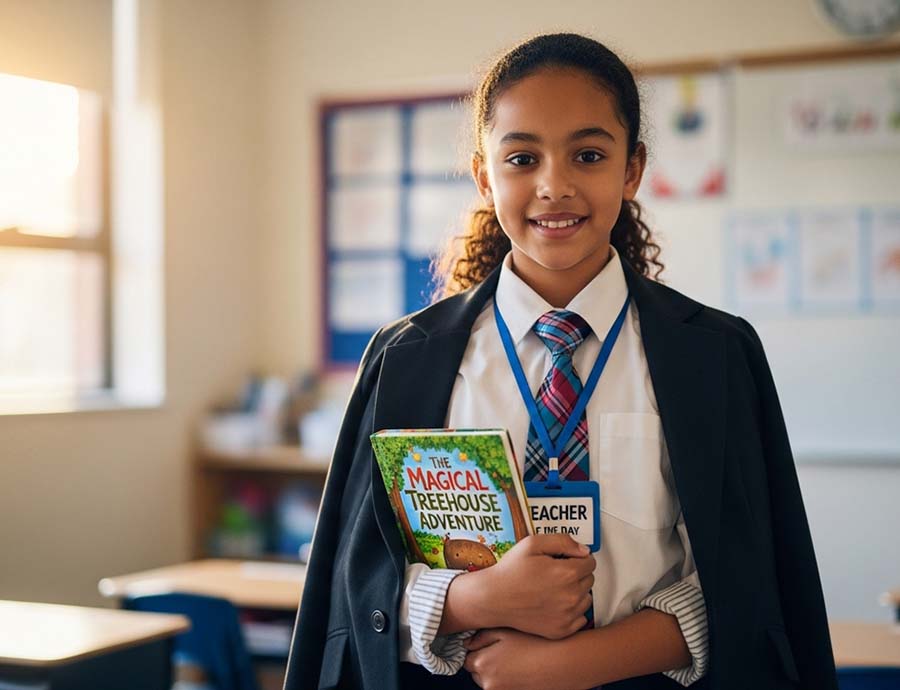
A teacher stands at the front of a classroom while pencils scratch and pages turn. There is a moment during a story when it gets quiet, and everyone listens. Someone raises a hand, a little unsure, and the teacher waits patiently to draw them out. The room smells like paper and crayons, and the board is filled with words and drawings. Each day is filled with small moments where something suddenly makes sense.
Becoming a teacher begins with a love of explaining things and a care for how others learn. Teachers practice listening, explaining ideas in different ways, and encouraging students when learning feels hard. Some teach reading or math, while others teach art, science, or music. If you enjoy helping someone understand something new and feel proud when they do, the path toward being a teacher may have already started!
You Might Love This If...
Skills That Follow You Everywhere
Being a teacher helps you develop ways of thinking and relating that extend beyond the classroom. Teachers learn to notice how others think, respond, and experience learning. These habits support growth, communication, and understanding in many parts of life. The work encourages reflection, patience, and steady progress.
Critical Thinking
Teaching requires constant attention and careful judgment. Teachers consider what students understand, where confusion begins, and how ideas connect. They reflect on lessons, adjust explanations, and think ahead about next steps. Over time, this sharpens the ability to analyze situations and make informed decisions.
Problem-Solving
Classrooms are full of small challenges that need practical solutions. Teachers find ways to explain ideas differently, support students who are struggling, and keep learning moving forward. Problem solving grows through trial, reflection, and adjustment. Each solution builds confidence in handling complex situations.
Empathy
Classrooms are filled with different personalities, emotions, and experiences. Teachers learn to listen closely, notice unspoken needs, and respond with care. Empathy helps create trust and understanding, even during difficult moments. This awareness shapes how teachers support learning and build strong relationships.
Explore more resources for a future Teacher

Up from Slavery by Booker T. Washington
Booker T. Washington
Why We Picked It
Career Connection
Washington believed education should combine academic knowledge with practical skills, and his hands-on teaching philosophy at Tuskegee shows teens how educators design curricula that prepare students for real life.

I Want to Be a Teacher Activity Book: 100 Stickers & Pop-Outs
Editors of Storey Publishing
Why We Picked It
Career Connection
Teachers set up their classrooms with name tags, schedules, bulletin boards, and student materials before school begins, and this activity book introduces the same organizational preparation real teaching starts with.

The Wednesday Wars: A Newbery Honor Award Winner
Gary D. Schmidt
Why We Picked It
Career Connection
Great teachers challenge students to think beyond what's comfortable, and Mrs. Baker's unconventional approach — using Shakespeare to teach life lessons — shows kids how inspiring educators connect academics to real growth.