
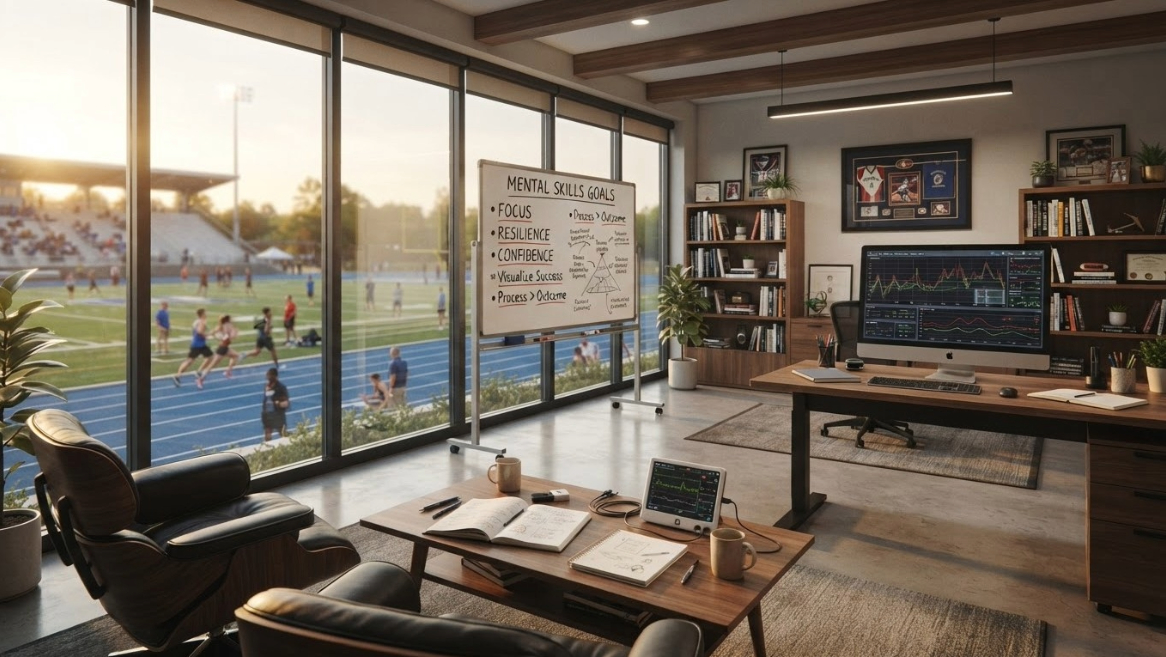
Did You Know?
During the 200-meter butterfly final at the 2008 Olympics, Michael Phelps’s goggles filled with water, so he counted his strokes to know when he would reach the wall. He still won gold and set a world record.
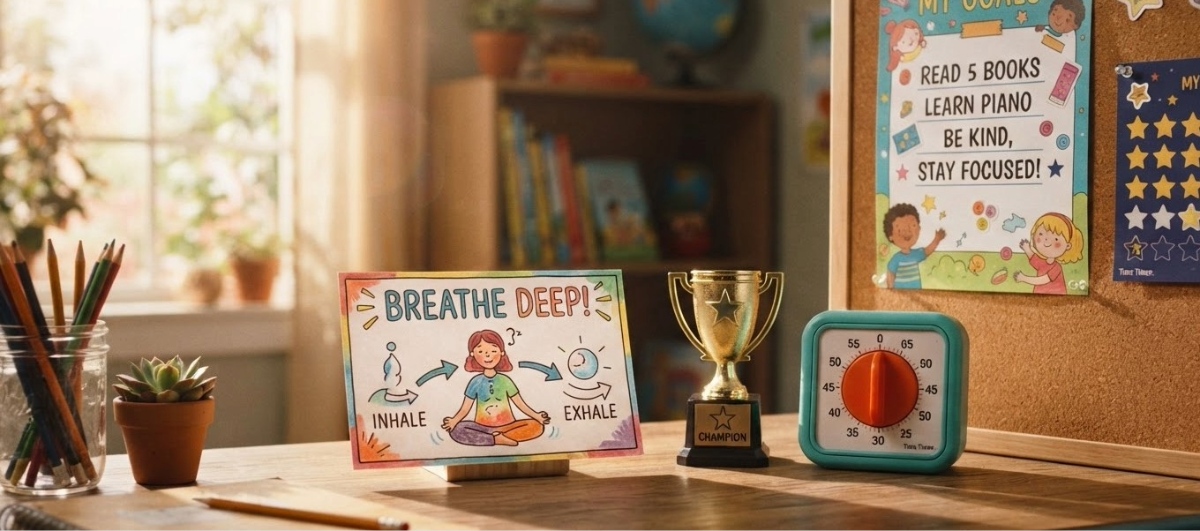
How to Get Started
You can start training your mind the same way you train your body, with a few minutes of practice and one skill you want to get better at. Try a slow breath, a one-word cue, or a picture in your head before something that makes you nervous, then notice what changes. Sports psychology begins with small experiments on yourself, and the results show you what to try next.
Explore the Basics
Pick a cue word like “smooth” or “ready” and say it quietly in your head right before your turn at something, like a free throw, a jump rope turn, or a kick. Try a different word on another day, like “calm” or “strong,” and notice which one feels best. Keep the word that helps you most and use it again next time.
Try It Out
Close your eyes for one minute before a skill, like a jump or a kick, and picture it going perfectly, with the sounds, the feel of the ground, and the finish. When the minute is up, open your eyes and try the skill for real. Do this a few times on different days and notice whether the picture in your head helps.
Join the Community
With a parent’s help, ask your coach, teacher, or club leader if your group could try a one-minute breathing or picture-it-in-your-head exercise before an activity. Offer to show them how it works, like three slow breaths counting to four in and four out. After the group tries it, talk about how it felt and whether anyone wants to do it again.