
Did You Know?
Before announcers traveled with their teams, some radio stations “re-created” road games in a studio from short telegraph reports. To make it sound real, announcers tapped a pencil for the crack of the bat while recorded crowd noise played in the background.
What Sports Broadcasters Really Do
You are sitting in a little booth high above a soccer field, with a microphone in front of you and a sheet of player names and numbers taped to the window. Down on the grass, a girl in a green jersey races past two defenders, and you start talking fast so everyone listening at home can see it in their minds. You tell them she is past the first defender, past the second, and heading straight for the goal, and your voice gets louder with every step she takes. The ball sails into the net, the crowd roars, and you let the noise fill the air for a moment before you say who scored. Then you give the score and the time left, because someone just turned on the radio and wants to know what they missed.
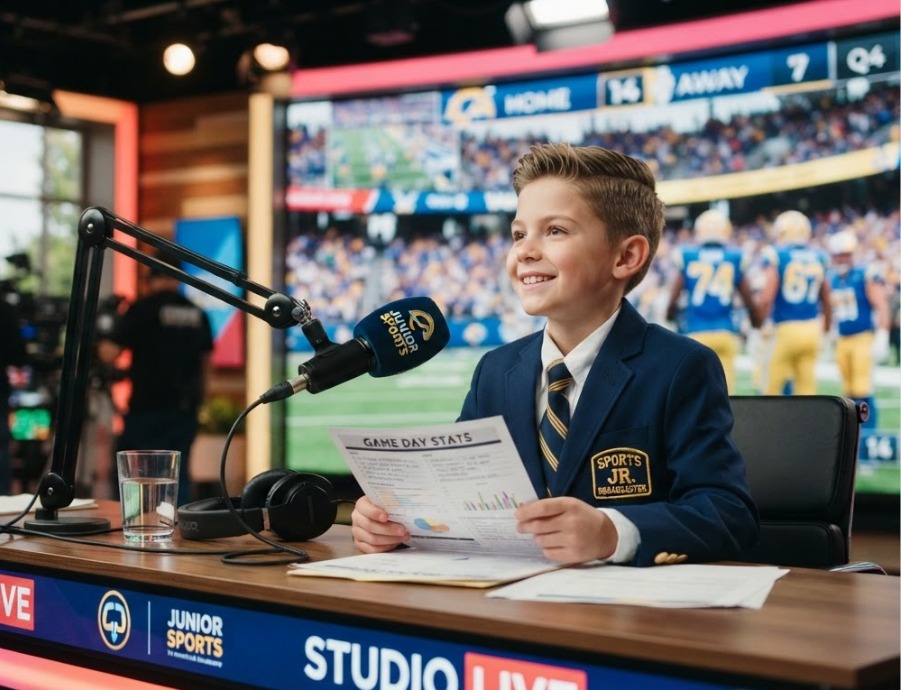
A sports broadcaster is a person who tells an audience what is happening in a game as it happens, on TV, on the radio, or online. Some broadcasters describe every play, and others, called analysts, explain why a play worked or what a team might try next. Before each game, broadcasters study the teams and write down facts about the players, so they always have something interesting to share. They work with a team that includes a producer, camera operators, and engineers, who all help get the game to people at home. If you love sports, enjoy talking about what you see, and like making others feel like they are part of the action, you may already be thinking like a sports broadcaster.
You Might Love This If...
Skills That Follow You Everywhere
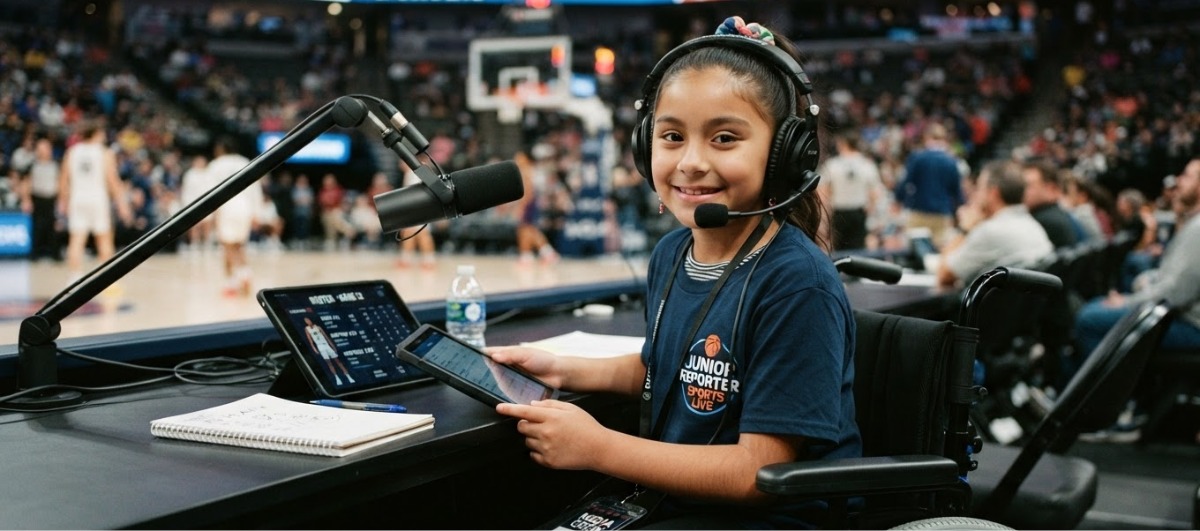
Sports broadcasters build skills that matter far beyond the booth. They learn to turn what they see into words others can picture, stay steady when something unexpected happens on air, and prepare so well that the right fact is always within reach. These abilities help in any job where you have to think and speak live.
Adaptability
Live games rarely go to plan. A replay runs long, a headset stops working, or the game goes quiet, and the broadcaster has to adjust on the spot without losing the audience. Staying calm and flexible when plans change is a skill that helps in any job where you cannot press pause.
Communication
A broadcaster has only a voice, and sometimes only a few seconds, to help listeners picture a play they cannot see. They choose short, vivid words, change their tone to match the moment, and learn when to stop talking and let the crowd do the work. Making ideas clear, quickly, to a listener who has no other way to see them is a skill that helps in any job where people depend on your words.
Organization
Before a game, broadcasters set goals for what they need to know, then build spotting boards that group player names, numbers, stats, and stories so the right fact is easy to find. They prioritize, deciding which facts matter most and which can stay in the notes. Planning ahead and keeping information in order is a skill that helps in any job where you need the right answer quickly.