
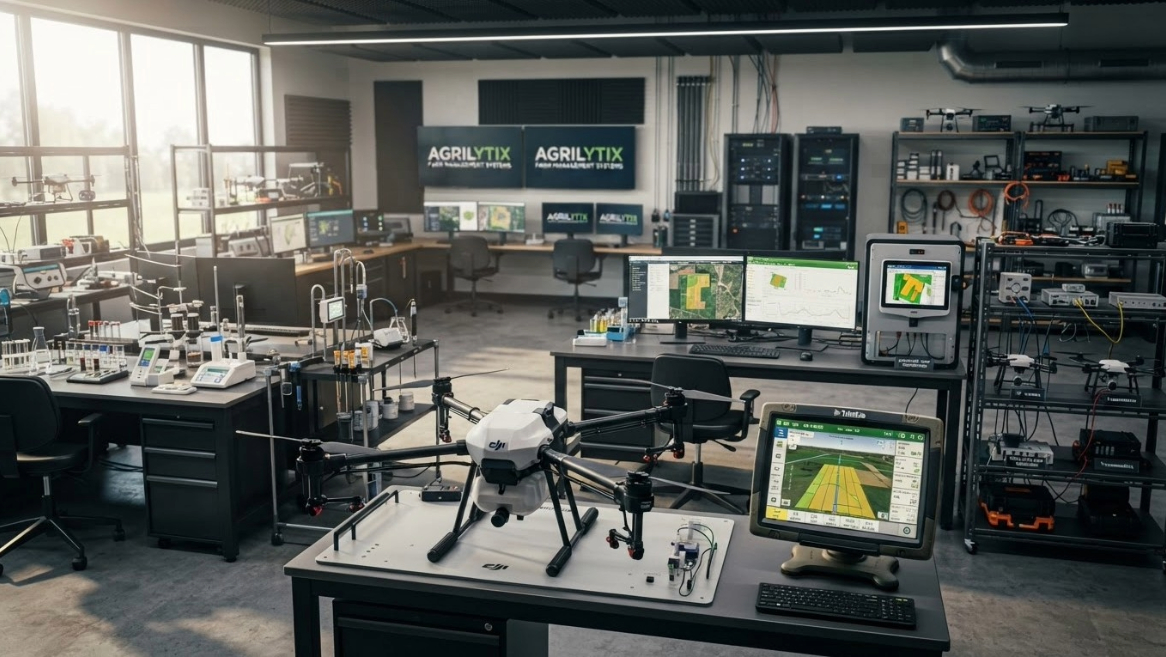
Did You Know?
A set of European satellites photographs nearly every field on Earth about every five days in 13 bands of light, several of which human eyes can’t see, and the images are free for anyone to use.

What Precision Agriculture Technicians Really Do
You’re sitting in the cab of a giant green tractor, but your hands aren’t on the steering wheel. The tractor is driving itself in a perfectly straight line, guided by satellites far above the field, while a screen in front of you shows a colorful map of the ground you’re crossing. Red patches mean the soil is dry and hungry for fertilizer, and green patches mean it already has plenty. As the tractor rolls over each patch, the machine behind it changes how much fertilizer it drops, all by itself. You didn’t plant a single seed today, but the map you built is deciding exactly how this whole field gets fed.
A precision agriculture technician is someone who helps farmers use technology to grow food smarter. They work with GPS, drones, satellites, sensors, and computer maps to figure out exactly what each part of a field needs, instead of treating a whole farm the same way. One corner of a field might need more water, while another needs less fertilizer, and the technician helps the farmer’s machines know the difference. They also set up and fix the high-tech equipment on tractors and sprayers, and they turn piles of data into simple maps a farmer can use. If you like gadgets, maps, and being outdoors, and you’ve ever wondered how a tractor could drive itself, you might already be thinking like a precision agriculture technician.
You Might Love This If...
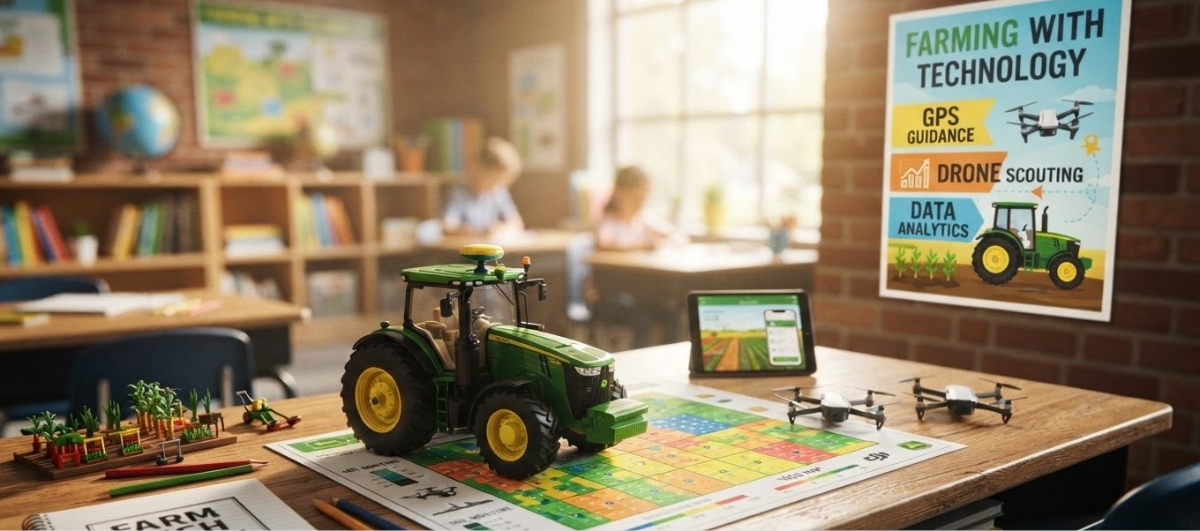
Skills That Follow You Everywhere
Precision agriculture technicians build habits that reach far beyond farm fields. They learn to read evidence carefully before deciding what a problem is, to track down the real cause when a system fails, and to explain complicated findings to people who need a clear answer. Those skills transfer to any career where data, equipment, and people all have to work together.
Critical Thinking
A yield map might show a weak spot in a field, but the map alone doesn’t say why. It could be soil fertility, drainage, pests, a planter problem, or a sensor error. Technicians have to weigh several possible explanations against the evidence, including soil tests, imagery, and the farmer’s own history with the field, before recommending a fix. Jumping to the wrong conclusion can cost a farmer thousands of dollars in fertilizer or seed that was never the problem.
Problem-Solving
When a guidance system drops out in the middle of planting, or a prescription map won’t load on a controller, the technician is the one who has to find the cause while a crew waits. That means working through the system step by step, from satellite signal to cable to software settings, and ruling things out until the real fault appears. The best technicians treat every breakdown as a puzzle with a logical answer rather than a mystery.
Communication
Data only matters if a farmer can act on it. Technicians regularly sit at a kitchen table explaining what a map shows, what it might mean, and what it would cost to act on it, to someone who has to make a real decision with real money. Learning to translate technical findings into plain language, and to listen to what a grower already knows about their land, is as important to the job as any software skill.