
Did You Know?
Ancient Chinese builders mixed sticky rice soup into their lime mortar. A 2010 study of a 600-year-old city wall in Nanjing found that a starch in the rice makes the mortar stronger and more resistant to water, and the same recipe is now used to repair historic Chinese bridges.

How to Get Started
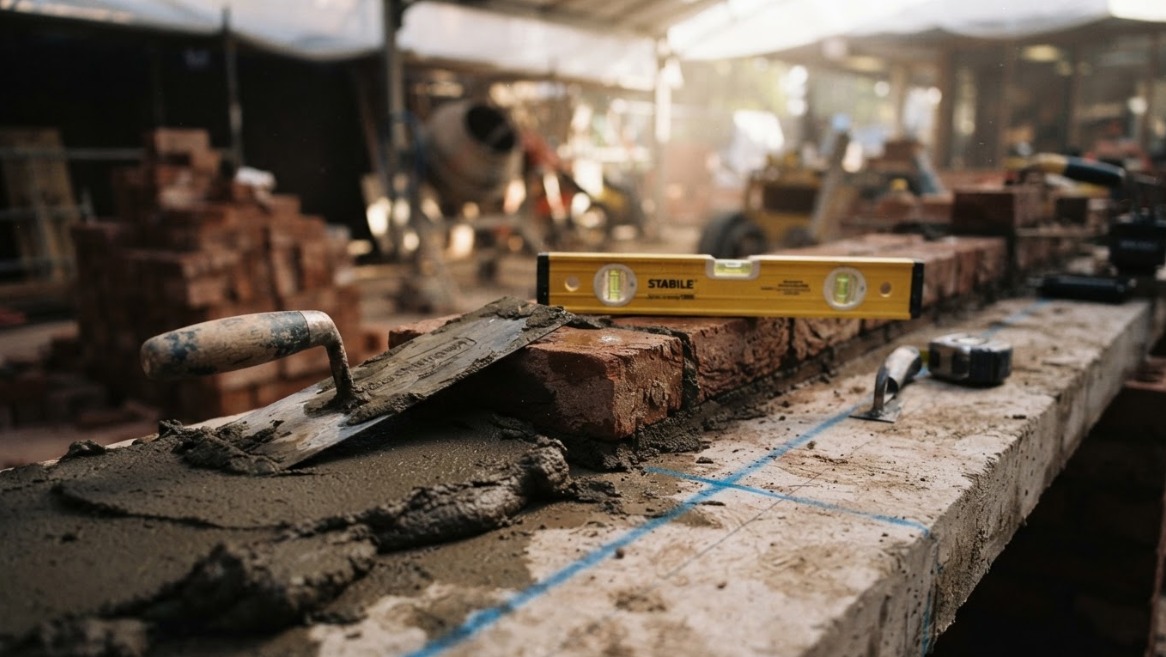
Masonry and tile work reward people who like to plan, measure, and build with their hands. You do not need a job site to start. Learning to see patterns in walls, laying out a small project before you start it, and getting comfortable with a trowel and a level will put you ahead of most people who walk into an apprenticeship.
Explore the Basics
Look closely at a brick wall near your home or school. Notice the pattern, which masons call the bond. See how each brick sits on top of the gap between the two bricks below it, so the joints never stack up in a straight line. Then build a wall out of blocks or LEGO bricks the same way. Push on it, and then build one with the joints lined up and push on that. You will feel why masons overlap their bricks.
Try It Out
Make a mosaic. With an adult, glue broken tile pieces, flat stones, or colored paper squares onto a board or a flowerpot in a pattern you design. Leave an even space between every piece. Real tile setters draw their layout before they set the first tile, so sketch yours on paper first and follow the plan.
Join the Community
Ask a parent to help you watch a mason or tile setter at work, either on a project at home or from a safe distance at a building site. Ask what the tools are called and why the mortar is that color. Habitat for Humanity has local affiliates in many communities, and some hold family-friendly events where you can see a house being built.